
Central Feeding System Manufacturer & Price
Learn what drives central feeding system price, how to size a system for your plastics plant, and how overseas buyers can compare manufacturer quotes.

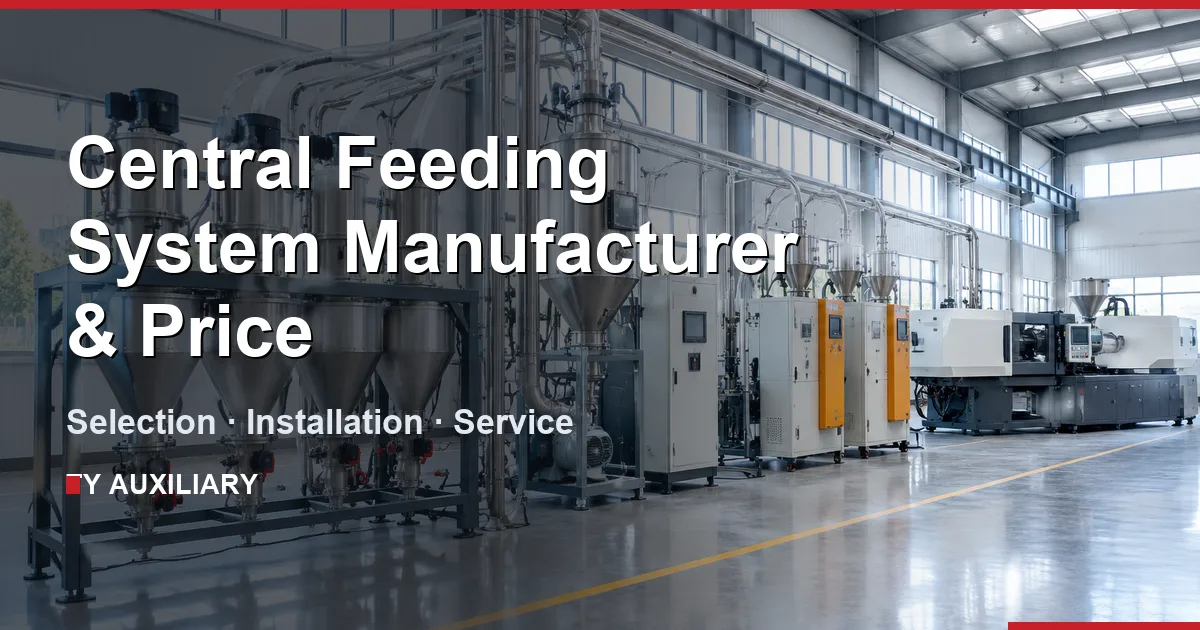
When a plastics processing plant scales beyond a handful of machines, moving material in bags and individual loaders quickly becomes the bottleneck. A central feeding system routes resin from a single drying and conveying hub to every processing machine on the floor, replacing scattered equipment with one controlled, monitored network. For procurement managers evaluating suppliers, the real questions are what drives the price, how to size the system correctly, and how to compare quotes on a like-for-like basis.
What Exactly Are You Buying When You Source a Central Feeding System?
A complete system is more than a blower and some piping. Before requesting quotations, confirm that each supplier itemizes the following components, because these are where hidden costs and compatibility issues usually appear:
- A central vacuum station with appropriately sized roots blowers or side-channel blowers
- Material loaders and receiving hoppers sized to each machine’s throughput
- Piping, bends and distribution valves sized to minimize conveying velocity loss
- Dehumidifying dryers and hopper dryers where hygroscopic resins such as PET, PA or PC are processed
- A central control cabinet with per-station monitoring, fault alarms and, ideally, integration with your plant’s existing controls
Ask suppliers to quote the full material path — from storage or big-bag unloading through drying, conveying, dosing and delivery to the machine throat. Fragmented quotes make it nearly impossible to compare total cost of ownership.
How Should You Size the System for Your Plant?
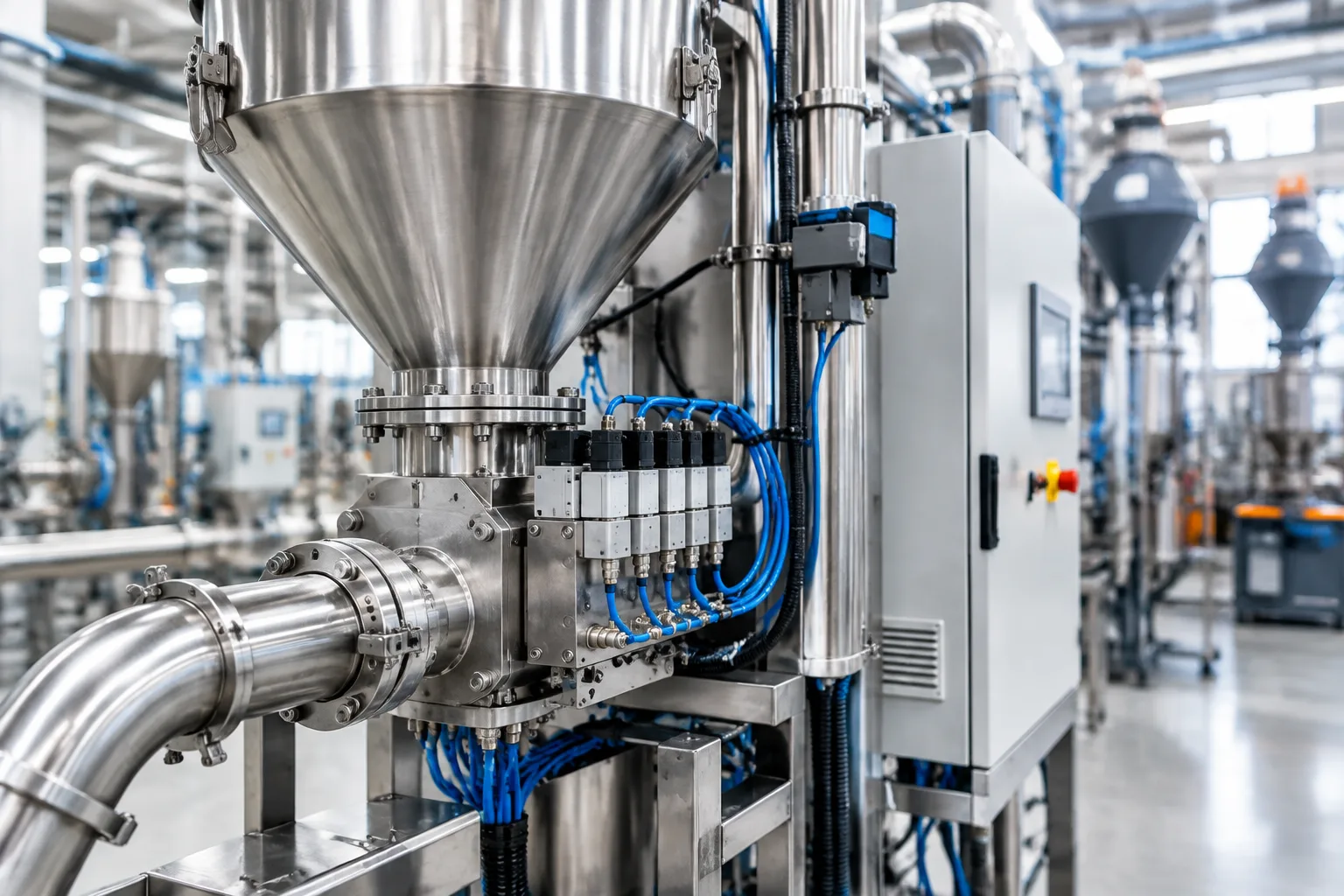
Undersized systems starve machines during peak demand; oversized systems waste capital and energy. Sizing depends on four variables you should document before contacting manufacturers:
- Total hourly material consumption across all machines, plus a margin for future expansion
- Conveying distance and height — long horizontal runs and vertical lifts determine blower power and pipe diameter
- Number of simultaneous conveying stations — the control logic must handle concurrent demand without pressure drops
- Material characteristics — pellet size, bulk density, abrasiveness and moisture sensitivity affect pipe selection and drying capacity
A reputable manufacturer will ask for your machine list and material data before proposing a configuration. If a vendor quotes directly from a catalog without reviewing your layout, treat that as a warning sign.
What Actually Drives Central Feeding System Price?
Pricing varies widely between quotations, and understanding the drivers helps you negotiate intelligently rather than simply chasing the lowest number:
- Conveying capacity and blower specification — larger, redundant blower packages cost more but protect uptime
- Control scope — a basic relay panel is far cheaper than a PLC system with touchscreen monitoring, automatic station switching and remote diagnostics
- Drying integration — adding dehumidifying dryers with dew-point control substantially raises system cost but is essential for engineering resins
- Material grade of contact parts — stainless steel hoppers and piping cost more than carbon steel but matter for filled or corrosive materials
- Installation scope — clarify whether the quote includes piping installation, commissioning and operator training, or equipment supply only
When comparing quotes, normalize them to the same scope: same number of stations, same drying capacity, same control functions and same installation responsibilities. Otherwise you are comparing apples to oranges.
Which Supplier Qualifications Should an Overseas Buyer Verify?
For buyers sourcing from manufacturers abroad, several verifiable signals reduce procurement risk. Confirm that the factory operates under a certified quality management system — ISO9001 registration is a reasonable baseline for this equipment category. Look for CE conformity on electrical cabinets and pressure-related components, particularly if the system will be installed in the EU. Ask to see the manufacturer’s own machining and assembly capability rather than reselling arrangements, because long-term spare parts availability depends on it.
Request reference installations relevant to your material and machine count, and ask whether the supplier provides remote support, spare parts stocking and documentation in English. Response time on pre-sales technical questions is often the most reliable predictor of after-sales service quality.
How Does a Central Feeding System Integrate With Other Auxiliary Equipment?
A central feeding system rarely stands alone. In most injection molding and extrusion plants it works alongside dehumidifying dryers, mold temperature controllers, chillers and granulators as part of an integrated auxiliary package. Coordinating these from one supplier simplifies responsibility: if a molding machine receives poorly dried material, the dryer vendor and the conveying vendor will otherwise each blame the other.
Consider specifying dosing and blending units at the central station if you run color masterbatch or regrind blends, and plan granulator placement so regrind returns to the system without manual handling. Early integration planning avoids costly retrofits of piping and control wiring later.
What Are the Practical Next Steps to Get an Accurate Quotation?
To move from inquiry to a comparable quotation efficiently, prepare the following before contacting manufacturers:
- A machine list with throughput rates and locations on your floor plan
- Material types, hourly consumption and any drying requirements
- Your expectation for control level, monitoring and expansion
- Site conditions: available power supply, compressed air and installation constraints
Suzhou Tongyi Automation Machinery manufactures central conveying systems, dehumidifying dryers, mold temperature controllers, chillers and granulators for plastics processing plants worldwide, operating under an ISO9001 quality system with CE-marked equipment. Send us your machine list and material data, and our engineering team will return a configured proposal with a clear scope breakdown — so you can evaluate central feeding system pricing on a genuine like-for-like basis and move quickly to order.