Central Feeding System Manufacturer and Price from
Learn how to specify, size, and price a central feeding system from Chinese manufacturers, covering system scope, sizing data, cost drivers, supplier.

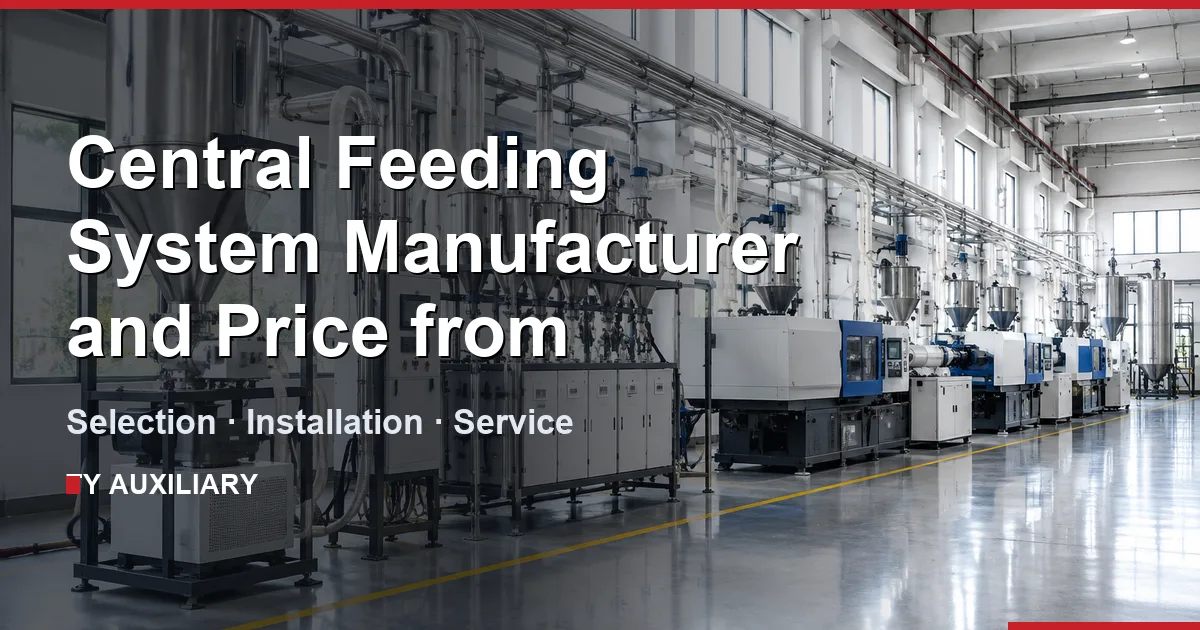
A central feeding system is the backbone of material handling in a modern plastics processing plant, delivering dried resin, regrind, and masterbatch from a single source to multiple processing machines automatically. For procurement managers sourcing from China, the real decision points are not just price but system design capability, component quality, and after-sales support. This guide explains what to evaluate before you request a quotation, so you can compare suppliers on the factors that actually affect uptime and operating cost.
What Does a Central Feeding System Actually Include?
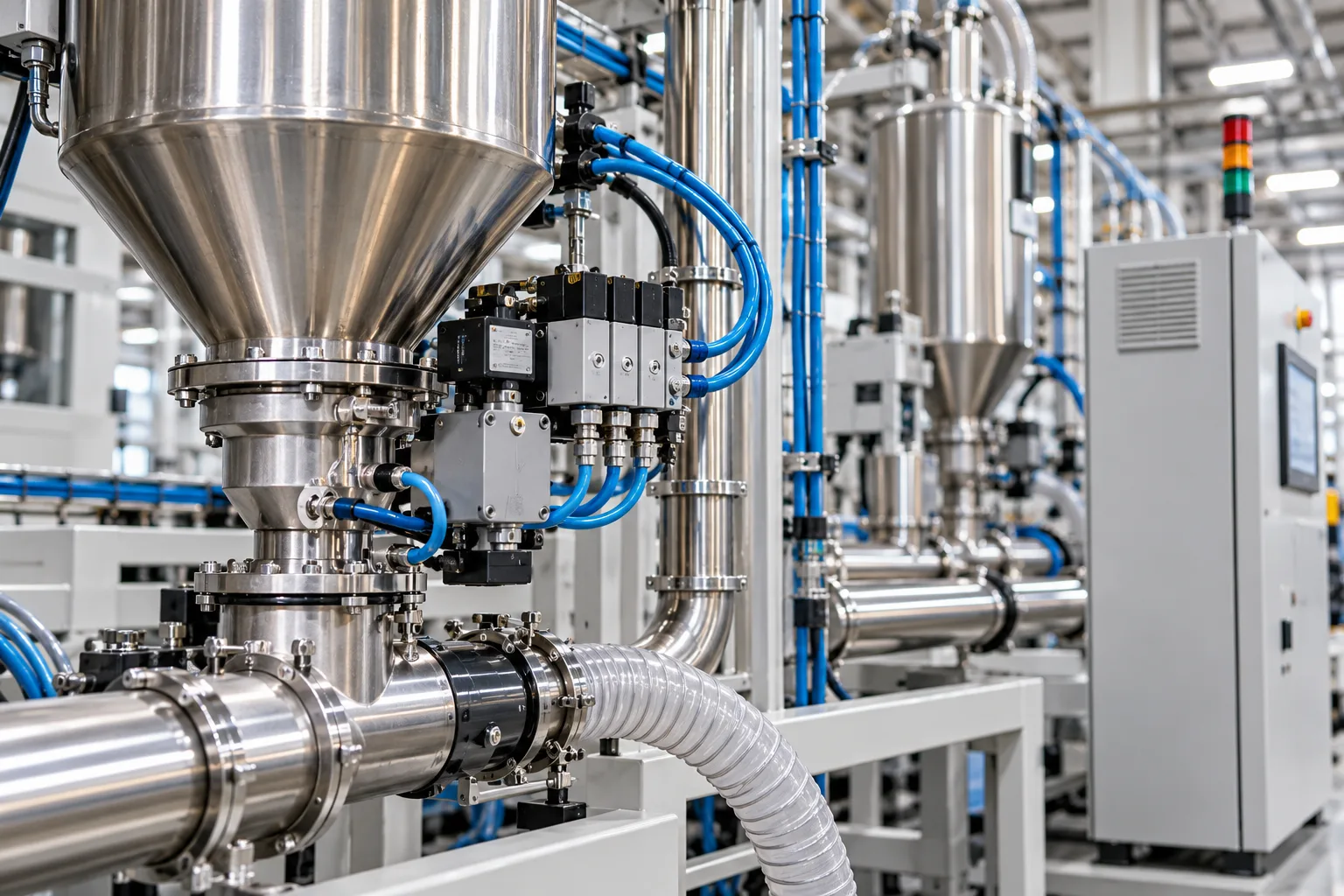
A complete system is more than a few vacuum loaders. When you compare quotations, make sure each supplier is pricing the same scope. A typical configuration includes:
- A central vacuum station, usually with multiple pumps configured for redundancy
- Vacuum receivers or loaders mounted at each processing machine
- Piping, junction boxes, and distribution valves sized for your throughput
- A control panel with dosing and recipe management
- Optional integration with dehumidifying dryers, gravimetric blenders, and metal separators
Clarifying scope early prevents the most common sourcing mistake: comparing a full turnkey quote against one that excludes piping, installation, or commissioning.
How Should You Size the System for Your Plant?
Sizing drives both price and long-term performance. Before requesting quotes, prepare this data for your supplier:
- Number and type of processing machines (injection molding, extrusion, blow molding)
- Hourly material consumption per machine and total plant throughput
- Material types, bulk density, and whether you run hygroscopic resins requiring dehumidifying dryers
- Regrind ratio and whether blending happens centrally or at the machine
- Plant layout, floor-to-floor height, and available routing for pipework
An undersized vacuum station causes slow loading cycles and machine starvation; an oversized one wastes capital and energy. A capable manufacturer will run these calculations with you rather than quoting from a generic spec sheet.
What Determines the Price of a Central Feeding System from China?
Pricing typically ranges widely because the system is engineered to layout, but the main cost drivers are predictable: number of loading lines, vacuum station capacity, stainless versus carbon steel contact parts, level of automation in the control panel, and whether dryers or chillers are integrated. When comparing Chinese suppliers, ask each vendor to break the quotation into core equipment, piping and installation materials, controls, and commissioning services. This makes deviations visible and gives you leverage in negotiation without eroding the specification you actually need.
How Do You Evaluate a Chinese Manufacturer Beyond the Quotation?
Price only matters if the system runs reliably for ten years. We recommend verifying:
- Quality management certification such as ISO9001 and CE marking on electrical components
- Whether motors, vacuum pumps, and control components come from recognizable international brands or are fully in-house
- Project references in your specific segment — ask for contactable overseas customers, not just photos
- Remote diagnostics capability and availability of spare parts in your region
- Engineering support during layout design, not just equipment supply
Suzhou Tongyi Automation Machinery manufactures central conveying systems alongside dehumidifying dryers, mold temperature controllers, chillers, and granulators, which means the entire auxiliary line can be engineered and commissioned as one integrated package under a single supplier responsibility.
What About Installation, Commissioning, and Support?
For overseas buyers, logistics and service are where projects succeed or fail. Confirm in writing who is responsible for shipping terms, on-site installation supervision, operator training, and commissioning documentation. A well-documented handover should include piping diagrams, electrical schematics, an I/O list, and a spare parts recommendation for the first two years. Ask whether remote support is included and what the guaranteed response time is once your plant is running.
Request a Quotation and System Layout
If you are planning a new plant or upgrading from individual loaders, the most useful first step is a layout-based proposal. Send us your machine list, material consumption figures, and plant drawings, and our engineers will return a sizing calculation, a 3D routing proposal, and an itemized quotation. Contact Suzhou Tongyi Automation Machinery to start the conversation with no obligation.