
Central Feeding System Manufacturer Price
Central feeding system price depends on loading points, conveying distance, materials, and automation level, and this guide explains how overseas buyers.

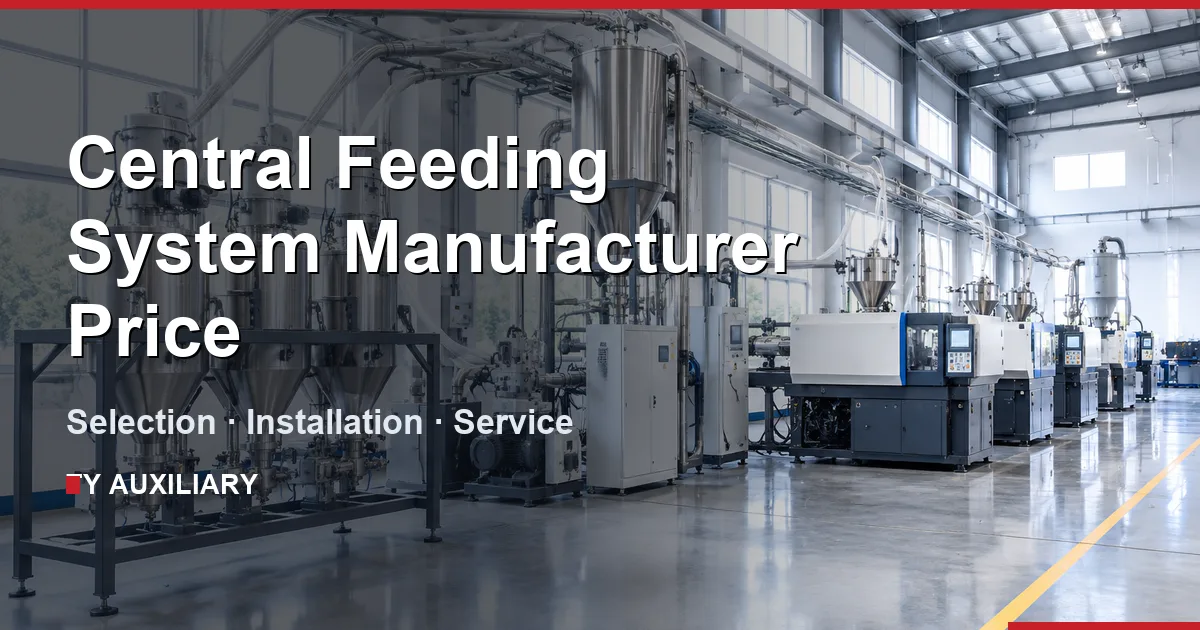
Central feeding system price is one of the first questions procurement managers ask when planning a new plastics processing plant or upgrading an existing workshop — and for good reason, since the investment typically covers much more than the piping itself. A complete system includes loaders, blowers, drying and metering units, and controls, so understanding what drives cost helps you budget accurately and compare supplier quotations on a like-for-like basis.
What Factors Determine the Price of a Central Feeding System?
There is no single fixed price, because each system is engineered around the layout of your plant and the materials you process. The main cost drivers include:
- Number of loading points: Each machine station requires a receiver, and more stations mean more material lines, valves, and controls.
- Conveying distance and layout: Longer horizontal runs, vertical lifts, and complex routing increase blower capacity and pipe requirements.
- Material types: Abrasive glass-filled compounds, powders, or hygroscopic resins like PET require stainless contact parts, dedicated vacuum receivers, or desiccant drying integration.
- Automation level: A basic central blower with manual switching costs far less than a fully integrated system with gravimetric blenders, EU-compliant dust collection, and central touch-screen control linked to your MES.
- Throughput requirements: Higher conveying rates call for larger-diameter piping and more powerful vacuum or pressure blowers.
A small workshop feeding three or four machines over short distances represents a fundamentally different scope than a twenty-machine plant running PET preform production with integrated dehumidifying dryers. Any supplier quoting a fixed figure without reviewing your layout and material data should be treated with caution.
How Should Buyers Compare Quotations Beyond the Headline Number?
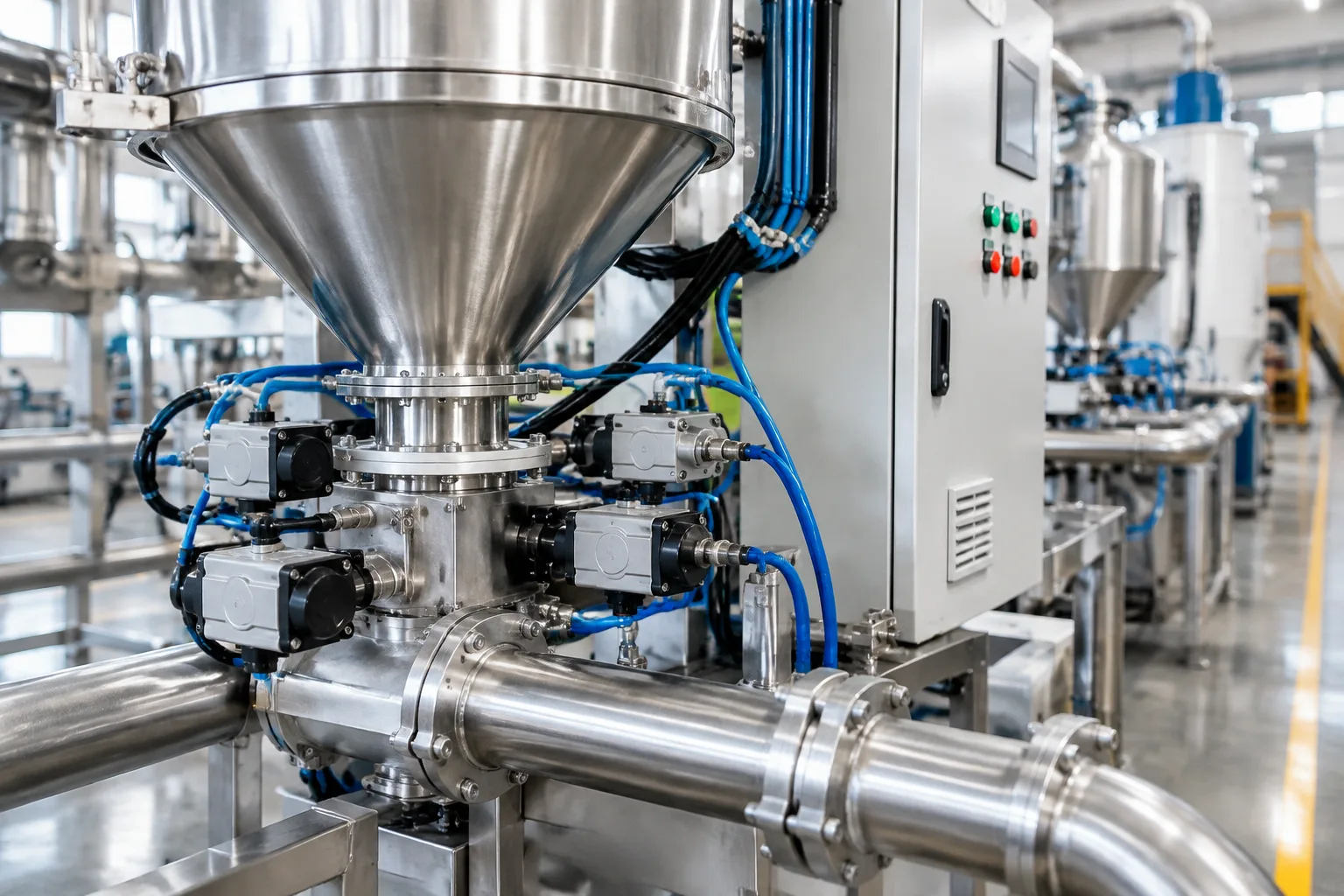
When you receive quotations, the purchase price alone tells you little. Evaluate the total scope against these checkpoints:
- Bill of materials transparency: Confirm the brands and specifications of blowers, vacuum valves, sensors, and the control platform. Lower quotes often hide generic components with short service lives.
- Engineering content: Does the price include layout design, pipe routing drawings, and installation supervision, or are these billed separately?
- Energy consumption: Inverter-driven blowers and demand-based conveying reduce running costs significantly over a system’s life, often offsetting a modest price difference within a few years.
- Spare parts availability: Check whether wear parts such as filters, seals, and hose assemblies are standard items you can source locally.
- Warranty terms: Compare the coverage period, what is excluded, and how remote diagnostics or on-site service is handled for overseas installations.
A structured comparison across these points usually reveals which quotations are genuinely competitive and which are simply incomplete.
Which System Configuration Suits Your Application?
Matching configuration to application is where engineering support matters most, and where the right advice prevents overspending on features you do not need.
Injection molding workshops
Multi-machine plants processing standard resins generally need a central vacuum unit with individual receivers at each press, combined with material-line valves controlled from a central panel. If moisture-sensitive materials such as PC, PA, or PET are in the mix, dehumidifying dryers with integrated conveying and closed-loop drying hoppers should be specified from the outset rather than retrofitted.
Extrusion and PET preform lines
Extrusion applications demand stable, continuous feed with precise moisture control, so the feeding system is usually paired with desiccant dryers, mold temperature controllers, and chillers as a coordinated package. Here the cost of the feeding system should be assessed as part of the complete thermal and material-handling solution, not in isolation.
Regrind and blending
If you process regrind, plan for granulators feeding back into the system, along with proportional blenders or gravimetric dosing at the press. These add cost but recover material value quickly in high-volume operations.
How Do Manufacturer Capabilities Influence Price and Value?
Buying directly from a manufacturer rather than through a trading intermediary typically improves both price and accountability, but the depth of the manufacturer’s own production matters. Suzhou Tongyi Automation Machinery, for example, manufactures industrial auxiliary equipment under an ISO9001 quality management system, with CE-marked products for export markets. When evaluating a supplier, look for evidence of:
- In-house fabrication of key components such as receivers, hoppers, and control cabinets
- Documented quality processes covering welding, pressure testing, and electrical assembly
- Experience integrating feeding systems with dehumidifying dryers, granulators, mold temperature controllers, and chillers from a single coordination point
- Export documentation and shipping experience, since overseas projects require proper crating, labeling, and pre-shipment inspection
A manufacturer that controls its own production chain can also respond faster when you need configuration changes mid-project — something trading companies often struggle to deliver.
What Should an Overseas Buyer Clarify Before Requesting a Quotation?
To get accurate pricing quickly, prepare the following information before contacting suppliers:
- A plant layout drawing showing machine positions, ceiling height, and available space for the central unit
- The number and type of processing machines, plus throughput per machine
- Materials to be handled, including any regrind ratio, fillers, or moisture sensitivity
- Local power supply specifications and voltage
- Whether drying, chilling, or temperature control equipment should be included in the same quotation
Suppliers can then propose a system matched to real conditions instead of guessing, which avoids both undersized installations and inflated quotes padded for unknowns. It also shortens the quotation cycle considerably.
Request a Tailored Quotation from Suzhou Tongyi
Because every central feeding system is engineered to order, the most useful next step is a technical discussion rather than a price list. Share your layout and material requirements with the Suzhou Tongyi Automation Machinery team, and our engineers will propose a configuration with a transparent cost breakdown covering equipment, piping, controls, and installation support. Whether your project involves a handful of presses or a full PET line with dryers, chillers, and granulators, we will help you invest where it counts. Contact us today to start your quotation.