
Central Feeding System Manufacturer Price From
Central feeding system price depends on station count, conveying distance, material type, and control level, so this guide explains what drives cost.

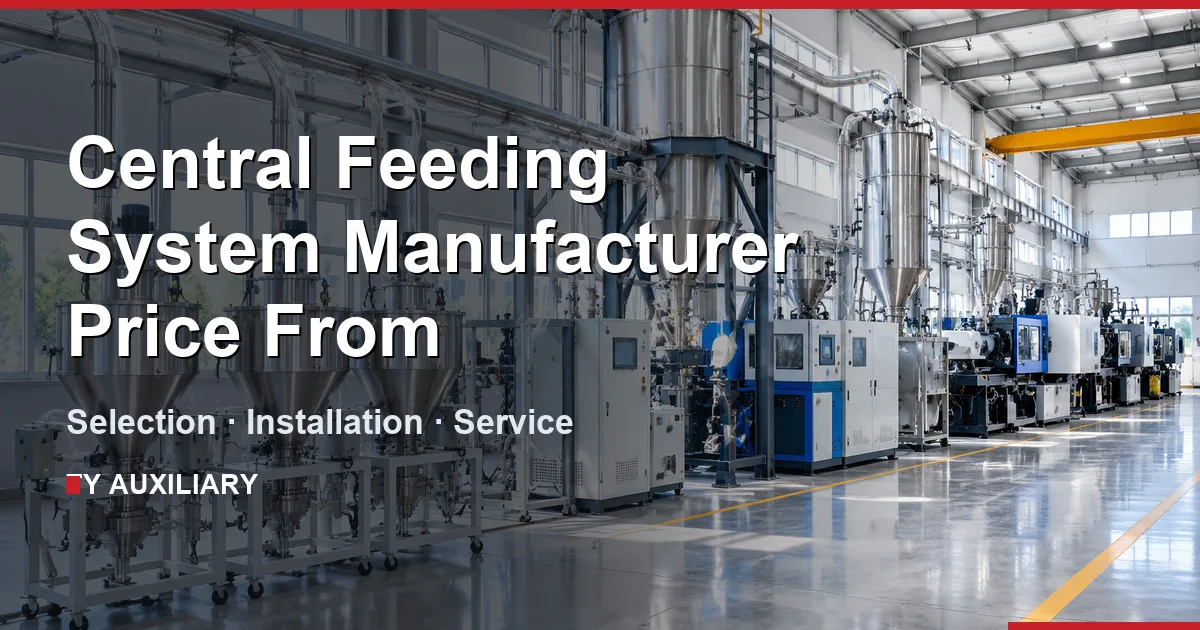
When buyers search for central feeding system price, they are rarely looking for a single number. A central conveying system is engineered around your plant layout, material range, and production volume, so pricing always reflects configuration. This guide explains what actually drives cost, how to compare supplier quotations fairly, and how to request a factory-direct price that matches your real processing needs.
What Factors Determine the Price of a Central Feeding System?
The largest cost drivers are the number of loading stations, conveying distance, and material type. A system serving six hoppers with short runs costs far less than a twenty-station installation with long vertical lifts and multiple bends. Other variables include:
- Vacuum loaders and receivers — quantity and size per machine
- Blower units — single or multiple stations, with or without frequency control
- Piping and bends — stainless versus galvanized steel, diameter, total run length
- Central control unit — basic station selection versus PLC-based control with recipe management, dosing integration, and remote monitoring
- Filter and dust collection — required for filled, hygroscopic, or dusty regrind
Because these choices vary widely between plants, a reputable supplier will quote only after reviewing your layout drawing and material list. Any vendor offering a firm price without those details is estimating, not quoting.
How Should Buyers Compare Quotations Between Suppliers?
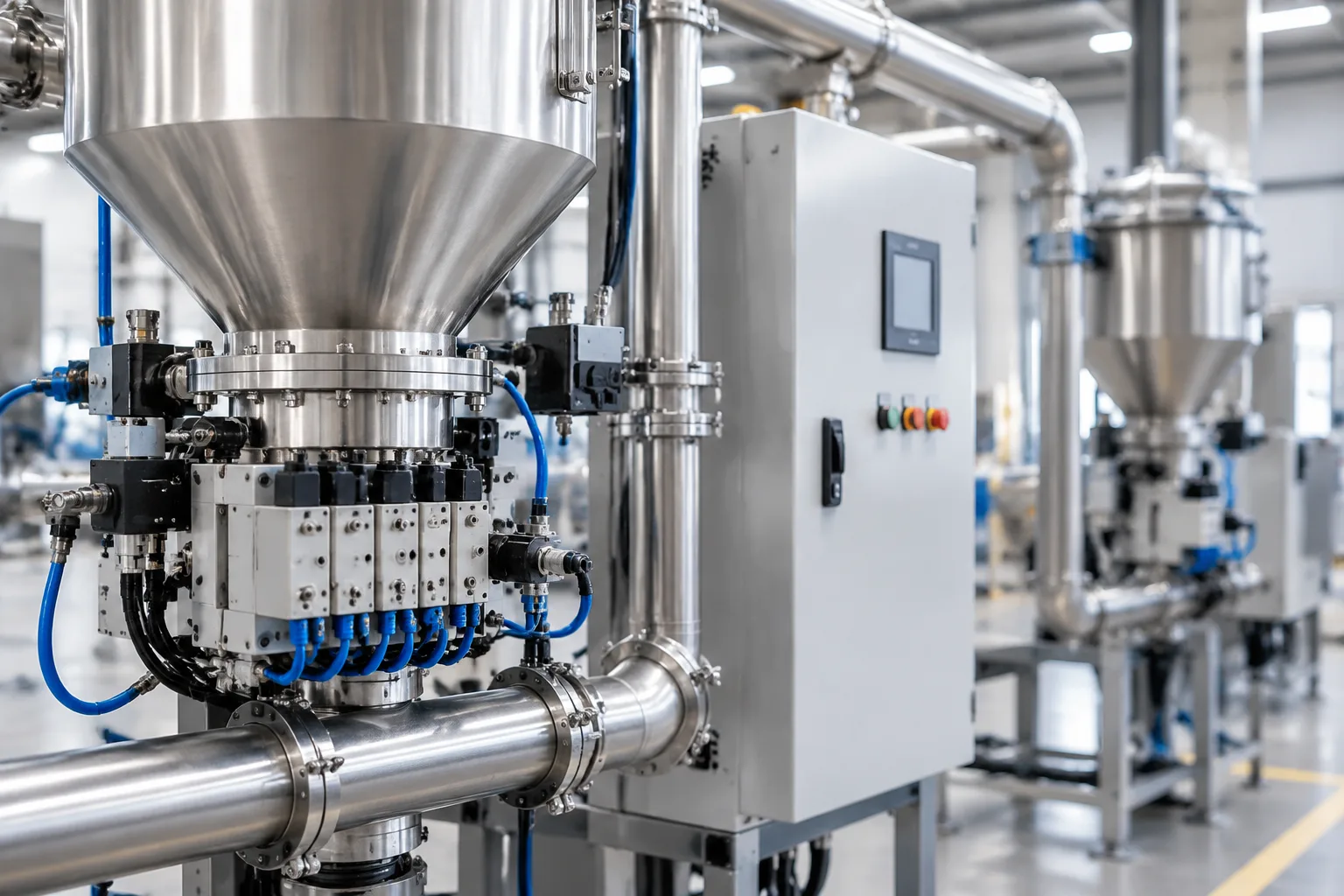
The most common procurement mistake is comparing only the headline figure. Two quotations can differ by 20–30% purely because one includes stainless pipework, insulated loading lines for dehumidified materials, or a higher-specification control cabinet. To compare on equal terms, ask each supplier to break the quotation into equipment, piping and installation, controls, and commissioning.
Also confirm what is excluded. Freight, on-site installation labor, spare filter sets, and after-sales response terms are frequently left out of factory quotations and appear later as add-ons. A transparent quotation itemizes these lines explicitly, which makes total landed cost — not just equipment price — the basis of your decision.
Why Buy Directly From the Manufacturer Instead of a Trader?
For transactional buyers, factory-direct sourcing delivers three practical advantages. First, pricing removes intermediate markups, which typically frees budget for better components rather than a lower-specification system. Second, engineering support comes from the people who design and build the equipment, so layout drawings, hopper sizing, and control logic are resolved during the quoting stage — not discovered during installation. Third, spare parts and consumables ship from the original production line, keeping lead times short for the life of the system.
When evaluating a manufacturer, verify quality-system credentials and ask whether the equipment carries CE marking for your market. Suzhou Tongyi Automation Machinery, for example, operates under an ISO9001 quality management system and supplies CE-certified auxiliary equipment to overseas plastics processors, covering central conveying, dehumidifying dryers, mold temperature controllers, chillers, and granulators as a coordinated line-up.
Which System Configuration Fits Your Plant Best?
Before requesting a price, prepare the information suppliers genuinely need:
- Number and type of processing machines (injection molding, extrusion, blow molding)
- Materials to be conveyed, including regrind and masterbatch percentages
- Plant layout sketch with conveying distances and heights
- Whether materials require drying — a dehumidifying dryer and central drying integration change the control architecture
- Future expansion plans, since blower and control sizing should accommodate additional stations
A small injection shop may only need a compact single-blower system, while a multi-line plant running engineering resins benefits from independent vacuum stations, integrated dosing, and recipe-controlled changeovers. Matching configuration to actual demand is the fastest way to avoid paying for capacity you will never use.
What Should Be Included in a Professional Quotation?
A factory quotation you can act on should contain: a system layout drawing, an equipment list with technical parameters, the scope of supply for piping and controls, installation and commissioning terms, warranty conditions, and estimated delivery time. It should also state the incoterms — FOB, CIF, or DAP — so freight and insurance are not ambiguous.
If a quotation omits any of these, request the missing items before proceeding. Suppliers who respond promptly and completely at the quotation stage usually demonstrate the same discipline during manufacturing and after-sales support, which matters more over a ten-year equipment life than a small difference in initial price.
How Can You Get an Accurate Factory-Direct Price?
Send your machine list, plant layout, and material specifications to the manufacturer directly. A structured inquiry allows the engineering team to propose the right configuration and return a costed, itemized proposal rather than a generic estimate. Suzhou Tongyi Automation Machinery provides system design, quotation, and after-sales support for central conveying systems and complete auxiliary equipment packages for plastics plants worldwide. Contact our team with your project details and receive a factory-direct proposal tailored to your production requirements — the most reliable way to turn a search for central feeding system price into a system that performs on your floor.