Preventing Material Contamination in Multi-Machine Conveying
Black specks, colour carry-over and wrong-resin shots in a central conveying system. Where contamination enters and the purging routine that stops it.

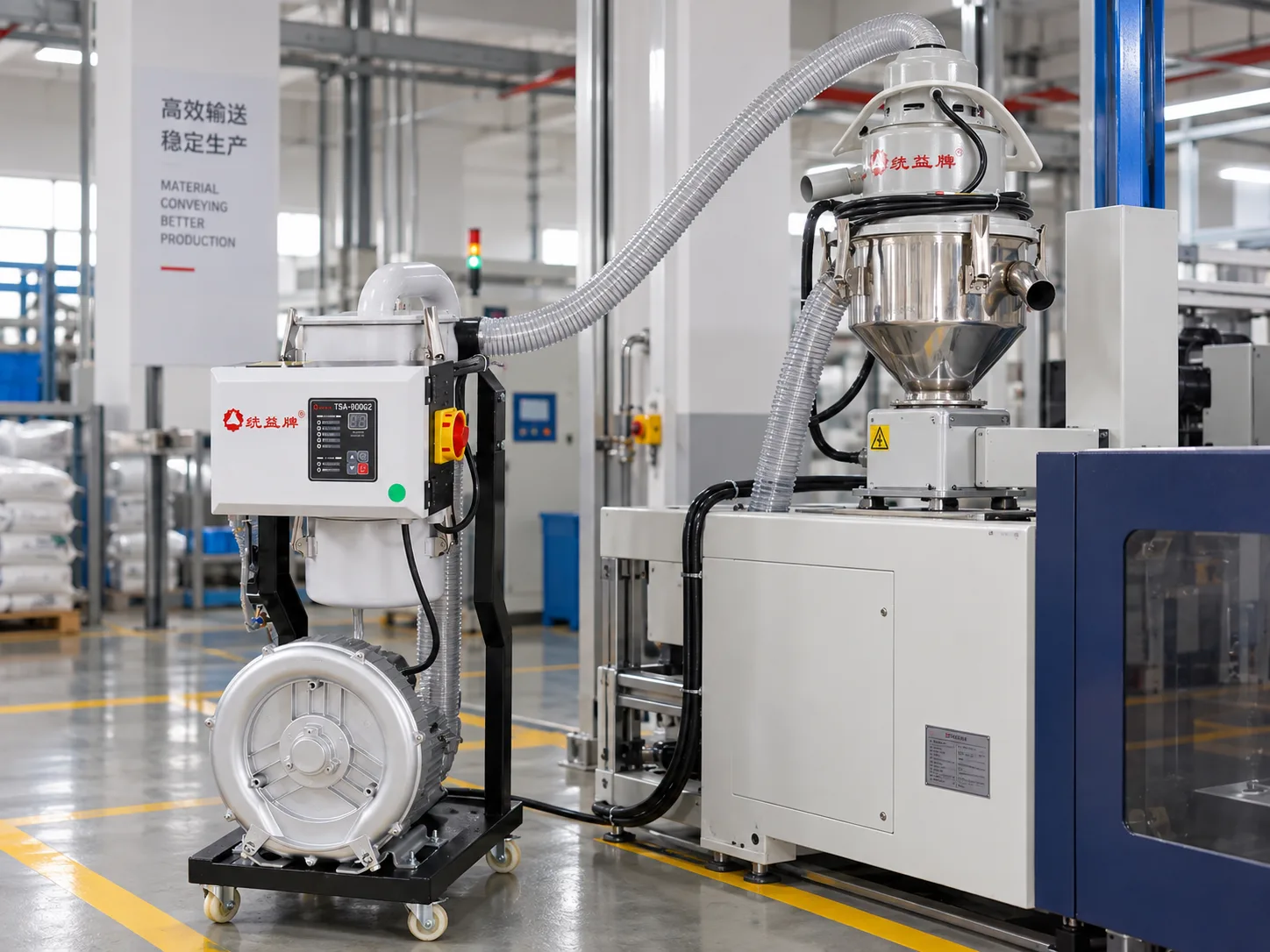
Contamination in a central conveying system is almost always introduced at four points: the material change, the filter, the pipe run and the hopper. Each has a different signature, and fixing the wrong one wastes time while the defects continue.
The good news is that a conveying system, unlike a machine, can be designed to prevent contamination rather than cleaned until it stops.
Where does contamination actually enter?
| Point | Symptom | Fix |
|---|---|---|
| Material change | first shots after change are off-colour | purge routine with measured shot count |
| Filter | slow conveying, occasional foreign specks | scheduled filter replacement |
| Pipe run | specks that appear intermittently at one machine | pipe cleaning pig, correct pipe material |
| Hopper | contamination only on one machine | hopper clean-out and lid discipline |
| Regrind circuit | black specks, degraded material | separate line or dedicated filter |
Why is the material change the main culprit?
Resin sits in horizontal runs, in bends and in the receiver between cycles. A line 30 metres long with a 50 mm pipe holds roughly 60 litres of volume — several kilograms of material that will not leave unless it is pushed or sucked out.
Without a purge routine, the first shots after a change contain the previous resin. The common mistake is to run the system empty and assume it is clean, when a significant quantity remains in the lower bends.
What does a working purge routine look like?
Five steps, in order:
- Run the line dry until the receiver stops discharging.
- Disconnect at the machine and blow through with air, or run a purge material (regrind or a dedicated cleaning granule) through the full line.
- Empty and clean the receiver — the filter and the discharge flap are the two places material hides.
- Document the shot count that clears the previous colour; use it next time instead of guessing.
- Record who did it and when — contamination problems are almost always traceable to a changeover that was not completed.
How should the piping be designed to reduce risk?
Three design choices reduce contamination without adding cost:
- Minimise horizontal runs and sharp bends — every bend holds material that gravity will not clear.
- Keep runs as short as the layout allows — shorter pipes hold less material and purge faster.
- Avoid dead legs — a branch that is rarely used collects material and releases it unpredictably.
These choices are made at the layout stage. Retrofitting them later means rebuilding the pipe network.
What about regrind circuits?
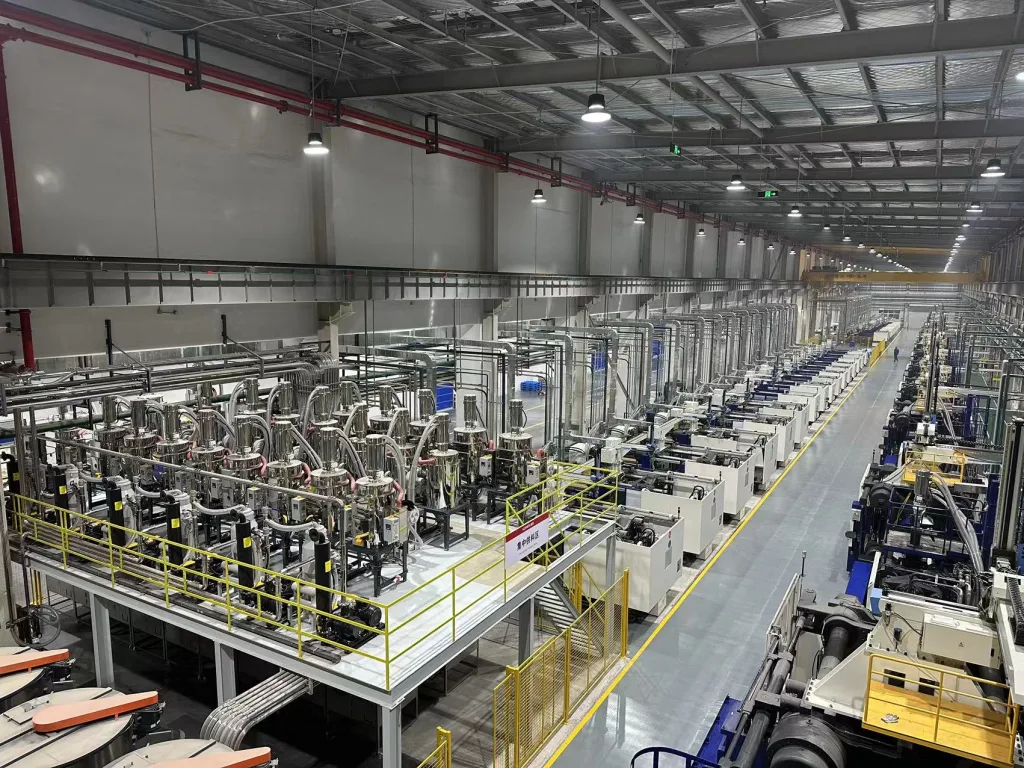
Regrind carries dust and occasional foreign material, and a shared circuit will distribute both. Where regrind is conveyed, the usual arrangement is a dedicated line with its own filter, or conveying regrind only to the machine that produced it.
Mixing regrind from several machines into one silo also mixes materials — a problem in plants running more than one resin, and a frequent cause of “unexplained” colour variation.
Where to go next
The centralized feeding system is where piping layout and purging provisions are defined, and the centralized feeding controller can log which material was routed where, which shortens the investigation when contamination appears.
Tell us your material list and changeover frequency and our engineers will propose a layout with the purge points marked.