
Vacuum Loader vs Central Conveying: Which Fits Your Plant?
One loader per machine or one central vacuum station? Distance, material count and change frequency decide, and the crossover is earlier than most expect.

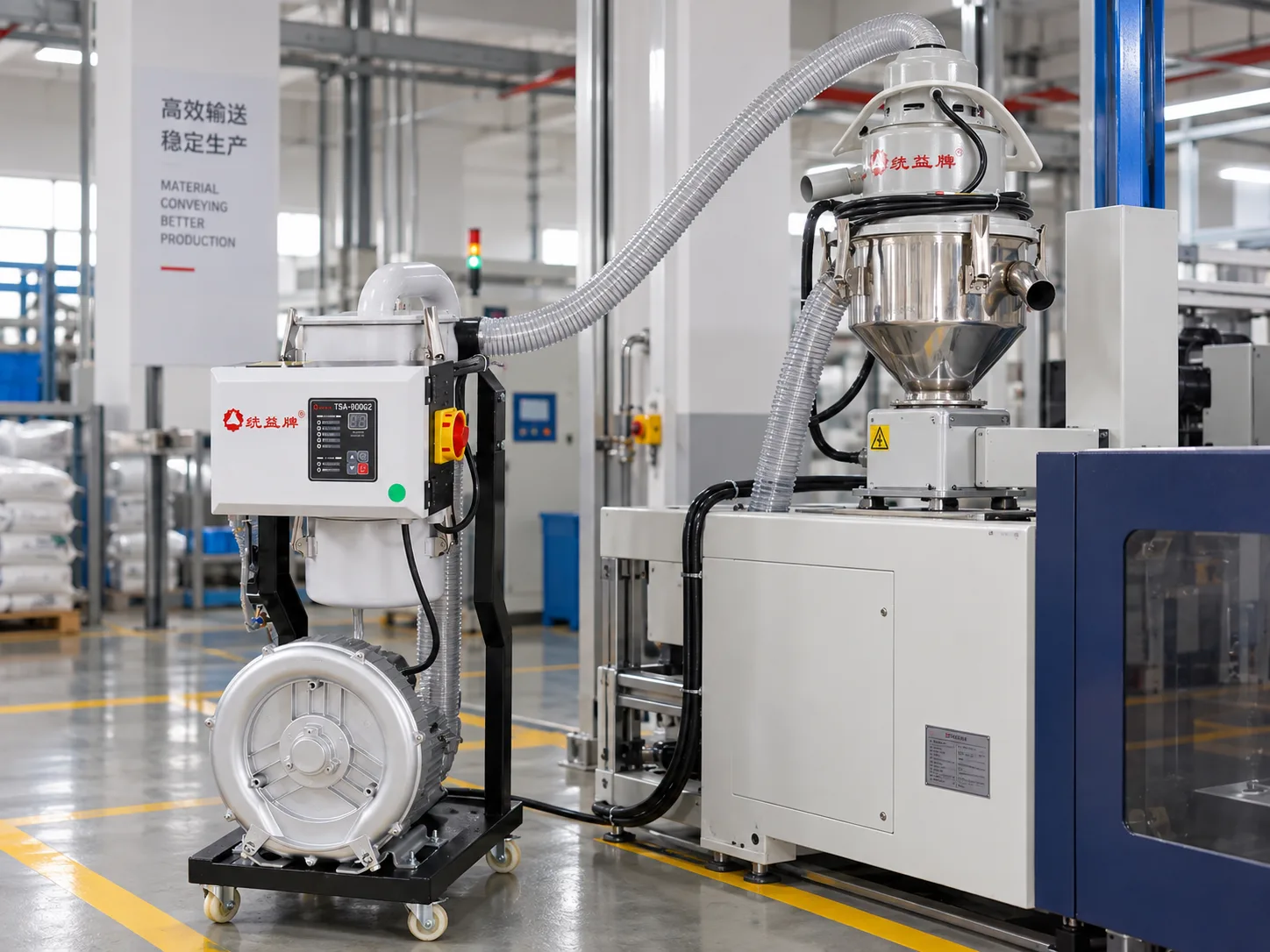
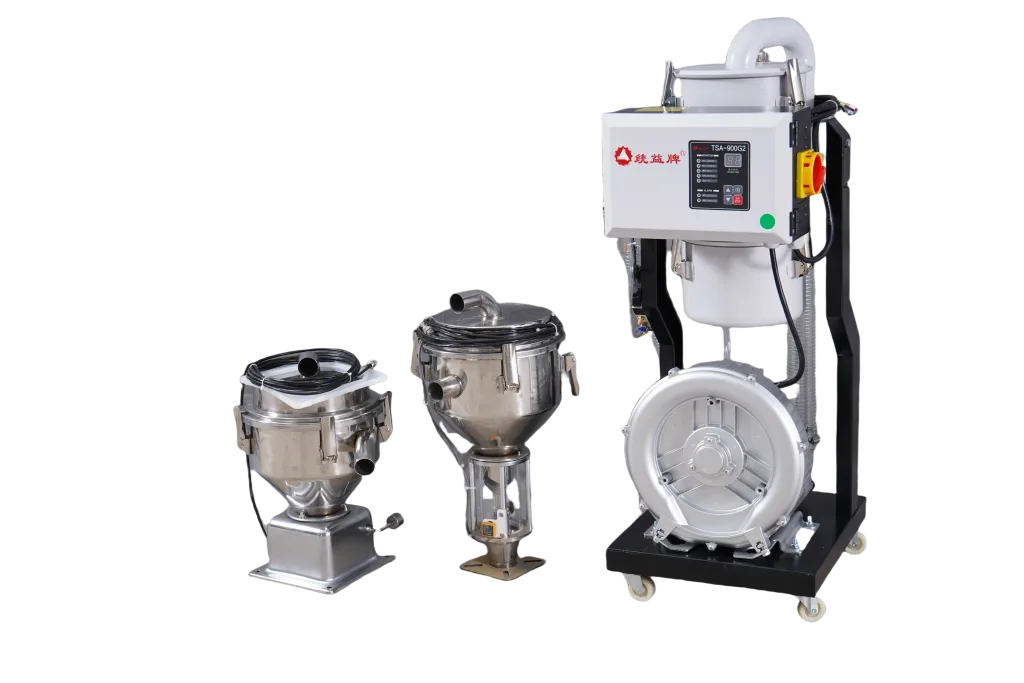
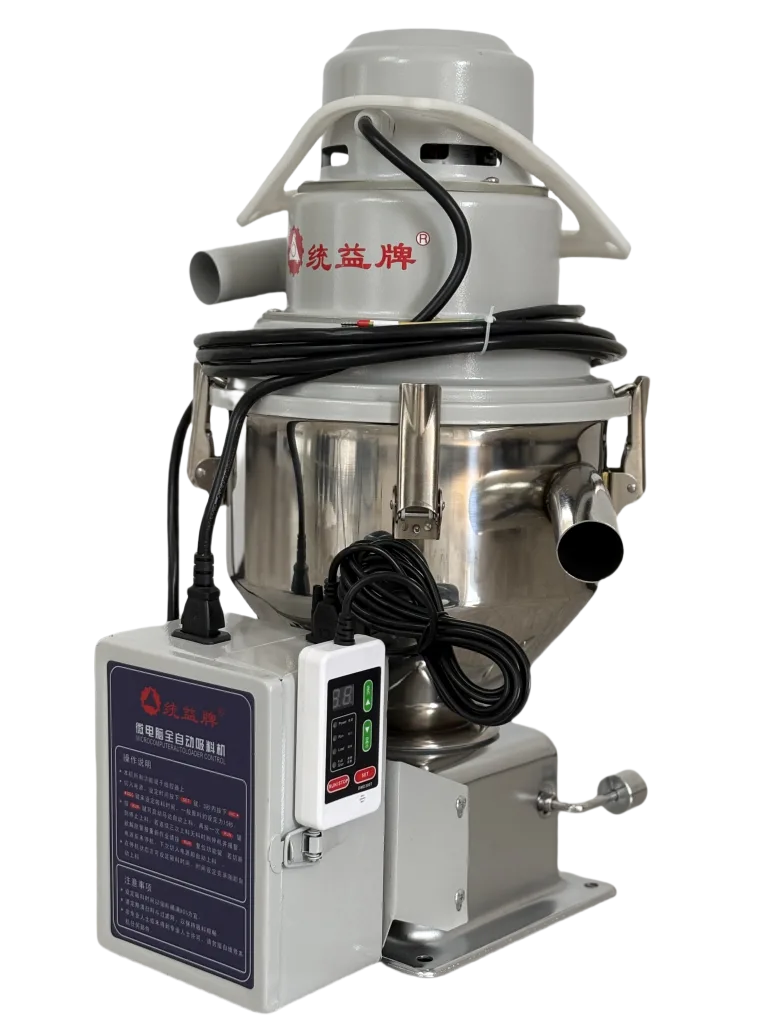
A single vacuum loader sits on one machine and draws from a nearby container; a central conveying system uses one vacuum station to feed many machines through fixed piping. The decision is driven by distance, the number of materials in play and how often they change.
The usual crossover is around four to six machines within 30 metres of a common material source. Below that, individual loaders are simpler and cheaper; above it, central conveying starts to win on labour and floor clutter.
What are the real differences?
| Factor | Single loader | Central conveying |
|---|---|---|
| Best at | 1–4 machines, short distances | 5+ machines, shared material source |
| Piping | none | fixed network, designed up front |
| Refilling | manual, per machine | automatic from a central station |
| Material change | quick, local | needs line purging |
| Floor clutter | containers at every machine | one material area |
| Failure impact | one machine | whole line on that circuit |
Why does distance matter so much?
Vacuum conveying loses pressure with distance and with every bend. Beyond roughly 30–40 metres of developed length, a single-stage blower struggles to move material at the required rate, and the design switches to a higher-pressure roots blower with a larger pipe diameter.
That changes the economics: short runs favour individual loaders, while long runs make the central system’s blower investment worthwhile because it replaces many small motors with one efficient one.
How does material count change the answer?
A plant running one resin on eight machines is the ideal central case: one source, one pipe network, one vacuum station. A plant running eight different resins on eight machines is closer to the opposite — each line needs its own circuit and purging between changes, and the piping multiplies.
Where several materials are in play, the usual compromise is central conveying for the high-volume resin plus individual loaders for low-volume and special colours.
What gets underestimated in central systems?
Three things:
- Purging between materials — every change requires running the line clean; without a purge routine, the first shots after a change contain the previous resin.
- Piping layout — bends, vertical lifts and long horizontal runs all cost capacity. A layout designed after the machines are placed is always worse than one designed before.
- Filtration and maintenance access — filters need changing, and a filter installed above a machine that requires scaffolding will not be changed.
Can the two be combined sensibly?
Yes, and most plants end up there. Central conveying handles the main resin from a silo or dryer; individual loaders handle regrind, colour batches and low-volume materials at the machines that need them. That combination keeps the piping simple and the flexibility high.
Where to go next
The automatic vacuum loading series covers machine-side supply for single loaders, while a centralized feeding system handles multi-machine distribution from one source. Where drying is also centralised, the three-in-one unit combines drying and conveying in one machine.
Send us your machine layout, material list and distances and our engineers will model both options with the piping and blower sizing included.