
Central Feeding System Manufacturer for Plastic
Learn how to select a central feeding system manufacturer for your plastics plant, from material specification and supplier capability to integration.

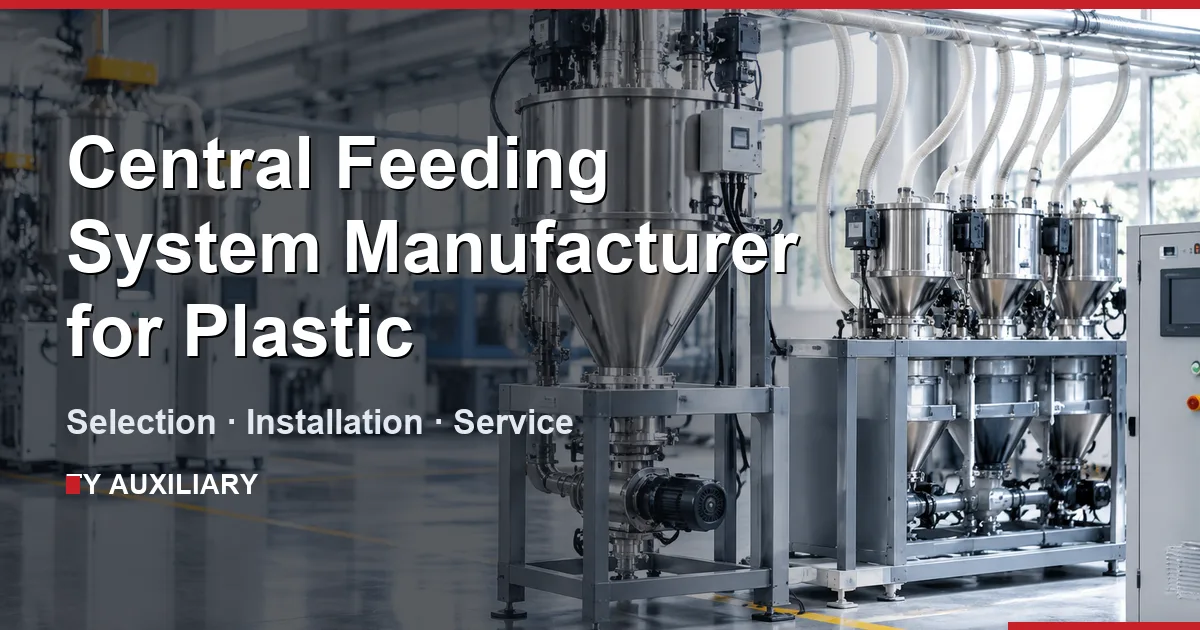
Choosing the right central feeding system manufacturer is one of the most consequential purchasing decisions a plastics plant will make. A well-engineered system quietly moves resin, regrind and additives to every machine around the clock; a poorly specified one produces material cross-contamination, frequent blockages and production stops that cost far more than the equipment itself. This guide explains what buyers should evaluate before committing to a supplier.
What Does a Central Feeding System Actually Do in a Plastics Plant?
A central feeding system replaces individual machine-mounted loaders with a shared network of vacuum conveyors, piping, receivers and a central control panel. Raw material is drawn from bulk storage or silos, filtered, dried if required, and delivered automatically to each injection molding machine or extruder on demand. The practical benefits are significant: one operator can manage material supply for dozens of machines, dust exposure drops, and color or material changeovers become faster and cleaner.
Because the system sits between storage and every production machine, its reliability directly shapes overall plant uptime. This is why procurement teams should treat supplier selection as an engineering decision, not simply a price comparison.
How Should You Specify a System for Your Facility?
Accurate specification starts with a materials audit rather than a floor plan. Before requesting quotations, document:
- The full range of resins processed, including bulk density, pellet size and moisture sensitivity
- Whether regrind and masterbatch will run through the same lines, and how blending ratios are controlled
- Required conveying distances and vertical lifts from storage to each machine
- Future capacity plans, since pipe sizing and pump selection should leave headroom
Sensitive materials such as PET, PA and PC require dehumidifying dryers integrated with the conveying loop, while hygroscopic resins delivered without drying will show defects regardless of molding quality. A capable supplier will ask for this data before proposing a layout; a distributor selling standard packages usually will not.
What Separates a Capable Manufacturer from a Trader?
The market includes genuine manufacturers, trading companies and assembly shops, and the differences show up years after commissioning. Key indicators of real manufacturing capability include:
- In-house fabrication of core components such as vacuum receivers, station housings and control cabinets
- The ability to customize pipe routing, station counts and controls to your specific layout
- Documented quality processes and compliance with recognized standards such as ISO9001 and CE for exported equipment
- Spare parts availability and remote technical support across time zones
Suzhou Tongyi Automation Machinery, for example, manufactures a full range of auxiliary equipment — central conveying systems, dehumidifying dryers, mold temperature controllers, chillers and granulators — allowing a plant to source the entire downstream chain from one supplier with matching interfaces and a single point of accountability.
Which Questions Should You Ask Before Signing a Contract?
A structured enquiry protects both parties and filters out suppliers who cannot deliver. We recommend requesting:
- A material flow diagram and equipment list tailored to your machine count and layout
- Clarification of what is included: installation, commissioning, operator training and documentation
- Warranty terms, response time commitments and the location of service support
- References from plants processing comparable materials, and evidence of certifications claimed
Buyers should also confirm electrical standards for their market and clarify voltage and control-language requirements early. Small omissions here become expensive delays during installation.
Why Does Integration with Dryers, Chillers and Granulators Matter?
A feeding system rarely operates alone. Dried resin must travel from dryer to machine without re-absorbing moisture, so insulated takeoff stations and closed-loop conveying matter for engineering resins. Chillers and mold temperature controllers govern cycle times and part quality, while granulators feed regrind back into the loop, where proper blending stations prevent ratio drift. Sourcing these units as one integrated package simplifies controls, reduces interface failures and gives maintenance teams a single supplier to call when something stops.
How Do You Move Forward with a Supplier?
Start with a short technical exchange rather than a purchase order: share your machine list, materials and plant layout, and ask the supplier to propose a configuration with clear reasoning. Reputable manufacturers will respond with a tailored proposal, sizing calculations and honest answers about what their equipment can and cannot do. If you are evaluating central feeding systems for a new plant or an upgrade of an existing workshop, the engineering team at Suzhou Tongyi Automation Machinery welcomes these technical discussions and can support projects from layout design through installation and after-sales service. Request a proposal with your production details, and compare the answers you receive — the quality of that first response is usually an accurate preview of the partnership.