
Direct Cooling in Water Mold Temperature Control
The TMC Series lists direct cooling, but the page does not define the circuit design. Learn what to ask the supplier before specifying this feature.

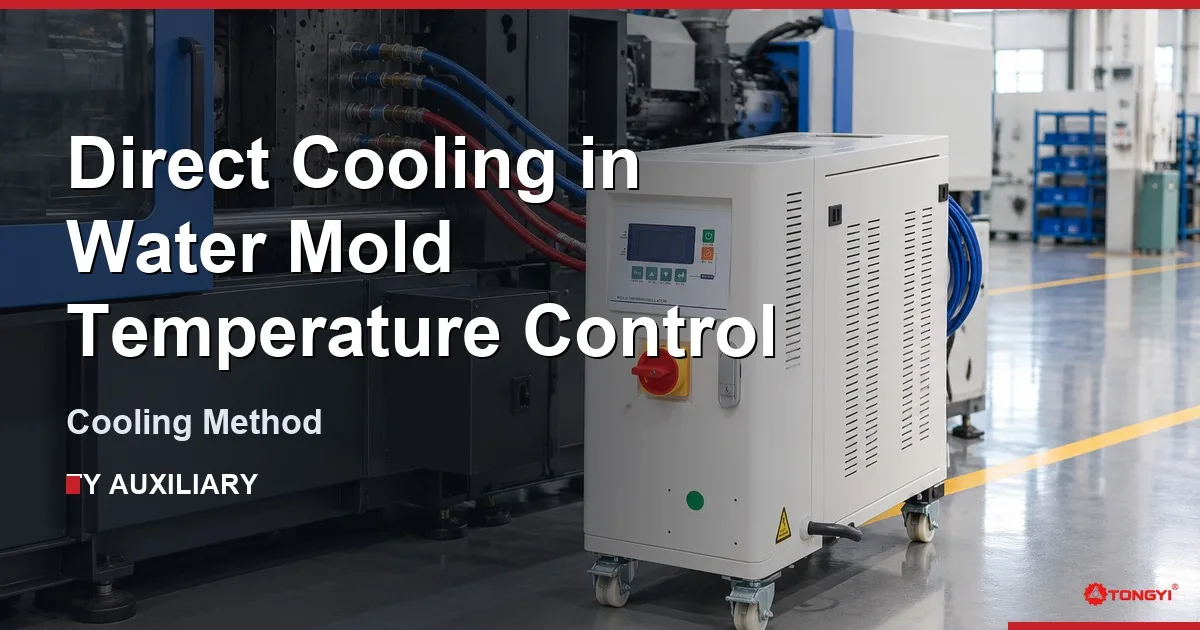
The TMC Series specification table lists the cooling method as direct. The product page does not define the internal design or the heat-exchanger arrangement for a quoted configuration. Ask the supplier to explain the design and connections for your site.
How does direct cooling actually work in a water type mold temperature controller?
Do not infer how direct cooling works from the label alone. Confirm which water circuits are connected, how the unit controls cooling, and what plant-water conditions and site requirements apply to the quoted model.
The product page does not explain the direct-cooling circuit or state that plant water enters the mold loop. Ask the supplier to describe the water paths, connections, and isolation requirements for the exact model.
What are the key factors in deciding between direct and indirect cooling?
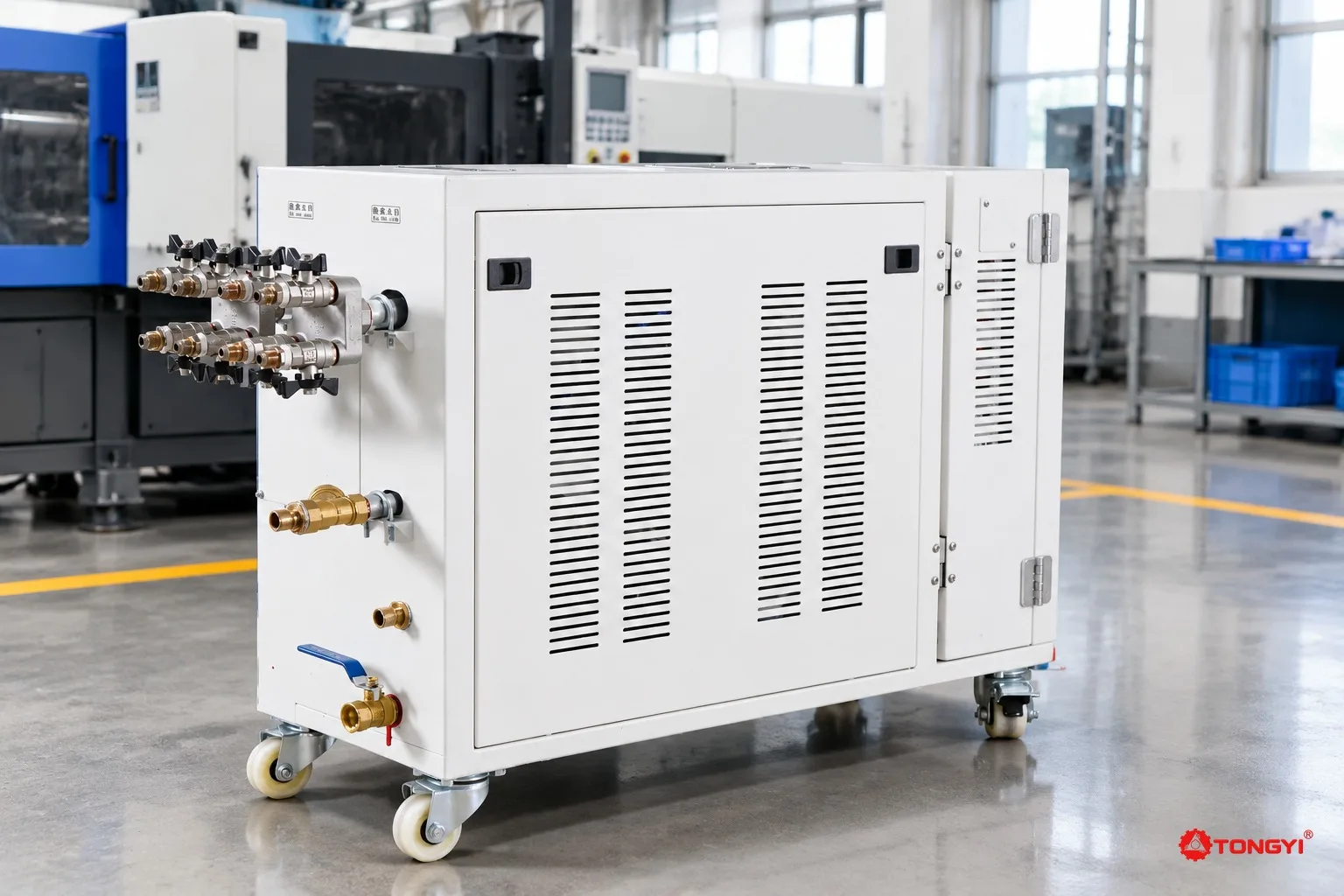
The word “direct” alone is not enough to describe the circuit or compare it with an indirect design. Ask each supplier for a diagram or written explanation of the heat-removal path and any separation between plant water and mold-loop water.
| Consideration | Direct cooling | Indirect cooling |
|---|---|---|
| Heat exchange location | Internal circuit within the controller | Separate heat exchanger stage |
| Plumbing footprint | Simpler loop between controller and mold | Additional exchanger and piping |
| Plant water contact with loop | Loop water is exchanged with plant supply water | Loop water remains isolated from plant water |
| Typical fit | Mold circuits that tolerate plant water exchange | Circuits needing strict loop isolation |
Use this comparison as a discussion framework with your supplier rather than a purchase decision on its own — the right choice depends on your plant water quality, mold design, and process requirements.
Which applications suit a direct cooling configuration?
Whether a direct-cooling configuration is suitable depends on its actual design and the site water and mold-circuit requirements. Confirm those details with the supplier; the product page does not state a cooling rate or cycle-time effect.
If your process requires separation between water circuits, state that requirement in the RFQ and ask the supplier to confirm the quoted design. Do not infer isolation from a cooling-method label.
How should a buyer verify the cooling configuration with a supplier?
The most reliable step is to ask the supplier to point to the cooling method line in the product specification sheet — on the TMC Series, that line reads “direct” — and then walk through exactly what that means for your mold circuit. A useful set of questions includes:
- How is the cooling circuit plumbed inside the unit, and where does plant cooling water enter and exit?
- How is cooling actuated and modulated in relation to the setpoint?
- What connection sizes and port arrangements does the model offer for supply and return?
- Are there any plant water quality or pressure conditions the buyer must meet for the cooling circuit to operate as designed?
- What documentation, wiring, and installation guidance is provided for hooking the unit to a specific mold?
Getting the circuit description in writing before ordering helps both sides check that the quoted configuration matches the site and mold-circuit requirements.
What should a procurement team include in a quote request?
A strong quote request for a water type mold temperature controller with direct cooling should state the process type, the mold’s heating and cooling circuit design, the target operating temperature range, the required pump and heating capacity class, and the plant’s available cooling water conditions. Including the intended controller-to-mold distance and connection preferences helps the supplier propose the correct model and configuration rather than a generic match.
Ask each supplier to confirm the cooling method line from their specification table, describe the cooling circuit arrangement for your application, and state what installation support and documentation are included. Comparing quotes on this like-for-like basis is far more meaningful than comparing headline specifications alone, and it gives your engineering team the information needed to validate the proposal before purchase.
Why does the cooling method line deserve a closer look before you buy?
The cooling method line is easy to skim past, yet it determines how the unit behaves during every cooling demand in your cycle. A controller listed as direct cooling, like the TMC Series, handles cooling through its internal circuit, which is a proven and straightforward arrangement — but it assumes your mold circuit and plant water conditions are compatible with that design. Verifying the configuration with the supplier, in the context of your actual mold, converts a spec-table entry into a working installation plan and protects both your schedule and your process quality.
Frequently asked questions
Is direct cooling suitable for every mold circuit?
The product page lists the TMC Series cooling method as direct but does not describe water exchange or circuit isolation. Ask the supplier to explain how the quoted model cools the circulating water and whether it meets your site requirements.
Does direct cooling require a separate heat exchanger?
No. In a direct configuration, the cooling exchange takes place through the controller’s internal cooling circuit, so no external heat exchanger stage is added to the loop. That keeps the plumbing between the controller and the mold simpler and more compact at installation.
What plant information should I give the supplier before ordering?
Provide the process type, mold circuit design, target temperature range, available cooling water conditions, controller-to-mold distance, and connection preferences. With these details, the supplier can confirm whether the direct cooling method in their specification table matches your intended installation.
How do I confirm what “direct” means for a specific model?
Ask the supplier to walk through the cooling method line in the specification sheet, explain the internal circuit arrangement, and describe how cooling is actuated for your application. Request written confirmation so your engineering and procurement teams share the same understanding before ordering.
See the Water Type Mold Temperature Controller TMC Series page for the published model specifications.
Last updated: October 30, 2026