
K-Type Thermocouples in Mold Temperature Control
The TMC Series lists a K-type thermocouple probe. Review sensor placement, wiring, and compatibility questions before connecting a controller to a mold.

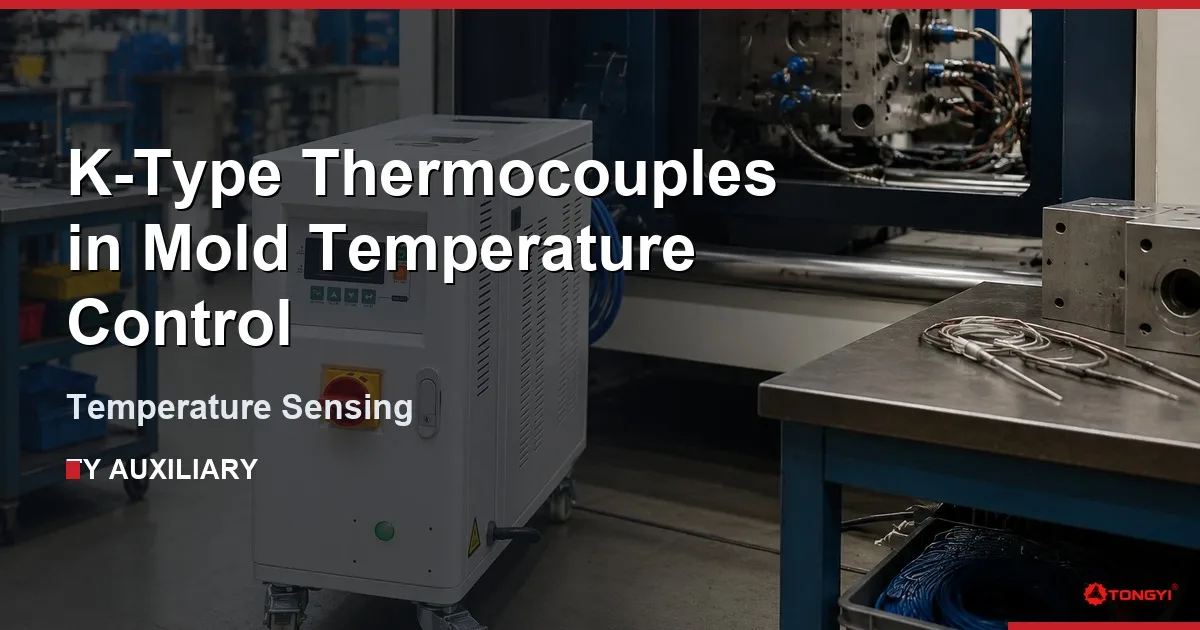
A K type thermocouple for mold temperature controller applications is the standard temperature sensing element specified on many molding machines, including the TMC Series, which lists a K-type probe thermocouple as its sensor. It converts temperature at the mold or probe into a millivolt signal the controller uses to hold your setpoint.
What does a K type thermocouple actually do in a mold temperature controller?
It measures the process temperature and feeds that reading back to the controller, which then adjusts heating (and, where applicable, cooling) to keep the mold or medium at setpoint. The K type — a nickel-chromium versus nickel-aluminum junction — is the most widely used thermocouple type in plastics processing because it offers a broad usable range, an industry-standard output curve, and broad compatibility with controllers and replacement parts.
In practical terms, if the sensor reads low, the controller drives the heater too long and the mold runs hot; if it reads high or drifts, the mold runs cold and cycle quality suffers. That is why sensor type, condition, and placement matter as much as the controller itself.
Why is the K type the default choice for molding temperature sensing?
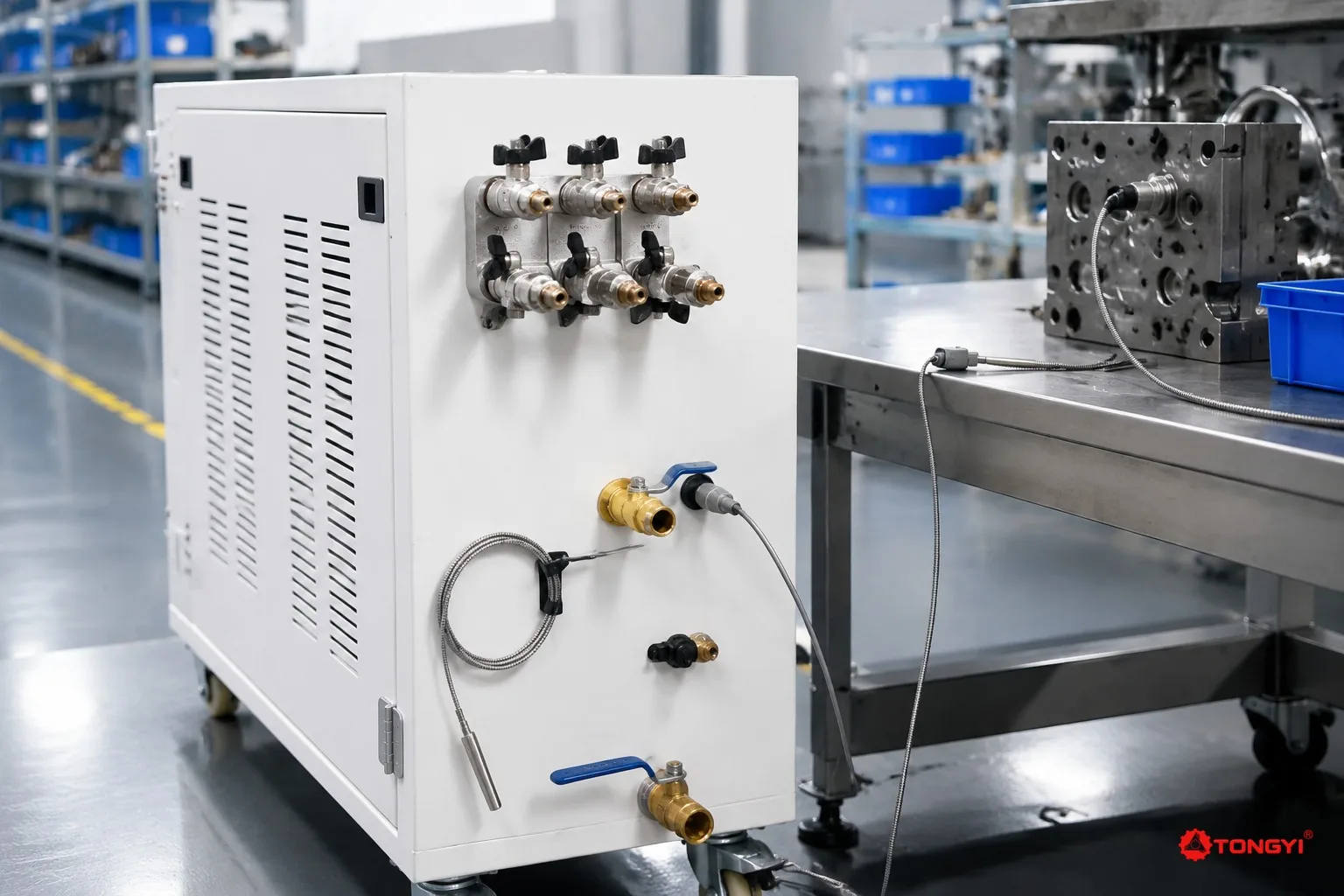
Three reasons recur across process engineering teams:
- Standardization. K type is the common thermocouple standard in North American molding plants, so spare probes, extension wire, and replacement controllers are easy to source.
- Range coverage. The K type covers the temperatures typical of mold temperature controller work with a single sensor type.
- Controller support. Controllers such as the TMC Series are designed around a K-type probe thermocouple, so matching the sensor to the controller avoids calibration and signal-matching issues.
How do thermocouple types compare for mold temperature controller work?
While K type dominates, it is worth understanding the alternatives so you can confirm what your mold and controller documentation actually require:
| Thermocouple type | Typical role in molding | Key consideration |
|---|---|---|
| K type | Standard probe for mold temperature controllers, including the TMC Series | Broadest parts availability and controller compatibility |
| J type | Older equipment and some legacy molds | Different output curve — not interchangeable with K without controller reconfiguration |
| PT100 (RTD) | Laboratory and high-precision process monitoring | Different signal type; confirm controller input compatibility before substituting |
The practical takeaway: never swap sensor types across a controller without verifying the input configuration. A K-type controller expects a K-type signal.
Where should the thermocouple be placed, and how should it be wired?
Sensor placement and wiring should be checked against the machine and mold documentation. Placement determines what temperature is being measured, so confirm the specified location and measurement method before comparing the controller display with mold readings.
For wiring, the reliable practice is to confirm three things before startup:
- Polarity. Thermocouple leads are polarity-sensitive; a reversed connection reads backwards.
- Extension wire type. Use matching thermocouple extension wire — substituting ordinary copper wire introduces errors at the connection.
- Connector and jack condition. Damaged plugs, loose jacks, and work-hardened leads are among the most common causes of erratic temperature readings on the shop floor.
What should buyers check for compatibility with the TMC Series?
The TMC Series mold temperature controller lists a K-type probe thermocouple, so the sensor type is established by the machine. The items worth confirming with your documentation before ordering spares or connecting a mold are:
- The probe style and connection format used on your unit, so replacement probes fit without modification.
- What your molds and hot runner systems specify — if a mold carries its own sensors, confirm how they integrate with the controller.
- Input configuration on any controller you plan to pair with existing tooling, so sensor and controller agree on thermocouple type.
Keeping sensor and wiring details with the mold setup records can help technicians check compatibility during a changeover and reduce the chance of a wiring mismatch.
What does good maintenance look like for thermocouple-based control?
Thermocouples are consumable sensing elements — they drift and eventually fail. A practical maintenance routine for a molding plant includes:
- Inspecting probes at every mold change for bent sheaths, corroded braid, and damaged connectors.
- Comparing controller readings against an independent reference periodically, so drift is caught before it affects parts.
- Stocking spare K-type probes matched to your controllers, because a failed sensor typically takes the machine down until it is replaced.
Because the sensor and controller work as a pair, ordering them together — or specifying a controller such as the TMC Series with its listed K-type probe thermocouple — simplifies spare-parts management.
How should you specify a mold temperature controller for your next project?
When requesting a quote, include the mold connection format, heater requirement, cooling requirement, process temperature range, and sensor arrangement. The TMC Series lists a K-type thermocouple probe; confirm sensor type, wiring, and placement against the machine and mold documentation before ordering.
Frequently asked questions
Are K and J type thermocouples interchangeable on a mold temperature controller?
No. They have different output curves, and a controller configured for one type will misread the other. Confirm the controller’s input configuration and the sensor type specified in your machine and mold documentation before substituting any probe.
Why is my mold temperature controller reading erratically?
Erratic readings most often trace to the sensor side: reversed polarity, damaged extension wire, loose or corroded connectors, or a failing probe. Inspect the full sensor path first before assuming the controller electronics are at fault.
Does the TMC Series use a K type thermocouple?
Yes. The TMC Series product page lists a K-type probe thermocouple as its sensor. For probe replacement and mold integration details, confirm the specific connection format against your machine’s documentation before ordering spares.
Can I use ordinary copper wire to extend a thermocouple lead?
No. Thermocouple signals depend on the junction of the two thermocouple metals, and copper introduces additional junctions that cause reading errors. Use matching thermocouple extension wire for any run between the probe and the controller.
See the Water Type Mold Temperature Controller TMC Series page for the published model specifications.
Last updated: October 30, 2026