
Energy-Saving Gas Mold Temperature Controller Types
This guide explains the main types of energy-saving gas mold temperature controllers, how to match temperature range and heating power to your molds.

An energy-saving gas mold temperature controller regulates mold temperature during injection molding using gas as the primary heating energy source, cutting heating costs compared with fully electric resistance heating while holding mold temperature stable within tight tolerances. Units are classified by heat-transfer medium (water or oil), cooling method, and heating capacity, and selecting the right type depends mainly on your required mold temperature and process thermal load.
What are the main types of mold temperature controllers?
Mold temperature controllers fall into two broad families defined by their heat-transfer medium. Water-type units circulate clean water and typically serve processes up to 120 °C, making them the standard choice for most common thermoplastics. Oil-type units use thermal oil for higher temperature ranges, typically 150–180 °C and above, for engineering resins and high-heat applications.
Within each family, units are further differentiated by cooling method and heating power. Direct cooling injects cooled water into the circuit for fast response, while indirect cooling uses a heat exchanger to protect the pump and seals. Heating power—usually expressed in kW—determines how quickly the unit can bring a mold up to setpoint and how well it recovers temperature after part ejection.
How does a gas-heated unit save energy?
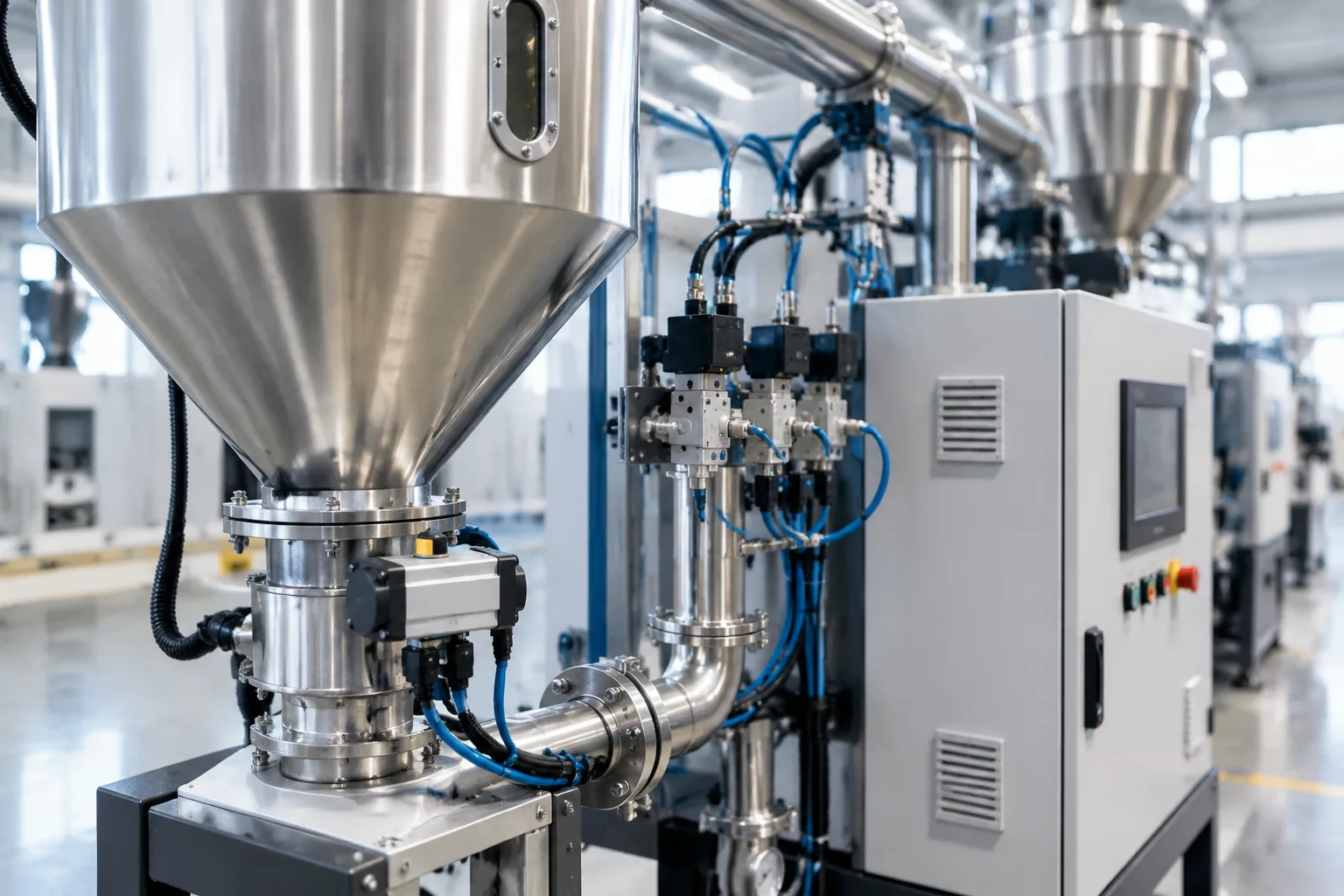
A gas mold temperature controller replaces part or all of the electric resistance heating with a gas-fired heat source. In regions where industrial gas is significantly cheaper per kWh than electricity, this conversion lowers operating cost per molding hour. Energy savings also come from the control strategy rather than the fuel alone:
- Modulating heat input. Instead of full-power on/off heating, the controller matches output to the actual thermal demand of the mold.
- Accurate closed-loop control. Tight temperature control (within a few degrees of setpoint) reduces scrap and rework, which is often a larger cost than the heating energy itself.
- Efficient cooling switchover. Direct cooling restores setpoint quickly after mold opening, so the heater runs less overall.
- Proper sizing. An oversized unit cycles wastefully; an undersized unit never stabilizes. Correct kW sizing is the single biggest efficiency lever at specification stage.
Which temperature range and medium should you choose?
Start from your material’s mold temperature requirement. Most commodity plastics—PP, PE, ABS, PS—mold in the 30–90 °C range, where a clean-water unit rated to 120 °C is the economical and practical answer. Engineering resins such as POM, PA and PC often need 100–120 °C, still within water-unit territory. Above that, oil-type or higher-temperature systems are required.
For buyers evaluating the water-type category, our TMC series illustrates how the range is structured. All TMC models use clean water as the heat-transfer medium, a 120 °C maximum temperature, and direct cooling, with the minimum controllable temperature set at cooling water temperature +5~30 °C. The models differ in electric heating and pump power:
| Model | Medium | Max temp | Cooling | Heating power | Pump power |
|---|---|---|---|---|---|
| TMC 60W | Clean water | 120 °C | Direct | 6 kW | 0.37 kW |
| TMC 120W | Clean water | 120 °C | Direct | 12 kW | 0.75 kW |
| TMC 240W | Clean water | 120 °C | Direct | 24 kW | 1.5 kW |
A practical reference point: the TMC 120W, with 12 kW of heating power and a 0.75 kW pump, is a common fit for mid-size injection molds running conventional thermoplastics, while smaller tools with low thermal mass can step down to the TMC 60W without paying for unused heating capacity.
How do you size a unit for your mold?
Sizing comes down to matching heating power and pump flow to the mold’s thermal demand. As a working method, buyers should confirm three figures with their molder or toolmaker:
- Mold weight and target temperature. Heavier molds and higher setpoints need more heating power to reach setpoint in acceptable time.
- Cycle thermal load. The heat removed by the part and mold opening per cycle determines the steady-state energy the unit must replace.
- Circuit flow and pressure drop. The pump must deliver adequate turbulent flow through every cooling channel; undersized pumps cause uneven mold surface temperature even when heating power is sufficient.
Where any of these figures is uncertain, choose the next model up in the series. In the TMC range, stepping from a 12 kW to an 18 kW or 24 kW unit costs little extra energy at part load because a properly controlled unit only draws the power the mold actually demands.
What should overseas buyers check before ordering?
Cross-border procurement of a mold temperature controller succeeds or fails on specification clarity. Before issuing a purchase order, confirm:
- Power supply compatibility. Match the unit’s voltage and frequency to your plant standard (for example 3-phase 400 V/50 Hz versus 220 V/60 Hz) and confirm at quotation stage.
- Control interface. If your molding machines use a central monitoring system, specify the required communication protocol so the temperature controller integrates cleanly.
- Water quality and cooling supply. Water-type units need a clean circuit and a cooling water supply at the stated temperature; hard or dirty water shortens service life, so plan filtration if needed.
- Compliance documentation. Work with manufacturers operating under a certified quality system—our own production is ISO9001-certified and CE-marked equipment is available—and request the certificates and test reports with the offer, not after delivery.
- Spare parts and support. Confirm which wear parts (pump seals, heaters, sensors) are stocked and how they ship to your region.
How do water-type and oil-type units compare on cost?
For most overseas buyers the choice is straightforward once the temperature requirement is known. Water-type units are generally cheaper to buy and operate within their range, use a harmless medium, and offer faster heat transfer than oil. Oil-type units cost more upfront and need periodic oil replacement, but they are the only practical option above roughly 120 °C. If your product mix stays within the 30–120 °C band, specifying a water-type unit—and saving the oil-type premium for the one high-temperature job that genuinely needs it—delivers the best total cost of ownership.
Frequently asked questions
Can a water-type unit replace an oil-type unit at the same temperature?
Below 120 °C, yes in most cases. Water transfers heat faster than oil, so water-type units often stabilize mold temperature more quickly. Verify your actual mold temperature requirement first; if it sits near or above 120 °C, an oil-type system is the safer choice.
What does direct cooling mean in practice?
Direct cooling introduces cooling water directly into the heating circuit when the measured temperature exceeds setpoint. It responds faster than indirect cooling through a heat exchanger, which helps after mold opening when temperature drops and the unit must recover quickly.
How do I know which kW rating I need?
Base the rating on mold weight, target temperature and cycle time. Small to mid-size molds running commodity resins typically suit 6–12 kW units; larger or hotter molds need 18–36 kW. Your toolmaker can confirm the thermal load, and we can match it to a specific model.
What information should I send for a quotation?
Send mold weight, target mold temperature, required heating and pump power if known, your local power supply, and any control or certification requirements. With these details we can recommend a model such as the TMC 120W or a larger unit and quote accurately.
Last updated: October 27, 2026