
TMC-60W vs TMC-90W: Comparing Model Specs
See how the TMC-60W and TMC-90W differ in published heater and pump ratings, and what process data to confirm before choosing between the two models.

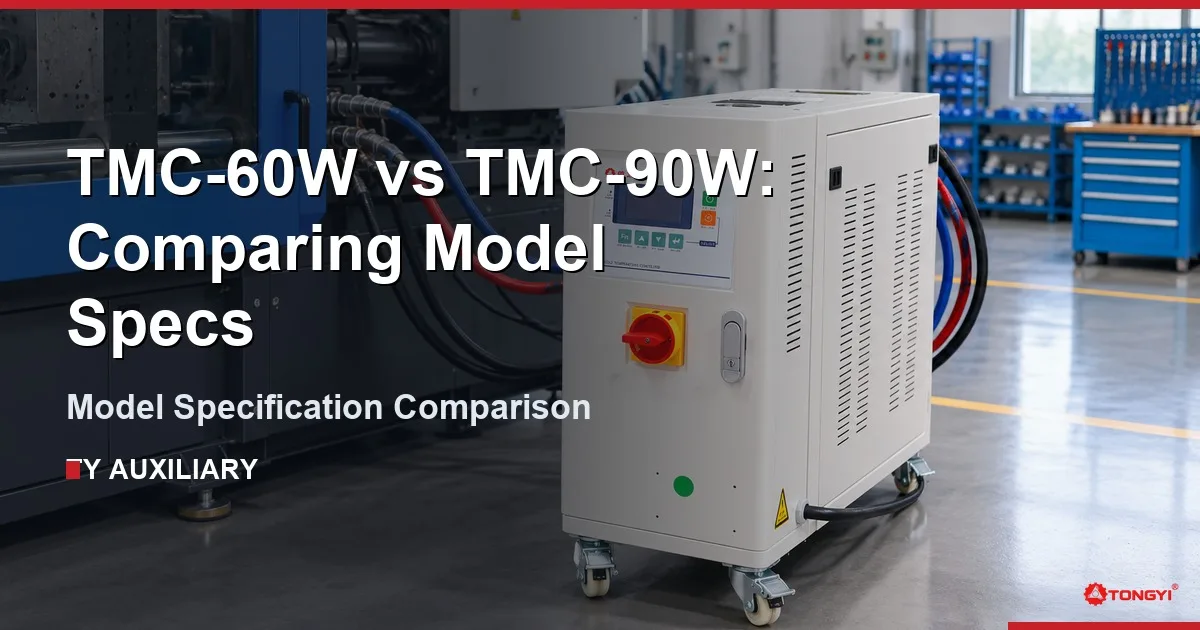
The TMC-60W vs TMC-90W water mold temperature controller comparison comes down to heating capacity and flow: the TMC-60W delivers 6 kW of heating with a 42 L/min maximum flow, while the TMC-90W steps up to 9 kW of heating and a 60 L/min maximum flow. Both are water-unit models rated to 120°C, so the right choice depends on your mold size, cycle demands, and process load calculation.
What is the difference between the TMC-60W and the TMC-90W?
The TMC-60W is listed with a 6 kW heater, 0.37 kW pump, 42 L/min maximum flow, and 0.35 MPa maximum pressure. The TMC-90W is listed with a 9 kW heater, 0.75 kW pump, 60 L/min maximum flow, and 0.4 MPa maximum pressure. These ratings describe the models; they do not by themselves establish heat-up time or temperature stability on a particular mold.
| Specification | TMC-60W | TMC-90W |
|---|---|---|
| Heater power | 6 kW | 9 kW |
| Pump power | 0.37 kW | 0.75 kW |
| Maximum flow | 42 L/min | 60 L/min |
| Maximum pressure | 0.35 MPa | 0.4 MPa |
| Maximum temperature | 120°C | 120°C |
| Heat transfer medium | Clean water | Clean water |
Which mold applications suit the TMC-60W?
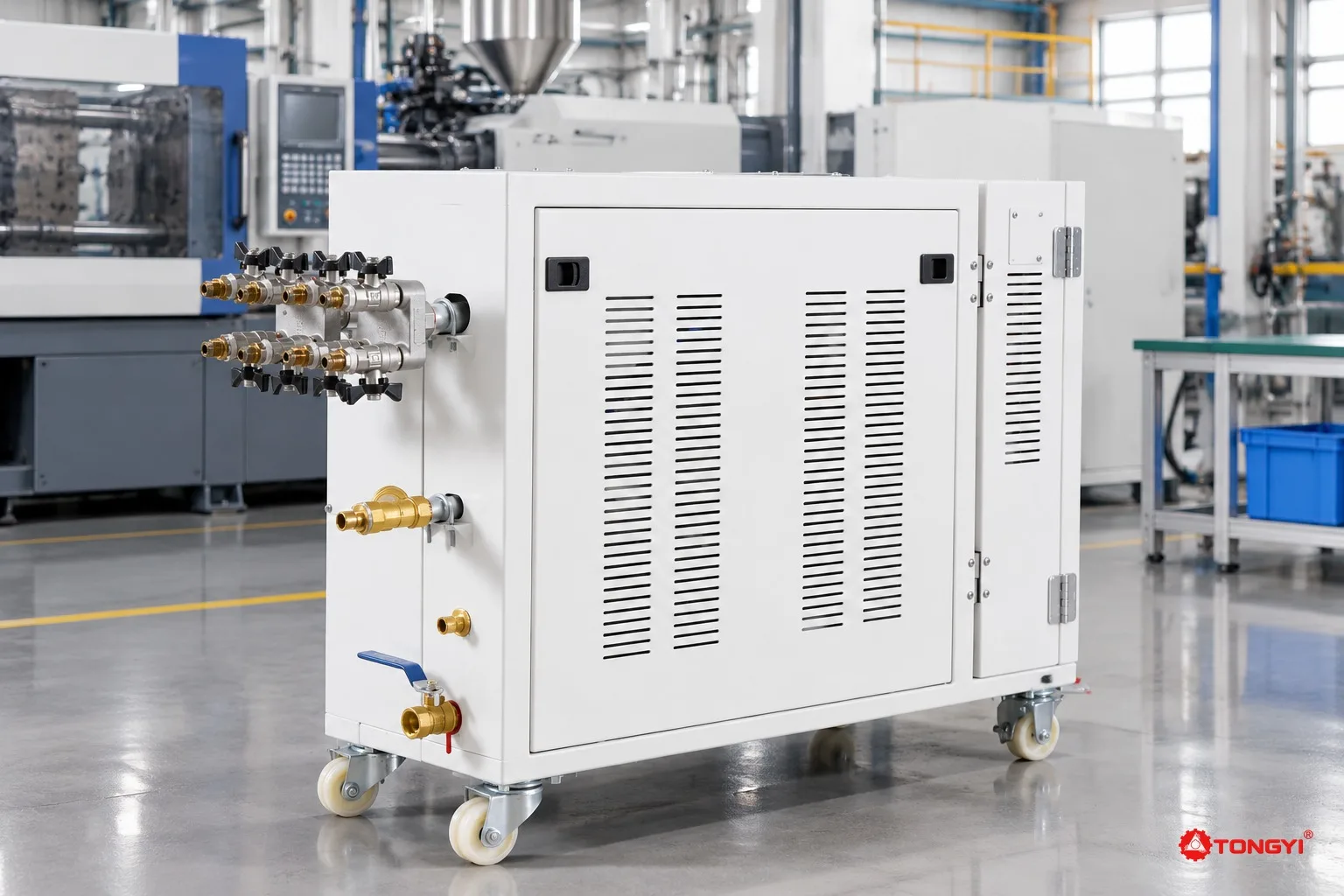
The TMC-60W is listed with a 6 kW heater and 42 L/min maximum flow. Those ratings do not establish suitability for a mold size, cavity count, or process; compare them with the documented requirements and ask the supplier to confirm the application.
- Smaller mold surface areas with limited channel volume
- Steady, continuous production where thermal load is predictable
- Facilities that value a compact footprint and lower pump power draw (0.37 kW)
The TMC-60W has a lower listed heater and maximum-flow rating than the TMC-90W. Whether either model meets a process requirement depends on the mold, utilities, and operating conditions, so confirm the heat load and circuit requirements before selecting a unit.
When should you step up to the TMC-90W?
The TMC-90W has a 9 kW heater, 0.75 kW pump, 60 L/min maximum flow, and 0.4 MPa maximum pressure. Compare those published values with the calculated process requirement and ask the supplier to confirm suitability for the mold circuit.
- Larger molds or multi-cavity tools with greater channel volume
- Applications where heat-up time and recovery between shots affect output
- Lines where you want headroom so the controller is not running at its limit
If a calculated requirement is close to a listed maximum, ask the supplier to review the operating margin and expected conditions. The product page does not quantify component life or control stability at a given load.
How do you size a mold temperature controller correctly?
Sizing starts with a process load calculation — never with a guess. You need to know how much heat the mold absorbs and how much flow is required to carry that heat through the channels at your target temperature. Ask your process engineer or mold maker to estimate the thermal load, then match it against the heater power and maximum flow of each model.
- Thermal load: estimate the heat the mold loses per cycle and confirm the heater can replenish it with margin.
- Flow requirement: verify the required circulation rate against the unit’s maximum flow — 42 L/min for the TMC-60W, 60 L/min for the TMC-90W.
- Pressure drop: longer or narrower channels increase resistance; the TMC-90W’s 0.4 MPa maximum pressure gives more allowance than the TMC-60W’s 0.35 MPa.
- Temperature range: both units reach 120°C using clean water; if your process requires higher temperatures, a water unit at this rating will not be sufficient and you should discuss oil-based alternatives with your supplier.
Neither model should be declared suitable for a specific mold without this calculation. A supplier who asks for your mold and process details before recommending a unit is doing their job.
What should you include in a quote request?
To get an accurate quotation and a correct model recommendation, provide more than a model number. A useful RFQ includes:
- Mold dimensions, number of cavities, and cooling/heating channel layout
- Target process temperature and required temperature stability
- Estimated thermal load or cycle data from your process engineer
- Available power supply specification at your facility
- Water quality, since both units are specified for clean water
With this information, a supplier can confirm whether the TMC-60W or TMC-90W fits — and flag it early if your process actually needs a different class of unit entirely.
How do you decide between the two models for your line?
Use the process load estimate and the circuit requirements to compare the TMC-60W and TMC-90W ratings. Do not infer purchase cost, energy use, or production performance from the model ratings; request a written sizing review before ordering.
Frequently asked questions
Do the TMC-60W and TMC-90W both run on water?
Yes. Both models use clean water as the heat transfer medium and are rated to a maximum temperature of 120°C. They are water-unit controllers, so water quality should meet the supplier’s clean-water specification to protect the pump and heater.
Is the TMC-90W always the better choice?
The TMC-90W has higher listed heater and pump ratings than the TMC-60W. The product page does not establish the effect on purchase cost, energy use, or production results. Compare the published values with your requirements and obtain a supplier review.
Can I connect either model to a mold without a load calculation?
Do not select either model from the comparison alone. Provide the mold heat-load estimate and circuit details to the supplier and request a recommendation tied to the published specifications and intended operating conditions.
See the Water Type Mold Temperature Controller TMC Series page for the published model specifications.
Last updated: October 30, 2026