Understanding the 120°C Temperature Rating
The TMC Series lists a 120°C maximum temperature. Learn what that rating means, what it does not establish, and what to confirm against your process.

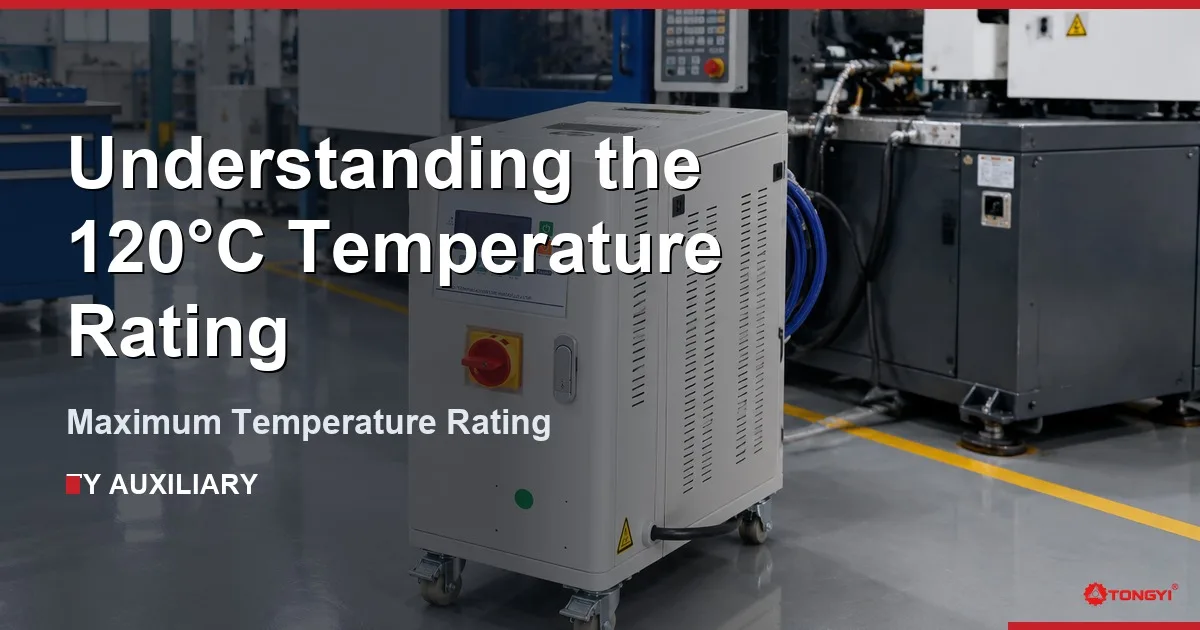
The TMC Series product page lists 120°C as the maximum temperature for the models shown. Treat this as a published equipment limit, not a guaranteed mold temperature or a promise of a particular process result. Confirm your operating requirement and application with the supplier.
What does the 120°C maximum temperature rating actually mean?
The 120°C figure is the upper limit of the controller’s heating and circulating capability when water is the heat transfer medium. It is a maximum rating, not a promise that every setpoint below it will deliver a specific mold surface temperature in your tool. Heat losses through lines, fittings and the mold itself mean the temperature at the mold cavity can differ from the setpoint, especially on longer runs of uninsulated hose.
For process engineers, the practical takeaway is this: if your mold process calls for operating temperatures at or below 120°C, a water-type unit rated to 120°C is a candidate. If your process specification calls for mold temperatures above that figure, you would need to look at higher-temperature water units or oil-type controllers instead, and you should discuss the exact requirement with your supplier.
When is a 120°C water type mold temperature controller the right choice?
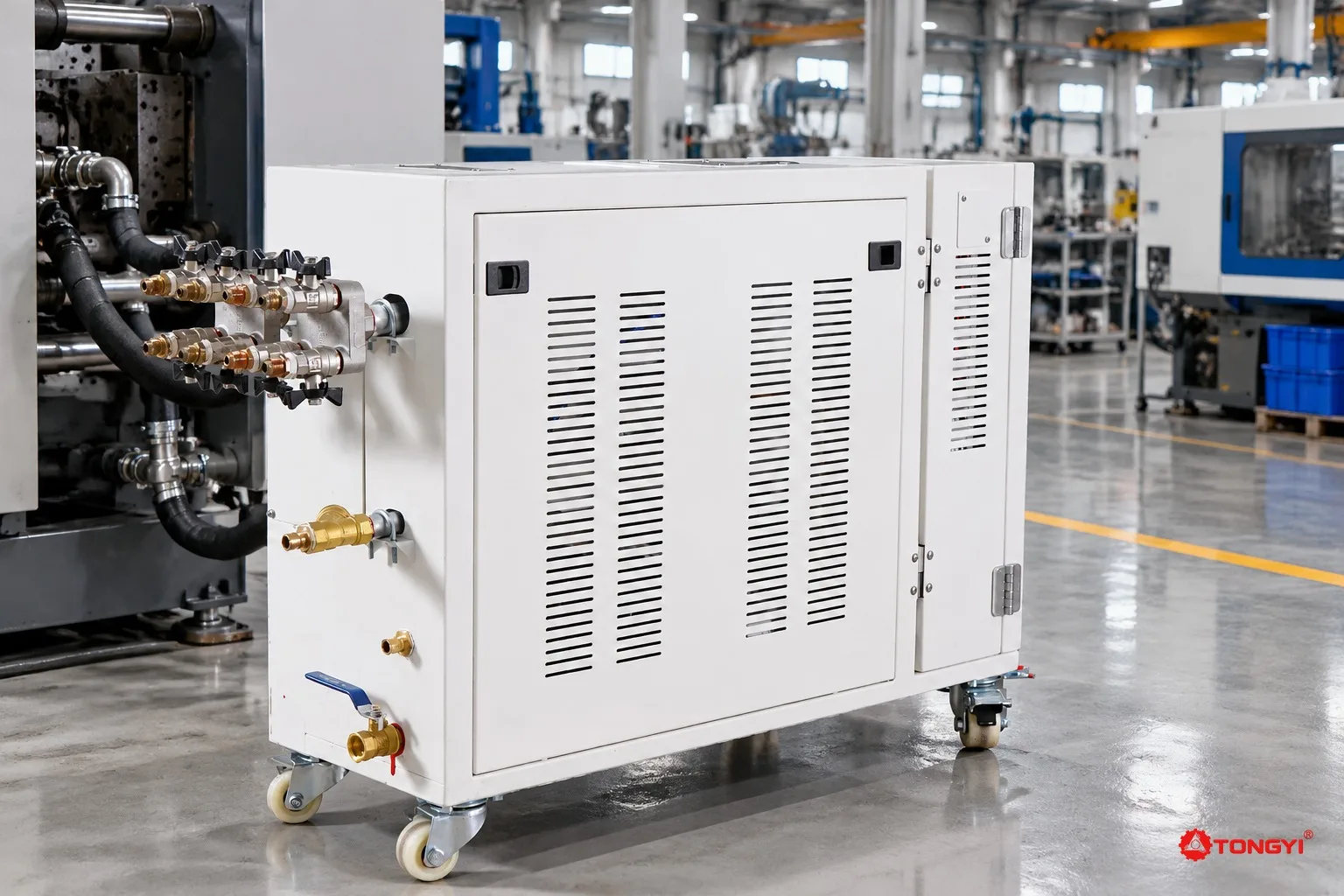
Start from the mold, not the controller. Pull the recommended mold temperature from your material supplier’s processing data or your mold maker’s specification sheet. If that recommended mold temperature falls within the 120°C maximum, a water-type unit is generally appropriate because water offers fast heat transfer and easy handling compared with oil.
Questions worth asking before you commit:
- What is the specified mold temperature for the resin or alloy being processed?
- How much heating power does the mold require to reach and hold that temperature at your production cycle rate?
- Are there zones in the tool with different temperature requirements?
- Is your plant water supply quality suitable for closed-loop circulation, or will treatment be needed?
If any answer is uncertain, send the full process specification to the controller supplier and ask them to confirm suitability in writing before you order.
How do TMC Series models compare on maximum temperature?
In the TMC Series, every model shown lists a maximum temperature of 120°C. That means model selection within the series is driven by other factors — pump and heating capacity, cooling configuration and control features — rather than by a temperature ceiling. The table below shows the rating carried across the lineup:
| Model | Heat transfer medium | Maximum temperature |
|---|---|---|
| TMC Series model (standard configuration) | Water | 120°C |
| TMC Series model (alternate configuration) | Water | 120°C |
| TMC Series model (extended configuration) | Water | 120°C |
Because each TMC Series model carries the same 120°C maximum temperature, a process engineer screening this series against a mold spec that stays below 120°C can focus on flow rate, heating capacity and installation details rather than temperature headroom. If your spec sits close to the ceiling, confirm your actual operating requirement with the supplier before finalizing the order.
Water type versus higher-temperature alternatives: how should you compare?
If your mold temperature requirement is comfortably inside the 120°C rating, water is usually the simpler medium to manage. If your requirement exceeds it, you have two broad paths, and the comparison below summarizes the decision drivers:
| Consideration | Water type, 120°C max | Higher-temperature option |
|---|---|---|
| Suits mold specs at or below 120°C | Yes | Yes, with headroom |
| Suits mold specs above 120°C | No | Yes, per unit rating |
| Medium handling | Water, straightforward | Typically oil or pressurized water |
| Selection basis | Match pump/heating capacity to mold | Confirm both temperature and capacity with supplier |
Do not size a controller on temperature alone. A unit whose maximum temperature meets your spec but whose heating or pump capacity falls short of the mold’s demand will struggle to hold setpoint at production speed.
What should you include in a quote request?
A precise RFQ shortens supplier response time and prevents mismatched equipment. Include the following when you request pricing for a 120°C water type mold temperature controller:
- Your target mold temperature and how it was specified (material datasheet, mold maker, or process validation).
- Mold size, number of temperature zones and expected flow demand.
- Available power supply voltage and frequency at your facility.
- Distance between the controller and the mold, since line runs affect heat loss and pressure drop.
- Cooling water conditions at your plant.
Ask the supplier to confirm in writing that the unit’s 120°C maximum and its capacity match your stated process requirement. That written confirmation is your best protection against selecting equipment on a nameplate figure alone.
How do you verify the rating matches your process before ordering?
Verification is a three-step exercise. First, document your mold’s temperature requirement from an authoritative source. Second, compare it against the controller’s stated maximum — for the TMC Series, that maximum is 120°C on every model shown. Third, have the supplier review your full process parameters and confirm the match, including any margin they recommend between your operating setpoint and the unit’s ceiling.
Treat 120°C as the maximum listed rating, not as a recommended continuous setpoint. Confirm the required operating range, site conditions, and appropriate margin with the supplier for your process.
Next step: confirm your requirement with the supplier
Before you commit to a purchase order, send your mold temperature specification, mold details and plant utilities to the supplier and ask for written confirmation that a 120°C water type unit meets the process. If your requirement turns out to exceed 120°C, the same conversation will steer you toward the right higher-temperature alternative. A short technical exchange at the quotation stage is far cheaper than rework after installation.
Frequently asked questions
Can a 120°C water type controller run below its maximum?
Yes. The 120°C figure is the ceiling of the unit’s capability, and the controller operates at whatever setpoint your process requires below that limit. Confirm your normal operating setpoint with the supplier so the unit is not sized for continuous operation at its ceiling.
Does 120°C at the controller mean 120°C inside the mold?
Not necessarily. Heat losses through hoses, fittings and the mold body can make the cavity temperature lower than the setpoint. Line length, insulation and flow rate all matter, so validate the actual mold temperature during trials rather than assuming setpoint equals mold temperature.
What if my mold process needs more than 120°C?
A 120°C maximum is not sufficient for that application. You would need equipment rated above your required mold temperature, such as a higher-temperature water unit or an oil-type controller. Share your process specification with the supplier so they can recommend the correct rating.
Why do all TMC Series models show the same maximum temperature?
Within the TMC Series as listed, every model shares a 120°C maximum temperature, so differences between models lie in other specifications. Compare pump and heating capacity, cooling options and control features, and confirm your operating requirement with the supplier before choosing a model.
See the Water Type Mold Temperature Controller TMC Series page for the published model specifications.
Last updated: October 30, 2026