
Choosing Mold Temperature Controller Heater Power
Compare heater ratings from 6 to 36 kW, then use a documented heat-load estimate and supplier review to select a water-type mold temperature controller.

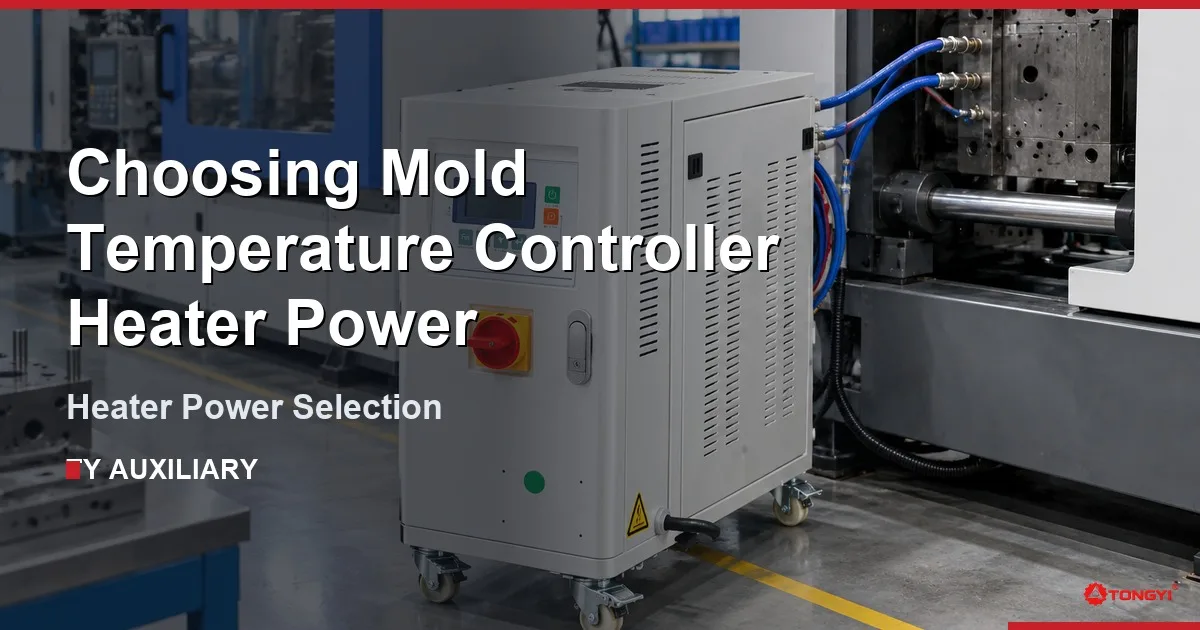
Choosing heater power for a mold temperature controller starts with a documented process heat-load estimate: add the heat required to bring the mold steel to setpoint within your target ramp time to the steady-state losses through insulation, platens, and piping, then select the next available rating above that total. Never size a unit by mold weight or capacity alone.
Why does heater power matter so much in a mold temperature controller?
Heater rating is one input to a thermal-capacity review. Warm-up and recovery depend on the mold, circulating-water volume, heat losses, process cycle, and site conditions; the published kW rating alone does not predict those times.
For plant engineers and procurement teams, the practical goal is a heater rating that matches a calculated heat load with a reasonable margin — not the biggest number on the spec sheet.
How do you estimate the heat load before selecting a rating?
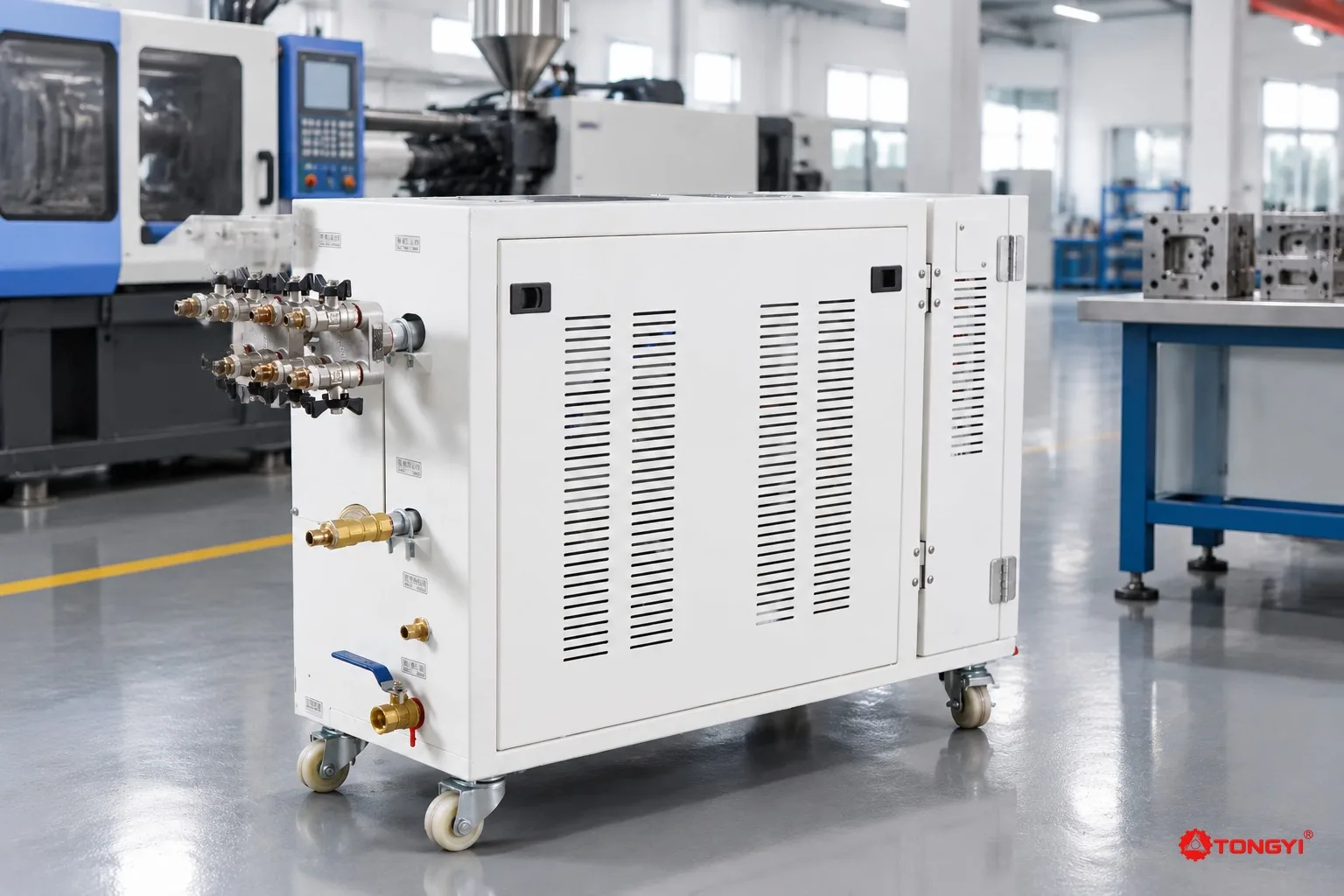
Selection must use a documented process heat-load estimate. That means a written calculation your team (or the supplier’s application engineer) can review, covering:
- Mold steel mass: the total weight of mold plates, inserts, and any hot components that must reach setpoint.
- Target ramp time: how quickly production requires the mold to reach operating temperature from ambient.
- Steady-state losses: heat lost through insulation, mold mounting surfaces, platens, and exposed piping runs.
- Process throughput: continuous running conditions that the heater must sustain after startup.
Once those inputs are documented, you can compare the resulting load figure against published heater ratings and choose the next size up. A supplier who offers to walk through this estimate with you is generally a better sourcing partner than one who quotes a model purely from mold drawings.
What heater ratings are available in the TMC Series?
The TMC Series covers a wide spread of heater ratings so that a calculated load can be matched to a specific model rather than a rough category. Verified ratings are:
| Model | Heater power | Maximum temperature | Heat transfer medium |
|---|---|---|---|
| TMC-60W | 6 kW | 120°C | Clean water |
| TMC-120W | 12 kW | 120°C | Clean water |
| TMC-240W | 24 kW | 120°C | Clean water |
| TMC-360W | 36 kW | 120°C | Clean water |
The TMC Series lists heater ratings of 6, 9, 12, 18, 24, and 36 kW across the six models, with clean water as the medium and a 120°C maximum temperature. Use a documented process heat-load estimate and ask the supplier to confirm the model selection; heater kW alone does not establish mold capacity or startup time.
Should you size up from a small mold or trust a kW-per-weight rule of thumb?
Do not infer mold capacity from heater kW. Rules of thumb that map mold weight to heater power ignore ramp-time targets, insulation quality, and ambient conditions — the very variables that drive real heat load. Two molds of identical weight can need very different ratings if one runs in a cold corner of the plant with poor platen insulation and the other runs insulated and preheated.
The reliable approach is to keep the heat-load calculation as the governing document, use the rule of thumb — if you use one at all — only as a sanity check, and record the reasoning in your equipment file. That documentation also protects procurement when a supplier proposes a different rating than you expected: you can ask them to show their calculation against yours.
What else should buyers verify besides heater power?
Heater kW is only one line in a full specification. Before issuing a purchase order, verify:
- Maximum temperature vs. setpoint: the TMC Series lists a 120°C maximum with clean water — confirm your process temperature fits with margin.
- Water quality requirements: all listed units run on clean water, so plan for supply-side filtration or treatment where site water quality is uncertain.
- Control accuracy and pump characteristics: ask the supplier for the control method, pump performance data, and connection sizes so they can be matched to your mold circuits.
- Facility utilities: confirm incoming power supply and installation clearances for the rating you select; higher-kW units draw proportionally more current.
Put each of these items in your quote request so competing suppliers respond on a like-for-like basis.
What should a procurement team include in a quote request?
A strong RFQ for a mold temperature controller states the documented heat load, the target ramp time, the required operating temperature, the mold circuit configuration, and site power conditions. Ask each bidder to name the specific TMC model they propose — TMC-60W, TMC-90W, TMC-120W, TMC-180W, TMC-240W, or TMC-360W — and to justify the rating against your heat-load figure. Suppliers who engage with the calculation, rather than defaulting to the largest unit, are the ones worth shortlisting. When you are ready to compare options, request the heat-load review alongside pricing so the technical basis and commercial terms arrive together.
Frequently asked questions
Can I size a mold temperature controller from my mold’s weight alone?
No. Mold weight ignores ramp-time targets, insulation, and heat losses, which often dominate the real load. Build a documented heat-load estimate from steel mass, target ramp time, and steady-state losses, then choose the next heater rating above that calculated figure.
Why do TMC Series units use clean water and a 120°C maximum?
The product page lists clean water as the medium and a 120°C maximum temperature for the TMC Series. It does not define a water-treatment specification; confirm water-quality limits and maintenance requirements in the equipment manual.
Is a higher heater rating always the safer choice?
A higher heater rating changes the available heating capacity and electrical requirements. The product page does not establish purchase cost, energy use, or control behavior for a specific application. Compare the process heat-load estimate and electrical supply with the supplier before choosing a rating.
How do I choose between the 12 kW and 18 kW TMC models?
Compare your documented heat load against both ratings. If the load fits within the 12 kW TMC-120W with margin, it is the economical choice. If startup ramp times or sustained losses push the figure past 12 kW, step up to the TMC-180W at 18 kW.
See the Water Type Mold Temperature Controller TMC Series page for the published model specifications.
Last updated: October 30, 2026