
How a Water Type Mold Temperature Controller Works
Follow the TMC Series water circuit from supply through the heater and mold, and see which details buyers should confirm before specifying a unit.

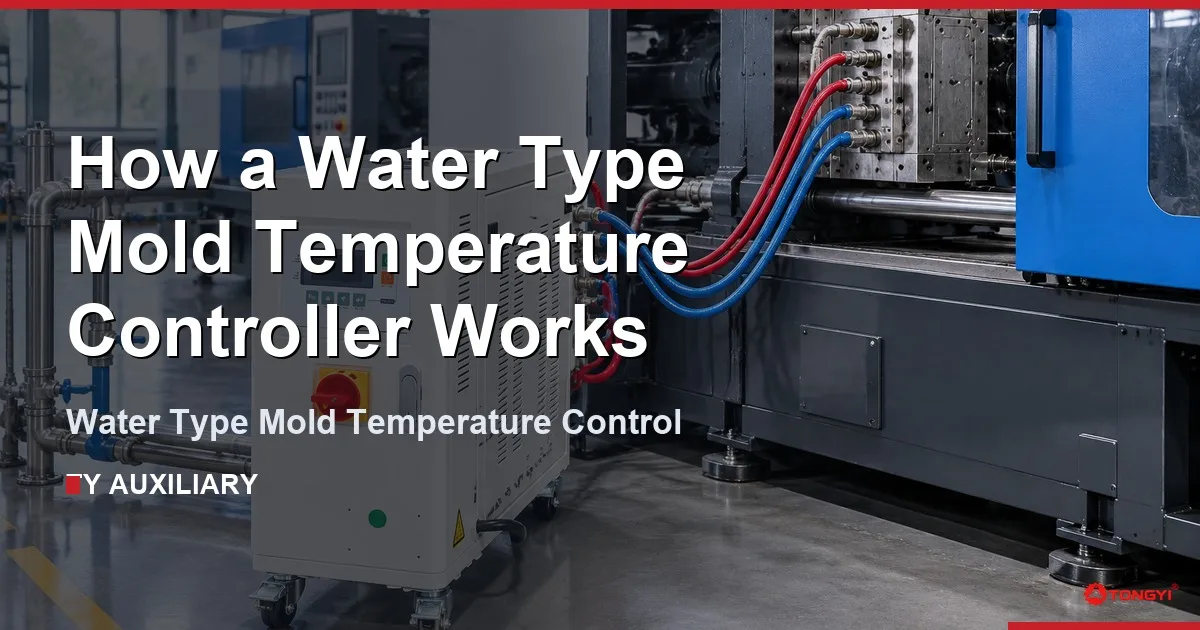
The TMC Series product page describes a water circuit that supplies clean water, circulates it through the heater and mold circuit, adjusts temperature automatically, and recirculates the water. Confirm the exact piping and control arrangement for the model being quoted.
What does a water type mold temperature controller actually do?
The controller regulates circulating-water temperature. The product page does not specify a mold-surface sensor location or guarantee a particular mold temperature. Verify measurements at the points defined in your process procedure.
The TMC Series product page lists clean water as the medium. Whether a water-type controller matches a process depends on the required temperature, heat load, circuit, and site conditions; confirm those items with the supplier.
What is the operating workflow, step by step?
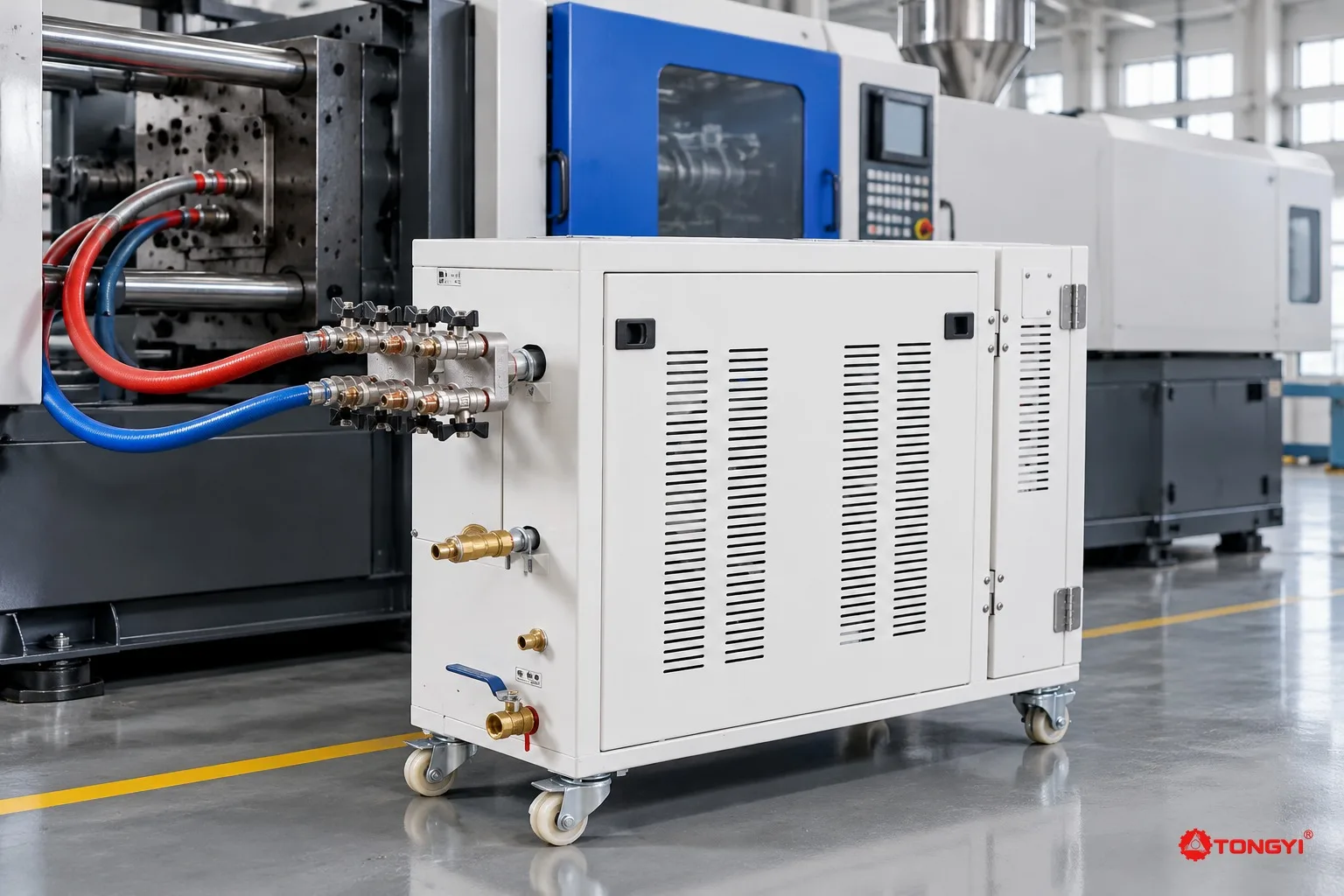
The stated operating workflow of the TMC Series follows four continuous stages: water supply, pump circulation through the heater and mold circuit, automatic temperature adjustment, and continuous recirculation.
- Water supply: clean water is brought into the unit as the working medium.
- Pump circulation: the pump drives the water through the heater, where it picks up heat, and then out to the mold circuit.
- Automatic temperature adjustment: the unit adjusts the circulating water automatically to hold the setpoint, compensating as conditions change.
- Continuous recirculation: water returns from the mold and repeats the loop, so the mold sees a steady supply of water at target temperature.
The listed cooling method is direct, meaning the unit cools the circulating water directly rather than through an intermediate heat exchanger. That keeps the response to a cooling demand quick and the circuit simple to maintain.
Why does water work as the heat transfer medium?
The product page identifies clean water as the medium. Do not assume water-quality, handling, or disposal requirements are the same at every site; check the equipment manual and local procedures.
When comparing units, ask the supplier to document the circulation path, cooling method, rated limits, installation requirements, and overseas service arrangements that apply to your order.
Water medium vs. oil medium: how do you choose?
The honest answer is that the choice comes down to your mold temperature requirements and plant preferences. The table below compares the two media at the level of practical differences rather than invented specifications:
| Consideration | Water medium (TMC Series) | Oil medium |
|---|---|---|
| Working medium | Clean water | Thermal oil |
| Maintenance and handling | Simple top-up, easy cleanup | Requires fluid management |
| Cooling method | Direct cooling | Typically indirect |
| Suited to | Conventional mold temperatures | Higher-temperature processes |
Compare the process temperature requirement with the model rating and ask the supplier to confirm the application. The circulation workflow alone does not establish that the controller is suitable for a particular mold or process.
What should buyers include in a quote request?
A water type mold temperature controller is only a good purchase if it matches your actual thermal load, so your quote request should be specific about the application rather than the box.
- Mold temperature setpoint your process requires at the steel.
- Mold size, number of cavities, and cooling channel layout.
- Machine connection details: inlet/outlet sizes and hose lengths.
- Plant water supply conditions, including supply pressure and water quality.
- Any access requirements for installation, service, and drainage.
Suppliers who respond with questions about these points are generally the ones worth shortlisting; a quote with no application questions is a red flag.
How should you evaluate suppliers before committing?
Ask each candidate to confirm three things in writing: how their unit implements the supply-circulation-adjustment-recirculation workflow, how the direct cooling method behaves during a cooling demand, and what their service response looks like for overseas buyers. Consistent answers across these questions matter more than brochure superlatives.
For procurement teams, it also pays to request the pump and heater specifications that underpin the circulation loop, so you can compare units on the same basis. If you are planning an injection molding line upgrade and want a unit sized to your actual thermal load, send your mold and machine details to the supplier and ask for a recommendation with the rated operating range stated explicitly.
Frequently asked questions
What medium does a water type mold temperature controller use?
It uses clean water as the heat transfer medium. The TMC Series supplies clean water into the unit, circulates it through the heater and mold circuit, and continuously recirculates it, avoiding the handling and disposal burden of oil-based media.
How does the controller hold the mold temperature steady?
Through automatic temperature adjustment within the circulation loop. The pump moves water through the heater to the mold and back, and the unit adjusts the circulating water automatically whenever the return temperature drifts from the setpoint.
What does direct cooling mean on the TMC Series?
Direct cooling means the unit cools the circulating water directly when the process calls for it, rather than passing heat through a separate exchanger. This keeps the circuit simple and the response to cooling demand prompt.
Is a water unit suitable for every molding process?
For higher-temperature requirements, provide the target operating range to the supplier and ask which equipment type and rating are appropriate. Do not infer suitability from the medium name alone.
See the Water Type Mold Temperature Controller TMC Series page for the published model specifications.
Last updated: October 30, 2026