
Oil Type Mold Temperature Controller Price
Heater power class, pump sizing, control type, certifications, and freight terms drive oil type mold temperature controller price, and this guide shows.

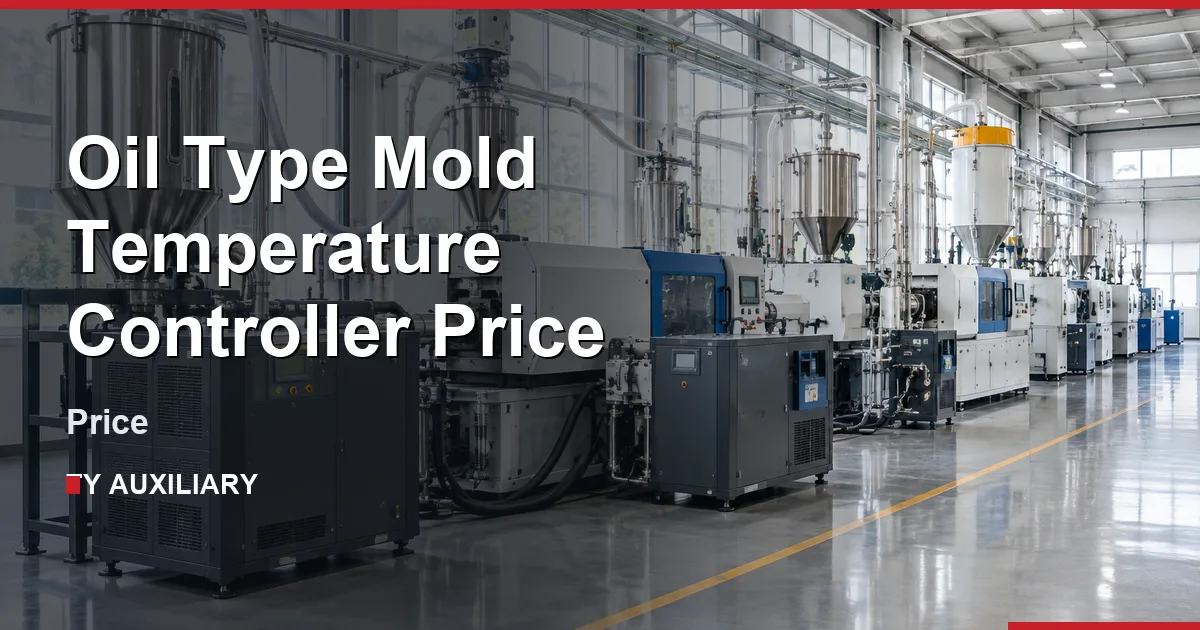
An oil type mold temperature controller price is driven by five factors: heater power class, pump power and flow, the control system (PID or PLC), optional inverter heating, and certifications plus freight. There is no single market price, because two quotes can describe very different machines; buyers comparing quotes should first normalize these specifications, then evaluate the supplier’s manufacturing depth.
What actually determines the price of an oil type mold temperature controller?
The single biggest cost driver is the heater power class. A 12 kW unit for a small mold costs substantially less to build than a 36 kW or 48 kW unit for large, multi-cavity tooling, because heater banks, contactors or SSRs, and the electrical cabinet all scale with power. Pump power and flow rate follow closely behind: oil units need enough circulation to carry heat through hoses and hot-runner channels, and a larger pump with a higher head means a bigger motor, a stronger casing, and more testing time.
Beyond the core thermodynamics, price is shaped by:
- Heat-transfer medium: oil units operate at higher temperatures than water units — typical oil mold temperature controllers run up to 180–350 °C depending on design — so they require higher-grade seals, expansion tanks, and piping, which raises cost relative to a comparable water unit.
- Control type: a basic PID temperature controller is the economical choice; a PLC with touch-screen HMI, multiple zone control, data logging, or remote monitoring adds engineering and component cost.
- Inverter (variable-frequency) heating: adjusting heater output continuously instead of switching full power on and off improves temperature stability and can reduce energy consumption on long-running jobs, but adds hardware cost.
- Certifications: CE marking for the European market, or other regional electrical and safety requirements, affect design, documentation, and testing effort.
- Packaging and freight: export-grade wooden crating, sea vs air freight, and Incoterms (FOB, CIF, DAP) all change the landed figure on your purchase order.
How should buyers compare oil type mold temperature controller quotes?

Compare quotes on a like-for-like basis by locking the technical envelope first: heater power, pump power and flow, maximum oil temperature, control system, and certification scope. Once those are identical across suppliers, any remaining difference reflects build quality, component brands, and service terms — which is exactly where you want the price conversation to happen.
Before requesting quotes, prepare this checklist so every supplier answers the same questions:
- Required oil temperature range and set-point accuracy for your resin and mold
- Heater power class and number of heating zones
- Pump power, flow rate, and maximum head for your hose runs
- PID or PLC control, and whether inverter heating is required
- Certification requirements for your destination market (for example, CE)
- Incoterms, packaging standard, and delivery lead time
Water units or oil units: which costs less to buy and run?
A water-based unit is generally the lower-cost option up to roughly 90–120 °C, while oil units are the economical choice once your process demands higher mold temperatures. Choosing the wrong medium is the most expensive mistake of all: underspecifying temperature capability forces a re-purchase, while overspecifying wastes budget on capability you never use.
| Factor | Water unit | Oil unit |
|---|---|---|
| Typical operating range | Ambient to ~90–120 °C | ~90–350 °C depending on design |
| Relative purchase cost | Lower for the same power class | Higher (seals, expansion tank, high-temp components) |
| Typical applications | General injection molding, packaging, thinner-wall parts | Engineering resins, thick-wall parts, hot runners, optical and automotive tooling |
| Maintenance focus | Scale and water quality | Oil condition, seal wear, leak checks |
If your material data sheet calls for mold temperatures above the water range, an oil type mold temperature controller is the correct baseline, and the rest of your cost comparison should stay within that category.
Which specification upgrades are worth paying for?
Spend on the features that touch part quality and uptime first. Temperature stability and pump reliability directly affect cycle consistency and scrap rates; a slightly higher controller price here pays back quickly in an injection molding environment running three shifts.
- Inverter heating suits high-volume production where energy cost and tight temperature windows matter; for intermittent or prototyping use, standard PID switching control is usually sufficient.
- PLC with HMI is worth the premium when you need multi-zone control, alarm history, recipe storage, or integration with a plant monitoring system; a single-zone PID panel remains the practical choice for standalone machines.
- Pump sizing should be based on your actual hose length, hot-runner drop, and mold channel resistance — not on a bigger-is-better assumption, which inflates both purchase and running cost.
- Certification scope should match your market’s legal requirements; paying for certifications you do not need inflates the quote without adding value.
What should you check about the supplier before committing to a price?
Evaluate the manufacturer, not just the machine. Two quotes with identical specs can differ widely in real-world reliability, spare-part availability, and how quickly a technical question gets answered after installation.
- Ask whether the heaters, pumps, and control components are from established, documentable brands, and request the component list in writing.
- Ask for the factory test procedure: an oil unit should be run at temperature and leak-checked before shipment, and you should receive the test record.
- Confirm spare-part availability and response times in your time zone, not just warranty length.
- Verify that the quoted temperature range is a continuous operating rating, not a peak figure.
- Clarify export packaging, Incoterms, and who handles customs documentation.
How can you get an accurate price quickly?
Send suppliers a one-page requirement sheet — mold temperature, heater power class or mold size, hose lengths, control preference, certification needs, and destination port — and you will receive comparable, firm quotations within days instead of weeks of back-and-forth clarification.
When you are ready, share your molding process details with our engineering team. We will recommend the appropriate oil type mold temperature controller configuration for your resin and tooling, explain the specification choices behind each cost driver, and provide a transparent, like-for-like quotation with delivery terms for your market. Contact us to start the comparison.
Frequently asked questions
Why do oil type mold temperature controller prices vary so much between suppliers?
Variations usually come from heater and pump power classes, control system complexity, component brands, certification scope, and freight terms. Two machines described identically can differ internally, so always compare full specification sheets and test procedures rather than headline figures.
Is inverter heating worth the extra cost?
For continuous, high-volume production with tight temperature windows, inverter heating improves stability and can lower energy consumption over time. For intermittent runs or prototyping, standard PID switching control is typically sufficient and keeps the purchase cost lower.
What information should I provide to get an accurate quote?
Provide required oil temperature, mold size and heater power class, hose length and layout, control preference (PID or PLC), any certification requirements, and your destination port with preferred Incoterms. With these details, suppliers can quote accurately on a like-for-like basis.
Do certifications affect the price?
Yes. Certification requirements such as CE involve design, documentation, and testing effort that suppliers reflect in the quotation. Specify only the certifications legally required for your destination market to keep the price aligned with your actual needs.
Last updated: October 30, 2026