
Comparing Water Mold Temperature Controller Specs
Compare the TMC Series temperature, heater, pump, control, communication, and protection data using a like-for-like supplier quotation checklist.

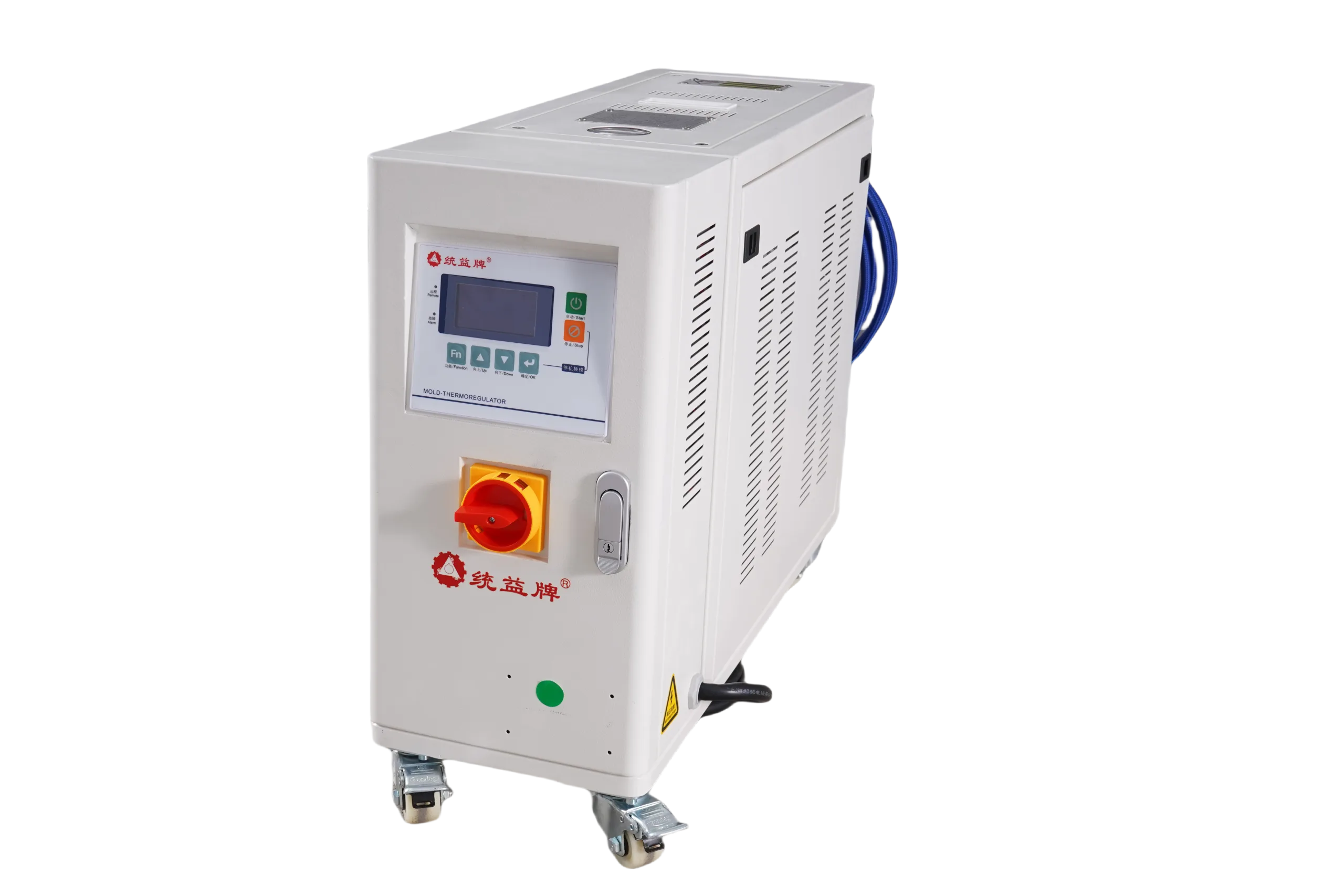
A specification comparison can organize the medium, maximum temperature, cooling method, control feature, sensor, protections, and model ratings. Confirm which values matter to your process and request written details for the exact configuration before ordering.
Which specifications should a buyer checklist include?
Start with the requirements that matter to your application and compare supplier responses on the same basis. A checklist can make differences visible, but it does not replace a model-specific engineering review or site safety assessment.
- Heating medium: confirm the controller is designed for clean water, and that your plant can supply water of suitable quality.
- Maximum operating temperature: the rated ceiling must exceed your mold temperature requirement with margin.
- Cooling method: direct cooling responds faster than indirect designs because coolant exchanges heat with the process water directly.
- Control method: dual PID control holds setpoint more tightly than single-loop or on/off control during cycle load changes.
- Sensor type: a K-type thermocouple is a common, widely serviceable standard; verify the probe matches your controller input.
- Protections: overheating protection, pump overload protection, and low water level protection should all be listed in the quotation.
Ask each supplier to fill in this checklist as part of the quote. Vague answers such as “high temperature” or “automatic protection” are a signal to request the datasheet before proceeding.
What temperature and cooling capabilities should you verify?
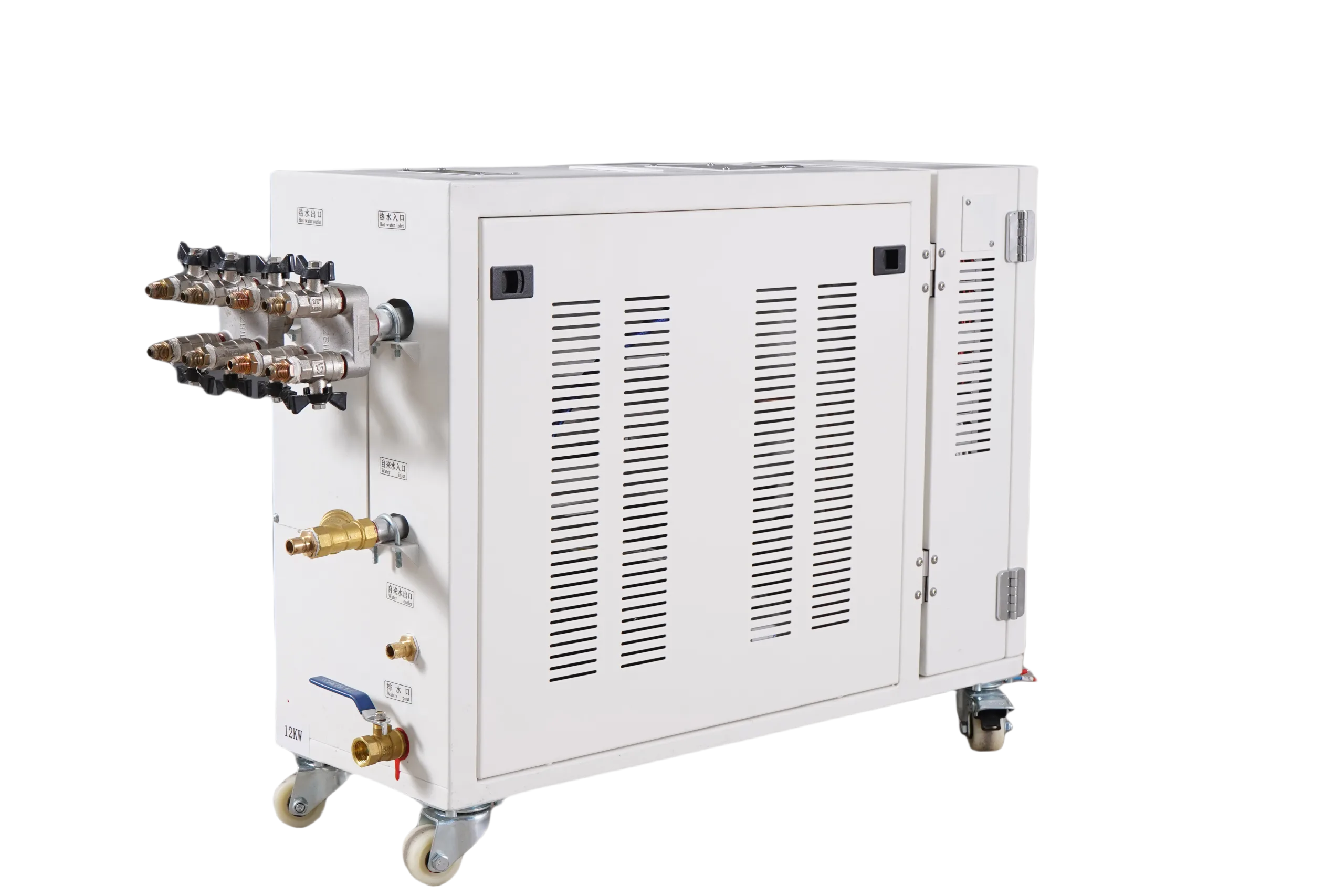
Compare the required process temperature with the published maximum and confirm the operating margin with the supplier. The product page does not establish that a 120°C water-type unit is suitable for a majority of molding applications or define a cooling-cycle result.
The TMC Series lists direct cooling, dual PID control, a K-type probe, RS485 communication, and several protections. The product page does not quantify component life, recovery time, or cooling rate. Confirm operating limits and expected behavior for the selected model with the supplier.
How do control features affect molding quality?
The product page lists intelligent dual PID control that adjusts heating and cooling, but it does not provide a temperature tolerance or guarantee dimensional stability. Define the process measurement points and acceptance criteria, then validate performance during trials.
Two additional features simplify integration and troubleshooting:
- K-type probe: a standard thermocouple type that most plants already stock as a spare, making replacement fast.
- RS485 communication: allows the controller to report temperature and alarm status to a central monitoring system or MES, supporting traceability on regulated or high-volume lines.
If monitoring or control over RS485 is required, specify the needed functions and confirm protocol, register map, wiring, and host compatibility with the supplier. Do not assume a listed communication interface includes every remote function or that a retrofit is impossible.
How do typical model specifications compare side by side?
Putting documented values in a table makes differences between quotation options immediately visible. The following example uses verified TMC Series specifications for a clean-water mold temperature controller:
| Specification | TMC Series value |
|---|---|
| Heating medium | Clean water |
| Maximum temperature | 120°C |
| Cooling method | Direct cooling |
| Control method | Dual PID control |
| Sensor | K-type probe |
| Communication | RS485 |
| Protections | Overheating, pump overload, low water level |
When a quotation arrives, compare the same specification rows for each offer. If a detail is missing, ask the supplier to clarify it in writing; do not assume that a blank row means a feature is absent or downgraded.
What should a complete RFQ include to get comparable quotes?
A consistent RFQ helps compare offers on the same stated requirements. Include the model, operating range, medium, circuit, electrical supply, control and communication needs, and required protections.
- Required mold temperature setpoints and the highest temperature in your product mix.
- Confirmation that a clean-water medium and direct cooling are acceptable for your plant.
- Control requirements: dual PID, K-type probe, and RS485 communication if you need remote monitoring.
- Mandatory protections: overheating, pump overload, and low water level, each listed by name in the quote.
- Power supply specification for your facility and any local installation requirements.
- Requested documentation: datasheet, wiring diagram, and operation manual in English.
Asking suppliers to state each requirement as “confirmed” or “not available” turns the RFQ into a scored comparison and gives you a written record to reference at inspection and acceptance.
How do you validate a supplier before placing the order?
Specifications on paper are only half the evaluation; the other half is whether the supplier can back them up. Before ordering, take three practical steps:
- Request the full datasheet for the specific model quoted, not a generic family brochure, and check that every value matches your RFQ.
- Ask for a factory test or video verification showing the unit reaching setpoint and demonstrating the low water level and pump overload alarms.
- Clarify spares and support: confirm K-type probes and pump components are available, and ask how technical support is delivered across time zones for US buyers.
Clear answers during quotation help resolve technical questions before ordering, but response speed alone does not establish after-sales service quality. Review the written service terms, response coverage, and support process separately.
What is the next step?
Shortlist suppliers using the same requirements and compare their written responses with the published TMC Series data. The listed 120°C maximum temperature, direct cooling, dual PID control, K-type probe, RS485 communication, and protections are reference points; confirm the exact configuration and application suitability before ordering.
Frequently asked questions
Is a 120°C water mold temperature controller enough for my application?
The product page does not establish how widely the TMC Series applies across thermoplastic processes. Compare the required temperature and operating conditions with the published specifications, and ask the supplier to confirm suitability for your application.
Why does direct cooling matter when comparing quotations?
The TMC Series product page lists direct cooling but does not explain the circuit design or quantify cooling and recovery times. Ask the supplier to describe the water paths and confirm how the selected configuration matches the mold and plant-water requirements.
What protections should a quoted unit include as standard?
The TMC Series product page lists overheating, pump-overload, low-water-level, and abnormal-operating-condition protections. Ask the supplier to document the indication and response for the quoted model; do not assume the feature list establishes alarm clarity or compliance with site requirements.
Can the controller connect to our plant monitoring system?
The TMC Series lists RS485 communication and says it can connect with injection molding machines and centralized control systems. Confirm which data and commands are supported, along with protocol and host compatibility, before planning monitoring or traceability.
See the Water Type Mold Temperature Controller TMC Series page for the published model specifications.
Last updated: October 30, 2026