
Gravimetric vs Volumetric Dosing: Accuracy, Cost and When It Matters
Gravimetric dosing weighs; volumetric dosing measures volume. The accuracy difference decides colour cost, and payback is often under a year.

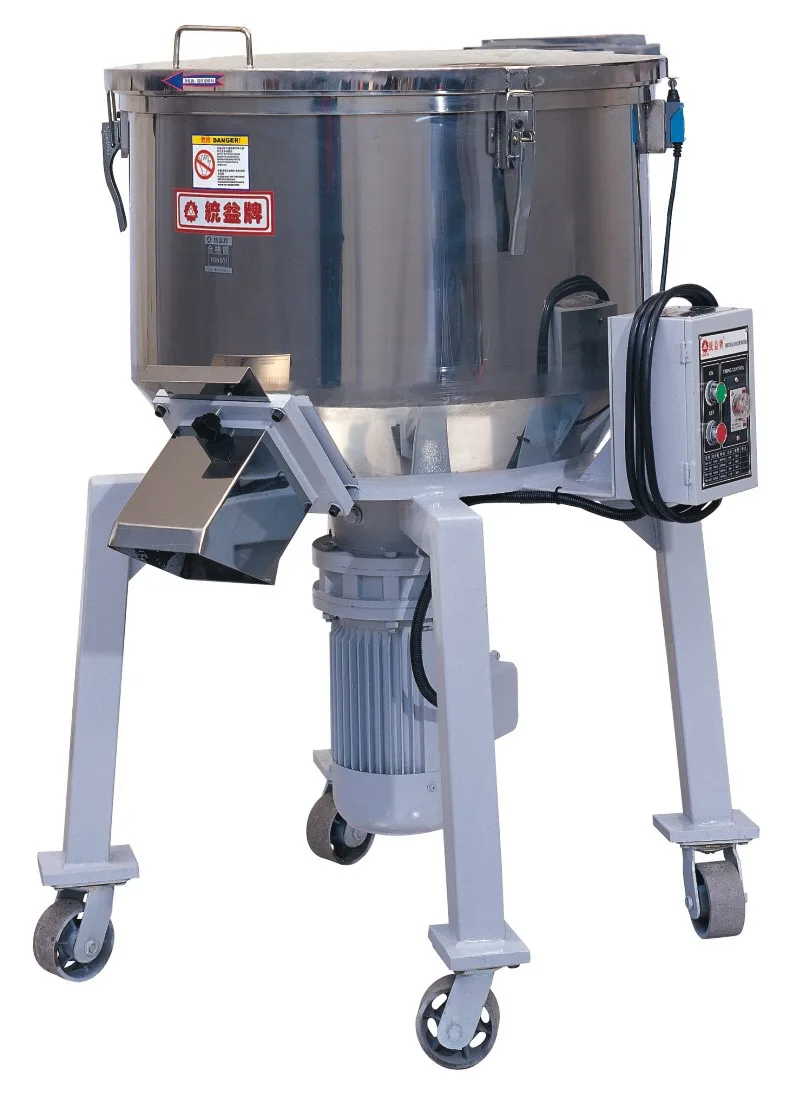
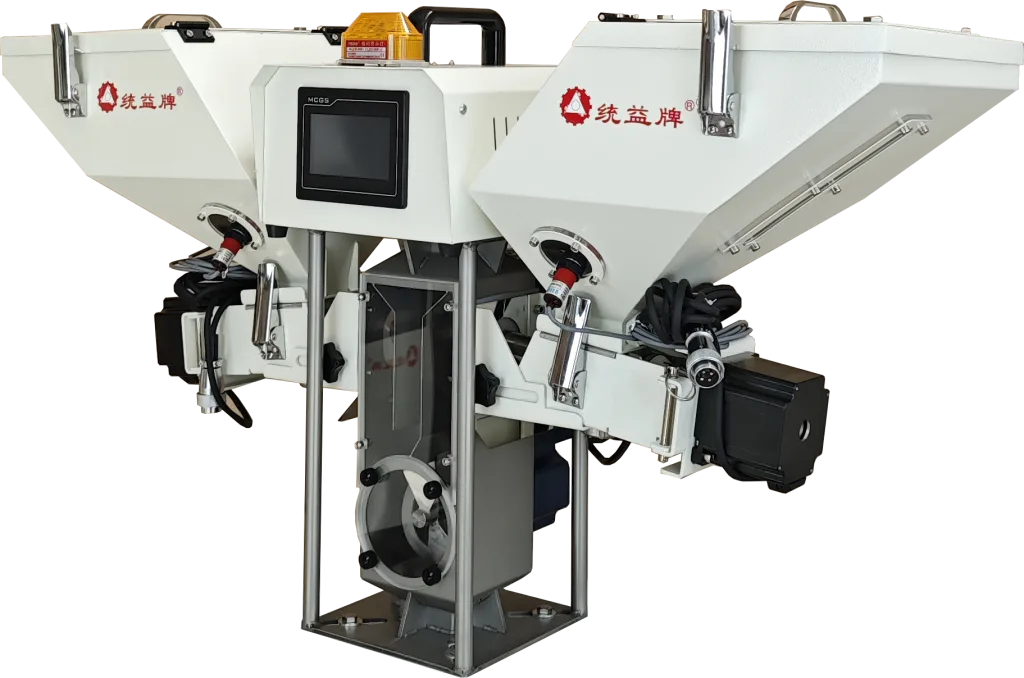
A volumetric doser measures masterbatch by volume and assumes constant bulk density; a gravimetric doser weighs it. The practical difference appears as colour drift: volumetric units hold ratio to roughly ±2–5 % of set point, gravimetric units to ±0.5 % or better.
Whether that matters depends on what you are dosing. At 2 % masterbatch the error is small in absolute terms; at 0.2 % for a critical colour or an additive, a 5 % ratio error is a quality problem that shows up as shade variation between shifts.
Why does bulk density drift in the first place?
Volume-based dosing assumes a fixed relationship between volume and mass. That relationship changes with:
- Regrind content — flake packs differently from spherical granule.
- Moisture — damp masterbatch bridges and packs, changing fill in the screw flights.
- Hopper level — a nearly empty hopper feeds less consistently than a full one.
- Particle shape between batches — different supplier lots of the same grade can differ.
None of these require an operator error to occur; they happen on their own, which is why volumetric dosing drifts rather than jumps.
What does the accuracy difference cost?
Two costs. The visible one is scrap from off-shade parts. The invisible one is over-dosing: plants that see drift tend to raise the set point to stay inside tolerance, which consumes more masterbatch than the part requires.
| Dosing type | Typical ratio accuracy | Masterbatch saving vs over-dosing | Capital |
|---|---|---|---|
| Volumetric screw | ±2–5 % | baseline | lowest |
| Volumetric with feedback | ±1–2 % | 1–3 % | medium |
| Gravimetric loss-in-weight | ±0.5 % or better | 3–8 % | highest |
At a masterbatch cost of several euros per kilogram and a 0.5 % let-down ratio, a 5 % over-dose is small in absolute terms — but across a plant running continuously it is a measurable annual line item, and gravimetric units often pay back within a year on material alone when the ratio is low.
When is volumetric good enough?
Volumetric dosing is the right answer in three cases: high let-down ratios (above 3 %, where the percentage error is small in absolute terms), non-critical colours where shade tolerance is wide, and single-machine setups where the capital difference dominates.
It is the wrong answer for low-ratio critical additives, for multi-machine plants that must hold shade across presses, and for any product where colour is a brand requirement rather than a cosmetic one.
What about mixing after dosing?
Dosing accuracy only reaches the part if the masterbatch is distributed evenly. A doser that meters correctly into a hopper without a mixer produces the same shade variation as an inaccurate doser, because the concentrate arrives at the screw in bursts.
This is why doser selection and mixer selection are one decision, not two: gravimetric dosing without adequate mixing is money spent on the wrong half of the problem.
Where to go next
The color masterbatch screw doser covers volumetric dosing for standard ratios. Where shade consistency across machines is the requirement, gravimetric dosing combined with a vertical mixer holds the ratio through the whole blend rather than at the dosing point only.
Tell us your let-down ratio, masterbatch cost and shade tolerance and our engineers will compare the annual material cost of both options for your plant.