
Inline vs Central Granulating: Which Pays Back Faster?
One granulator per machine or one central unit for the hall? Labour, floor space, dust and payback compared for typical molding plants.

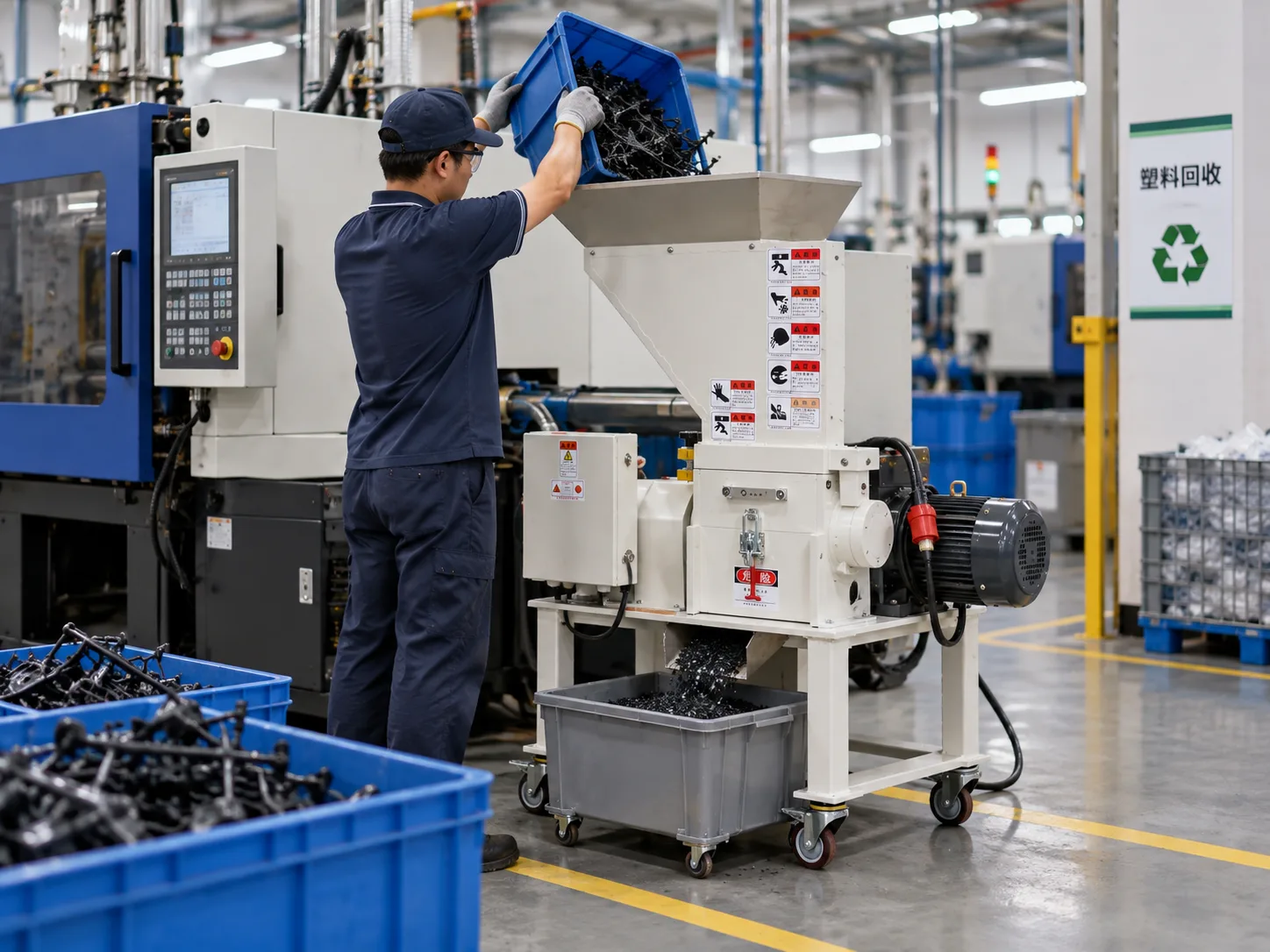
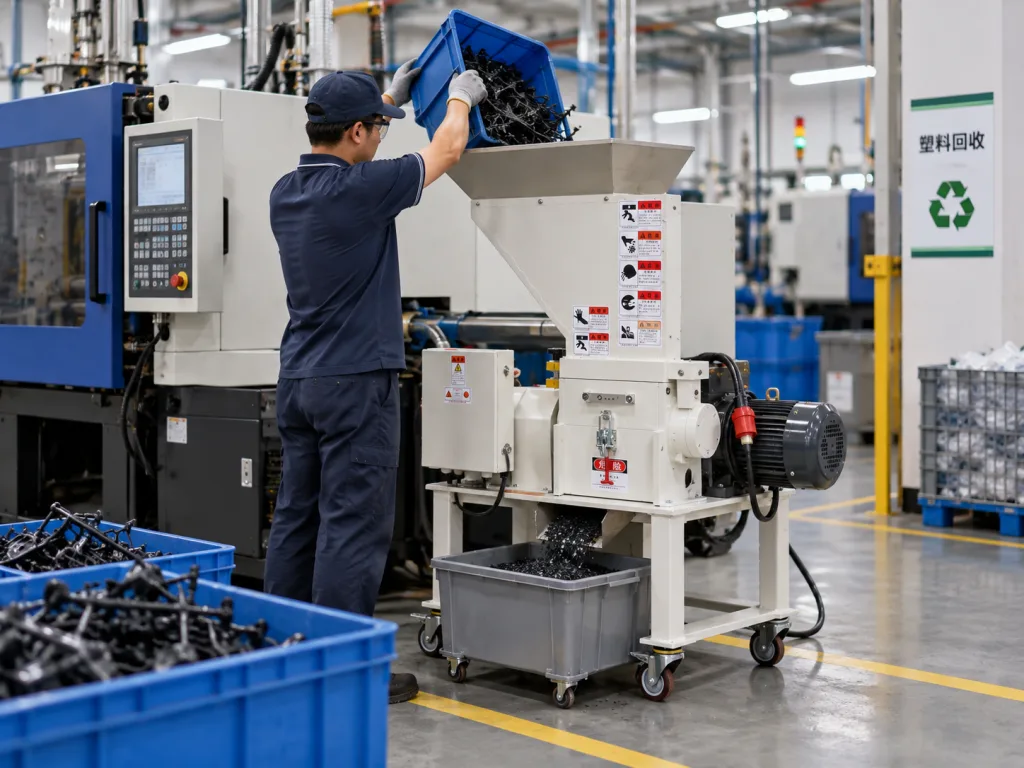
Inline granulating puts a small machine beside each press; central granulating collects scrap from the whole hall into one larger unit. The decision is usually framed as capital cost, but the numbers that actually decide it are labour, floor space and how much manual handling the plant can sustain.
As a rough rule: below six machines, inline almost always wins. Above fifteen, central usually wins. Between those numbers it depends on layout and on how much the plant values floor space.
What does each option really cost?
| Cost line | Inline per machine | Central for the hall |
|---|---|---|
| Capital | one small unit per press | one large unit + conveying + silo |
| Labour | near zero for runners | collection route, manual or automated |
| Floor space | 0.5–1 m² per press | 8–20 m² in one place |
| Maintenance points | one per press | one total |
| Dust | distributed in the hall | contained in one room |
| Material traceability | regrind stays with its press | regrind mixes across materials |
Why does traceability favour inline?
With inline granulating, the regrind from a press goes back into the same press, in the same material, within minutes. With central granulating, everything arrives in one silo and gets blended unless the plant runs separate lines per material.
That matters most in plants running several resins: a central system either needs segregated collection and storage, or it produces a blended regrind that cannot go back into any single product. Many plants discover this only after installing the central system.
When does central granulating pay back?
When the labour saved exceeds the cost of the collection route. Three conditions make that happen:
- High machine count — the collection route is roughly the same effort for fifteen machines as for five, so the cost per machine falls.
- Large scrap volume — thick parts and purgings need a machine too large to place beside a press.
- Existing conveying — if a central feeding system already runs through the hall, adding regrind return is incremental rather than new infrastructure.
What is usually underestimated?
Two things. The first is dust: central granulating concentrates it, which is good, but only if the room is actually enclosed and extracted. An open central granulator in the hall is worse than ten small enclosed ones.
The second is downtime. One central granulator that stops takes the whole hall’s recycling with it; a single inline unit that stops affects one press. Many plants keep one spare inline unit for exactly that reason.
Is a hybrid arrangement sensible?
Often yes. A common arrangement is inline granulators on presses running hygroscopic or expensive resin (where regrind must stay segregated), plus a central unit for commodity scrap and purgings. This keeps traceability where it matters and captures the labour saving where it does not.
Where to go next
The low-speed side granulator is the inline workhorse, while the powerful granulator is the machine for central installations handling thick scrap. Where regrind is returned centrally, a centralized feeding system can carry both virgin and regrind.
Send us your machine count, scrap type and material list and our engineers will model both layouts against your labour cost.