
Sound-Proof vs Standard Granulator: What the Noise Actually Costs
Granulators run 85 to 100 dB. What sound-proofing changes, what it costs, and when a standard unit still makes sense in a molding hall.

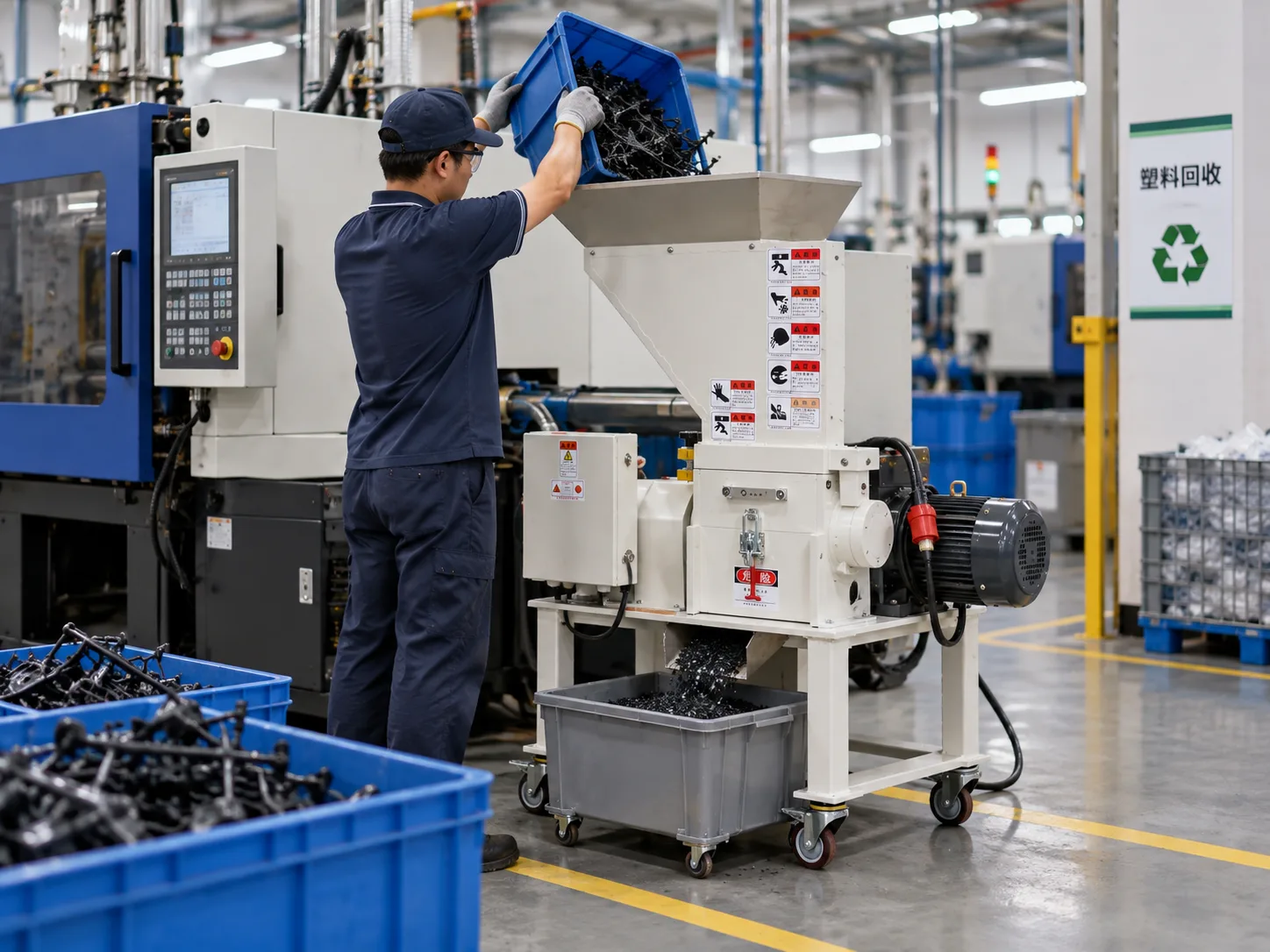
A standard granulator running beside an injection machine measures roughly 85–95 dB at the operator position; a sound-proofed unit typically measures 70–78 dB. That difference decides whether the machine can sit in the production hall at all, because most jurisdictions require hearing protection and signage above 80 dB and impose strict limits above 85 dB.
Sound-proofing is therefore not a comfort feature. It is the difference between installing the granulator at the machine and building a separate room for it.
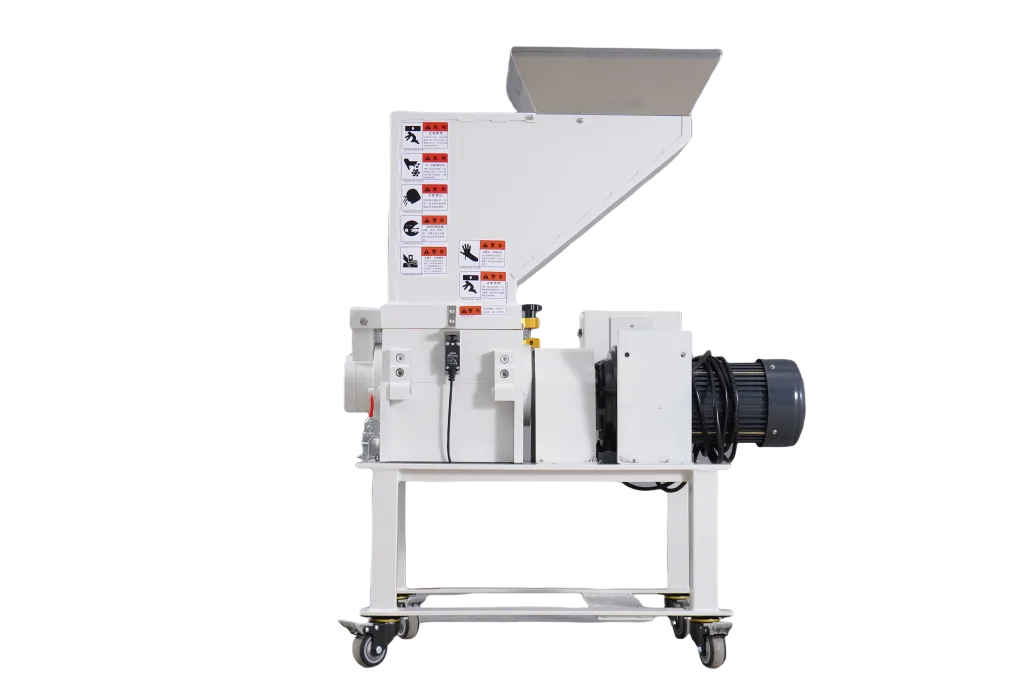
What makes a granulator loud?
Three sources contribute, and they respond to different fixes:
- Impact noise — the rotor striking granule inside the chamber. Dominant in high-speed machines and reduced most by lowering rotor speed.
- Airborne noise through the housing — reduced by mass and damping in the enclosure panels.
- Motor and drive noise — usually the least significant, and reduced by mounting isolation rather than enclosure.
Sound-proofing addresses the first two. A low-speed rotor addresses the first at the source, which is why low-speed and sound-proof are usually specified together.
How much does the enclosure actually reduce?
| Configuration | Typical level at 1 m | Fits in production hall? |
|---|---|---|
| Standard high-speed | 88–95 dB | no, separate room or hearing zone required |
| Standard low-speed | 80–86 dB | marginal, hearing protection required |
| Sound-proofed low-speed | 70–78 dB | yes, normal conversation possible nearby |
| Sound-proofed, enclosed room | below 65 dB | yes, outside the hall |
These are ranges, not guarantees. Material type matters: thin wall runners are quieter than thick purgings, and a partially filled hopper radiates less noise than an empty one.
When is a standard granulator still the right choice?
Three situations justify skipping the enclosure:
- Separate granulating room — if the machine already sits in an isolated area, the enclosure buys nothing.
- Intermittent use — a granulator run for twenty minutes a shift has far less noise exposure than one running continuously.
- Very large scrap — thick purgings need impact energy, and enclosing a high-speed machine is expensive for limited benefit.
The economic case for sound-proofing is strongest where the granulator runs continuously next to operators, which is exactly the machine-side runner recycling case.
What else does the enclosure change?
Beyond noise, an enclosure affects three practical things:
- Access for cleaning — a poorly designed enclosure turns a five-minute clean into twenty, and cleaning stops happening.
- Heat retention — enclosed cutting chambers run warmer; good designs provide airflow without letting noise out.
- Footprint — an enclosure adds roughly 20–30 % to the floor area of the same machine without one.
How should noise be specified in a purchase?
Ask for a measured sound pressure level at a defined distance and load, not a marketing figure. A useful specification reads: “≤ 78 dB(A) at 1 m, measured at the operator position, running the specified material at rated throughput.” Without the distance and load stated, the number is not comparable between suppliers.
Where to go next
The low-speed sound-proof side granulator is designed for in-hall installation beside the machine. Where scrap is thick or volume is high and the granulator sits in its own room, the powerful granulator is the appropriate machine instead.
Tell us where the granulator will stand and what noise limit applies on site and our engineers will specify the right configuration.