
Setting Masterbatch Let-Down Ratio Without Streaks
Streaks are usually a mixing and dispersion problem, not a ratio problem. How to set let-down ratio, verify dispersion and fix the four common causes.

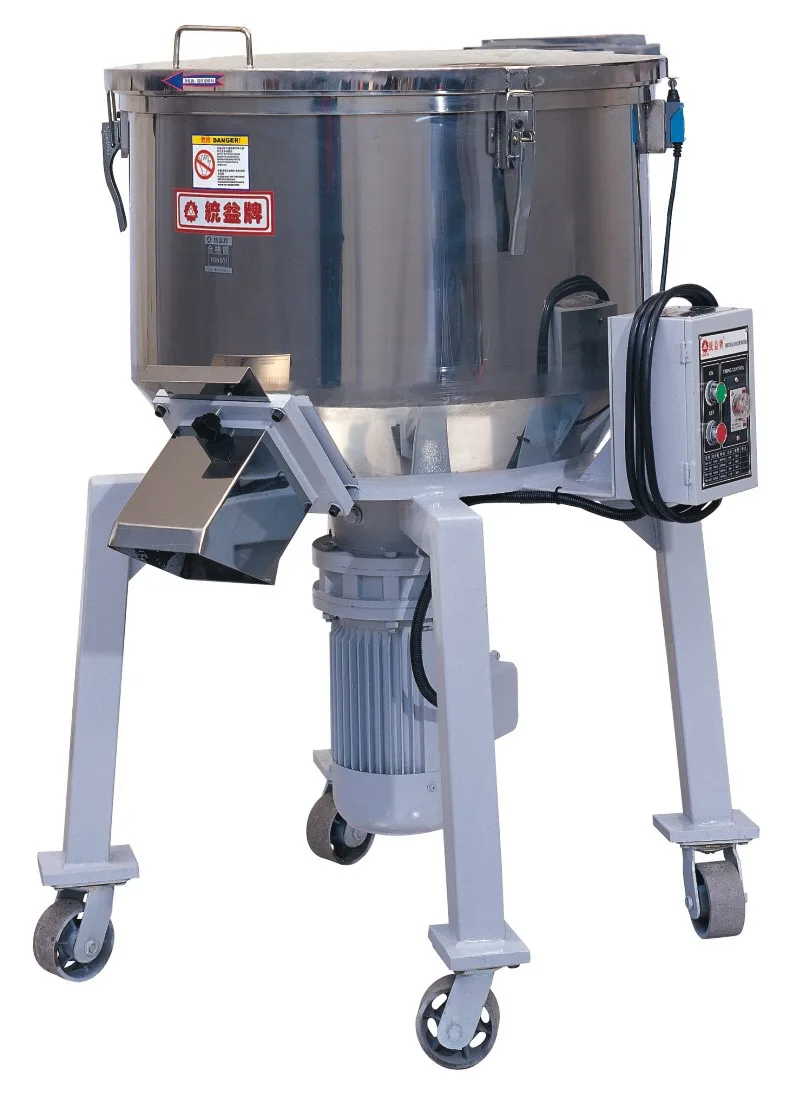
Streaks and colour swirls are almost never caused by the let-down ratio being wrong. They are caused by the concentrate not dispersing before the melt reaches the cavity. Raising the ratio to hide streaks wastes masterbatch and usually makes the problem worse, because more concentrate in the same poor mixing gives larger undispersed domains rather than better colour.
The correct sequence is: set the ratio from the supplier’s recommendation, verify dispersion, then fix the dispersion problem.
What is a normal let-down ratio?
Typical ranges by application, assuming a standard concentrate:
| Application | Typical ratio | Note |
|---|---|---|
| Opaque colour, thick wall | 1.5–2.5 % | most common range |
| Opaque colour, thin wall | 2.5–4 % | needs more for coverage |
| Transparent / translucent tint | 0.2–1 % | low ratio, dispersion critical |
| Additive masterbatch | 1–5 % | per supplier datasheet |
| High-concentration colour | 0.5–1.5 % | supplier-specific |
The supplier’s datasheet is the authority for the specific concentrate. The table above is only a sanity check on whether a proposed ratio is plausible.
Why do streaks appear even at the correct ratio?
Four causes, in order of frequency:
- No mechanical mixing — masterbatch dosed into a hopper without a mixer reaches the screw in slugs.
- Insufficient back pressure or screw speed — low shear leaves concentrate domains intact.
- Cold material at the feed throat — under-dried or cold granule melts late, so masterbatch and resin never blend.
- Wrong concentrate for the carrier resin — a concentrate based on a different polymer disperses poorly in your resin.
Raising the ratio addresses none of these. It makes cause one worse by increasing the size of the concentrate slugs.
How do you verify dispersion rather than assume it?
Three checks, cheapest first:
- Visual on a moulded plaque — a stepped plaque shows whether colour is uniform across wall sections.
- Microscope on a microtomed section — shows undispersed domains directly, which is the definitive test.
- Colour measurement (spectrophotometer) — ΔE across parts and across shifts; drift indicates dosing, scatter indicates dispersion.
The distinction matters: a ΔE shift with low scatter is a dosing problem, while high scatter at stable average is a dispersion problem.
What about mixing time and mixer type?
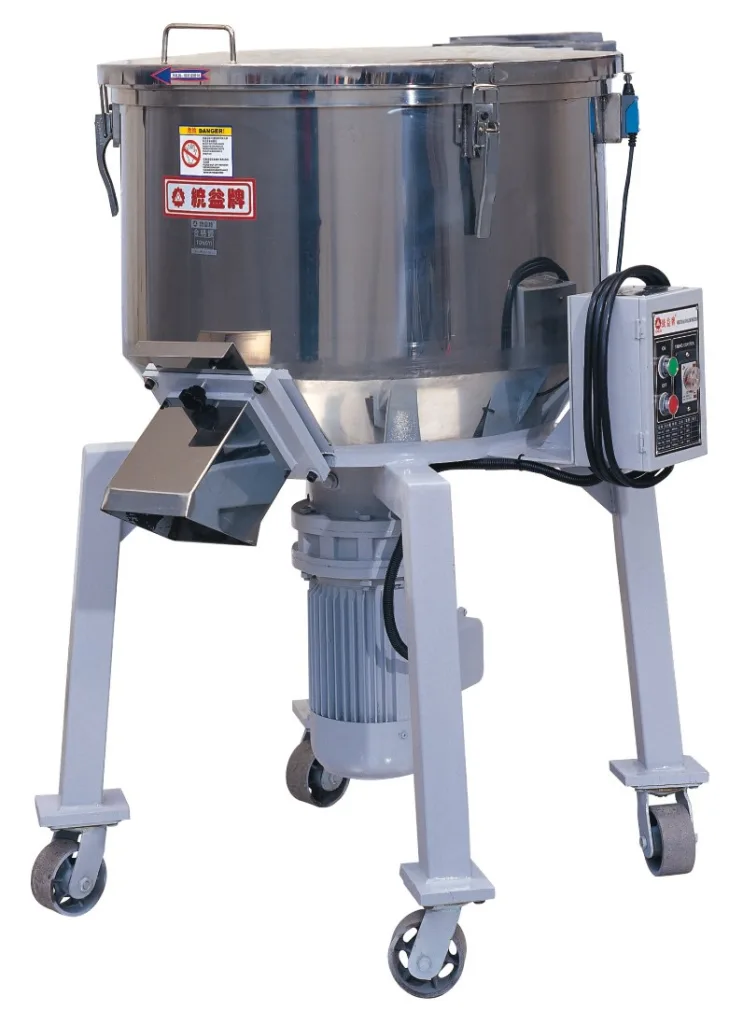
A vertical mixer typically needs one to three minutes to distribute masterbatch evenly through a batch; longer does not improve dispersion of the pigment itself, only distribution of the concentrate particles. Horizontal mixers handle larger batches and heavier blends but take longer to empty.
The practical rule: mix long enough that a sample taken from the top and the bottom of the batch reads the same colour. Anything beyond that is time spent without benefit.
How should the ratio be changed safely?
Change one variable at a time and verify with measurement. A workable procedure: adjust the doser, run ten shots to clear the previous blend, then sample from three consecutive shots and measure. Changing ratio and screw speed together makes the result unattributable.
Where to go next
Dosing accuracy and mixing both matter. The color masterbatch screw doser meters the concentrate, and a vertical mixer or large vertical mixer distributes it through the batch before the screw sees it.
Send us your resin, concentrate and current defect pattern and our engineers will help separate a dosing problem from a dispersion problem.