
Holding Colour Consistency Across Multiple Machines
Same recipe, different presses, different shade. The five process variables that shift colour between machines, and how to bring them back together.

When two machines run the same recipe and produce different shades, the cause is almost always one of five variables: melt temperature, residence time, shear history, dosing accuracy or drying condition. The concentrate is rarely at fault, and changing it is the most expensive way to look for the answer.
Diagnosing which variable moved is the whole job. Each one leaves a different signature.
Which variables shift colour between machines?
| Variable | Symptom | Typical cause |
|---|---|---|
| Melt temperature | lighter or darker overall, ΔE shift | barrel profile differences, heater band age |
| Residence time | darkening, especially in透明 colours | shot size vs barrel capacity mismatch |
| Shear history | metallic or pearlescent shift | screw speed and back pressure differences |
| Dosing accuracy | slow drift through the shift | volumetric doser on low ratio |
| Drying condition | splay that reads as colour variation | different dryers, different dew point |
Why does melt temperature matter so much for colour?
Many organic pigments shift hue with temperature, and the effect is cumulative rather than instantaneous: material sitting at higher temperature for longer darkens progressively. Two machines with identical set points can differ by 10–15 °C in actual melt temperature because of heater band condition, thermocouple placement or screw wear.
Measuring actual melt temperature on both machines — not the set point — is the first step in any cross-machine colour investigation.
How does residence time enter?
A small shot on a large barrel means material sits in the barrel for many cycles. That extra thermal history darkens colour, and it explains the classic complaint that the same recipe runs lighter on the large machine and darker on the small one.
The usual guideline is a shot size between 25 % and 70 % of barrel capacity. Outside that band, colour and mechanical properties both shift.
What is the role of the dosing system?
Volumetric dosers drift with bulk density, and bulk density differs between machines if one runs regrind and the other does not. Two presses fed from the same masterbatch but different regrind ratios will diverge in shade over a shift, even at identical doser settings.
Gravimetric dosing removes that variable by measuring mass rather than volume, which is why multi-machine plants with tight colour tolerances usually move to it.
How do you bring machines back into agreement?
A practical sequence, cheapest first:
- Measure melt temperature on every machine with a needle probe under identical conditions.
- Check shot size ratio against barrel capacity on each machine.
- Verify dosing by weighing a timed output from each doser.
- Check dryer dew point where hygroscopic resin is involved.
- Only then adjust colour recipe, and only for the machines that remain outliers.
Where to go next
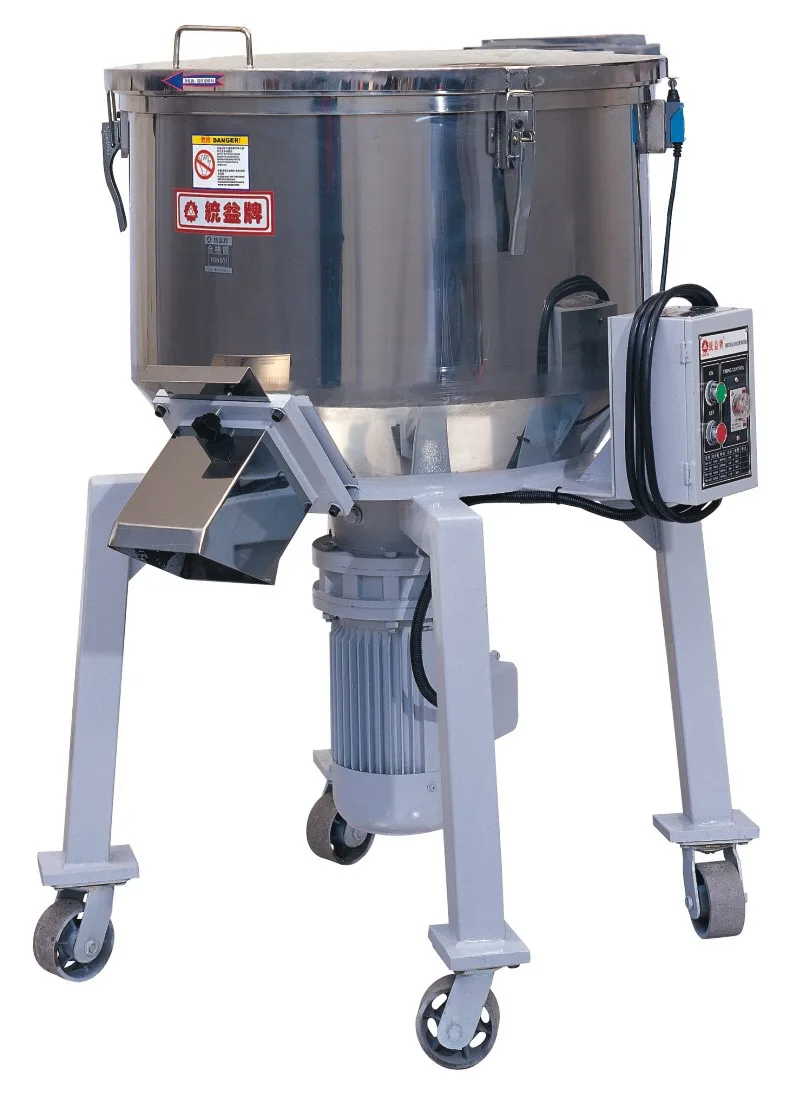
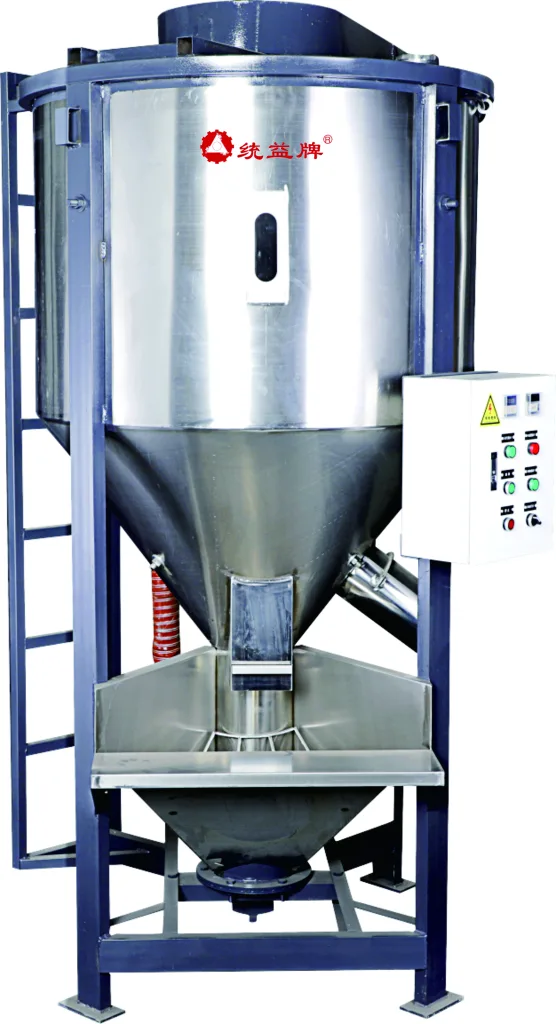
Consistency at the dosing and mixing stage removes two of the five variables at once. A color masterbatch doser with a vertical mixer gives a repeatable blend; where the plant runs several presses on one colour, a large vertical mixer keeps batch-to-batch variation out of the comparison.
Send us the ΔE values and machine list and our engineers will help narrow down which variable is moving.