
Vertical vs Horizontal Color Mixers: Which Blends Better?
Vertical mixers blend fast and empty cleanly; horizontal mixers handle heavy blends. Cycle time, uniformity and where each type actually wins.

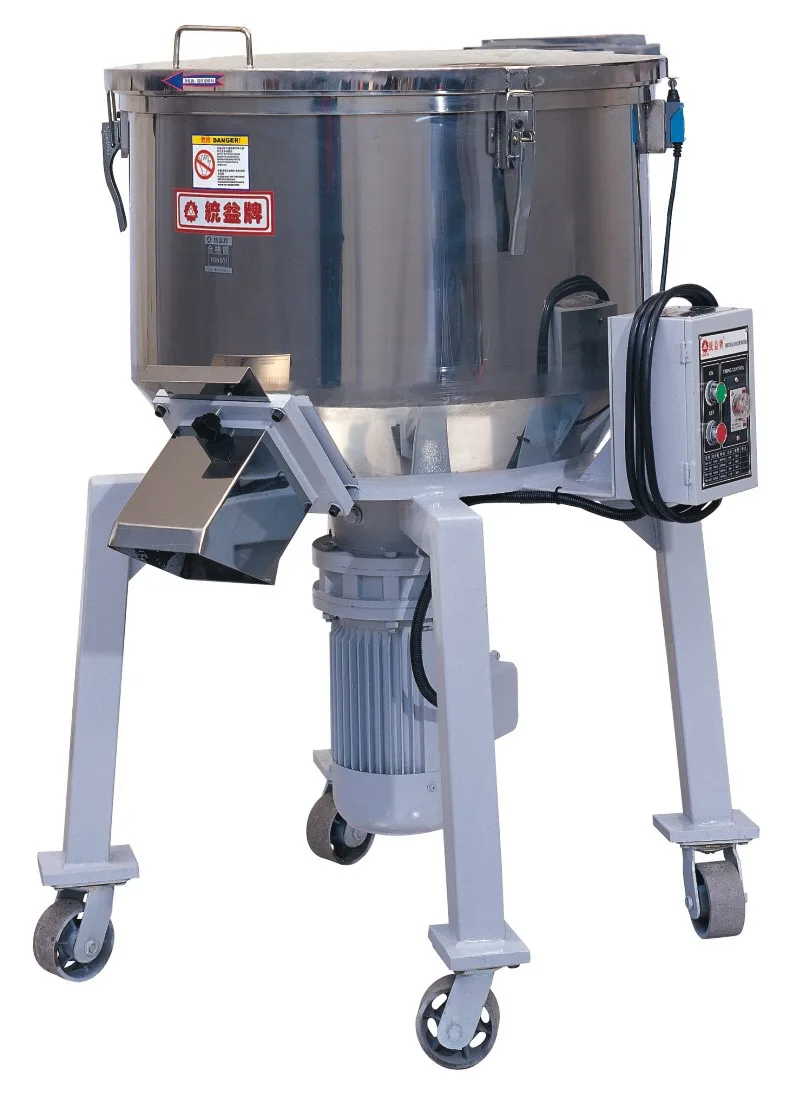
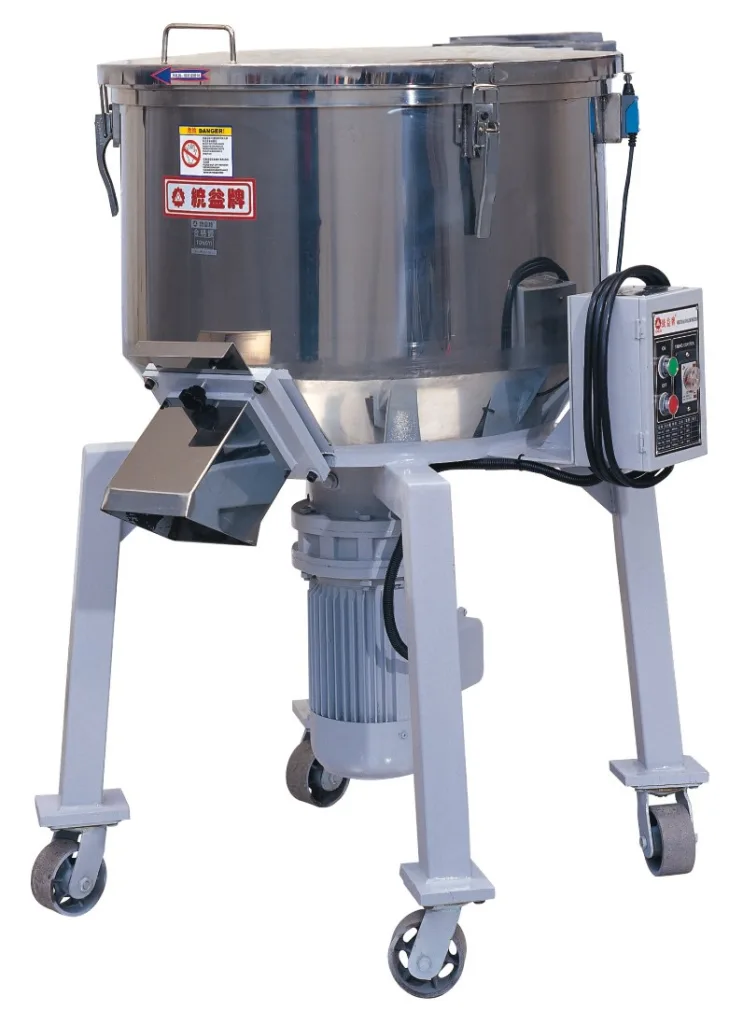
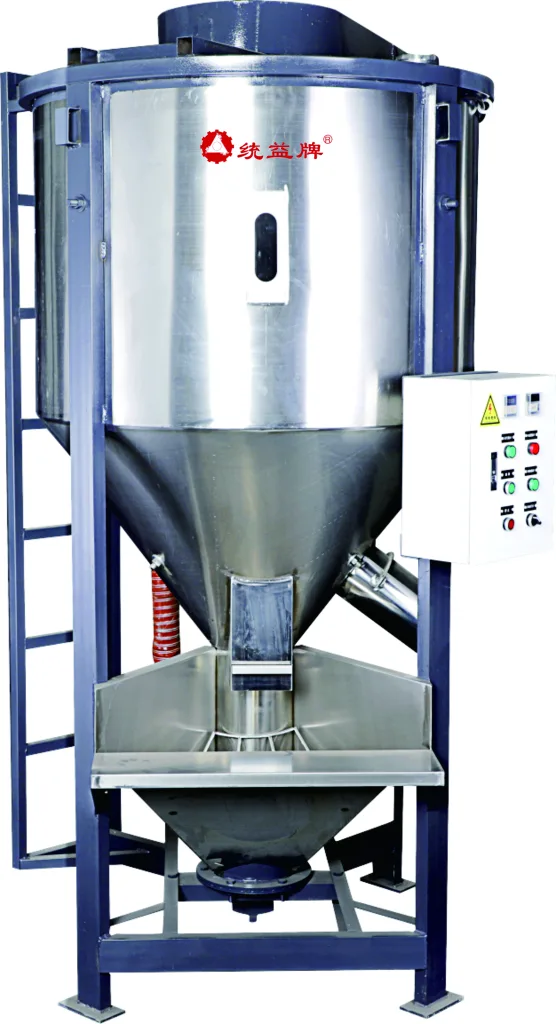
A vertical mixer uses a rotating screw inside a conical vessel; a horizontal mixer uses paddles or ribbons in a trough. Both distribute masterbatch through granulate, but they differ in cycle time, batch size, emptying behaviour and how they handle difficult blends. The choice usually comes down to batch size and how often the machine changes material.
For colour work at typical injection volumes, a vertical mixer wins on cycle time and clean-out. Horizontal mixers come into their own on large batches, heavy additives and blends that need longer mechanical working.
How do the two types differ in practice?
| Factor | Vertical | Horizontal |
|---|---|---|
| Batch size | 25–500 kg typical | 100–2000 kg typical |
| Cycle time | 1–3 minutes | 3–10 minutes |
| Residue after emptying | very low | higher, needs clean-out |
| Material change | fast, minimal purge | slower, more purge |
| Heavy additives | adequate | better |
| Floor space | tall, small footprint | long, larger footprint |
Why does the vertical type empty so cleanly?
The conical geometry means material flows down and inward as the screw turns, and the discharge is at the bottom centre. There is no trough floor for material to sit on, which is why residue is typically a fraction of a percent of batch weight.
That matters for colour work: a mixer holding 500 g of the previous colour turns every subsequent batch slightly off-shade until it is cleaned. With twenty colour changes a month, that residue is the difference between a five-minute changeover and a thirty-minute one.
When does a horizontal mixer make more sense?
Three situations:
- Large batches — above roughly 500 kg per batch, horizontal designs scale better and mix in a reasonable time.
- Heavy or high-ratio additives — fillers and glass fibre need longer working and a design that will not segregate.
- Continuous blending — where the mixer feeds a surge hopper rather than batching, a horizontal unit integrates more easily.
What determines mixing quality more than the machine type?
Three parameters, in order of impact:
- Fill level — under-filling prevents the screw from working the whole batch; over-filling stalls it. Most vertical mixers work best at 60–80 % of nominal capacity.
- Mixing time — enough to distribute, not so much that friction heats the blend. For colour work, one to three minutes is normally sufficient.
- Charging order — adding masterbatch onto virgin before the screw turns distributes faster than adding it after the screw has started.
How does the mixer interact with the dosing system?
The doser meters concentrate into the mixer, and the mixer distributes it. If the mixer runs continuously, the concentrate arrives in bursts and never fully disperses. If the doser is volumetric and drifts, the mixer distributes the wrong ratio evenly.
Neither problem is visible from the mixer alone, which is why the two are best specified together: dosing accuracy sets the average shade, mixing sets the scatter around it.
Where to go next
The vertical mixer covers most colour work up to a few hundred kilograms per batch, and the large vertical mixer extends that to higher volumes while keeping changeover fast. Dosing accuracy is handled upstream by the color masterbatch screw doser.
Tell us your batch size range, colour change frequency and additive type and our engineers will recommend the mixer type and working volume.