
Water-Cooled vs Air-Cooled Chillers for Injection Molding
Air-cooled chillers need no cooling tower; water-cooled chillers use less power. The decision turns on ambient temperature, load profile and plant layout.

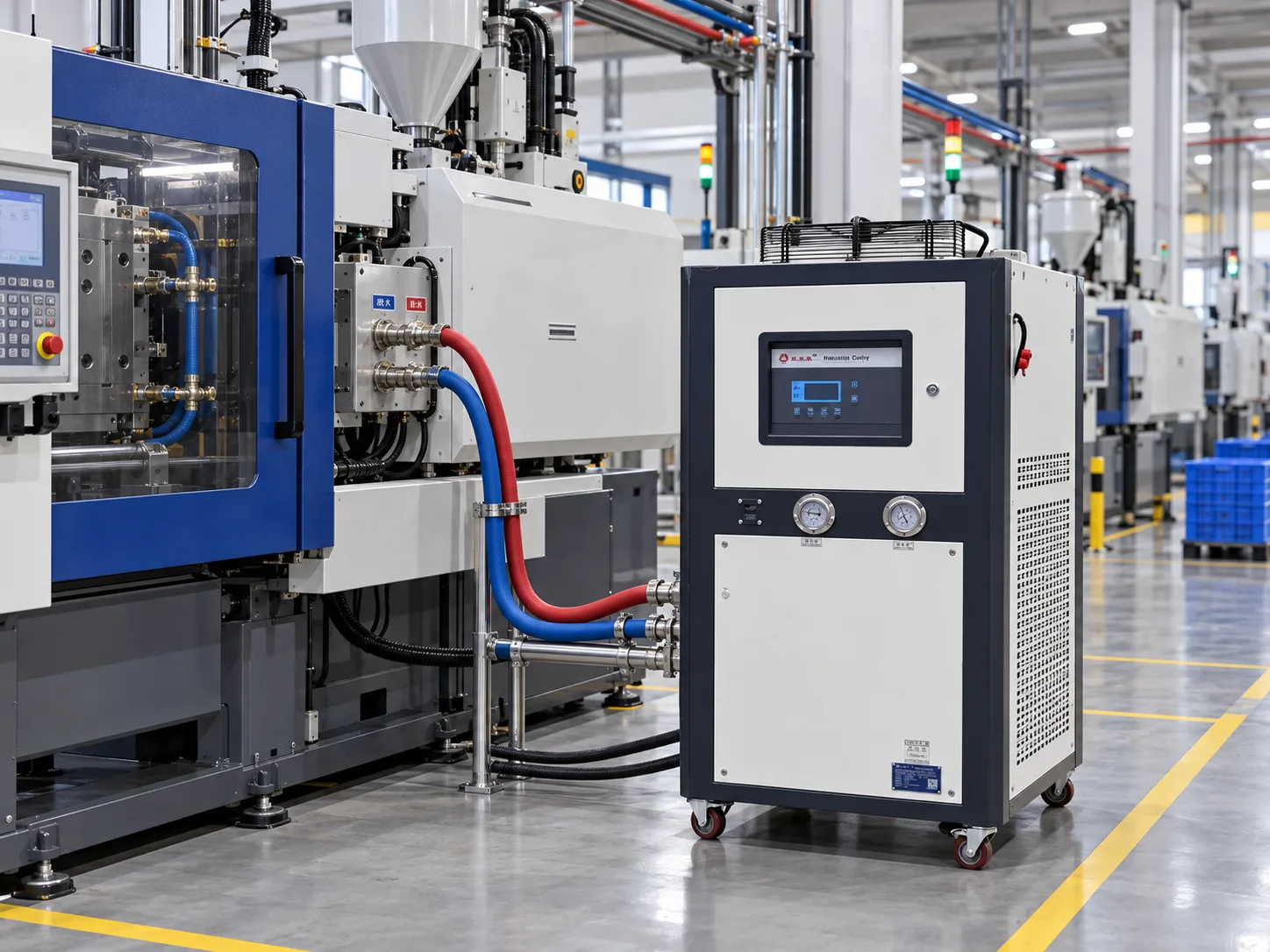
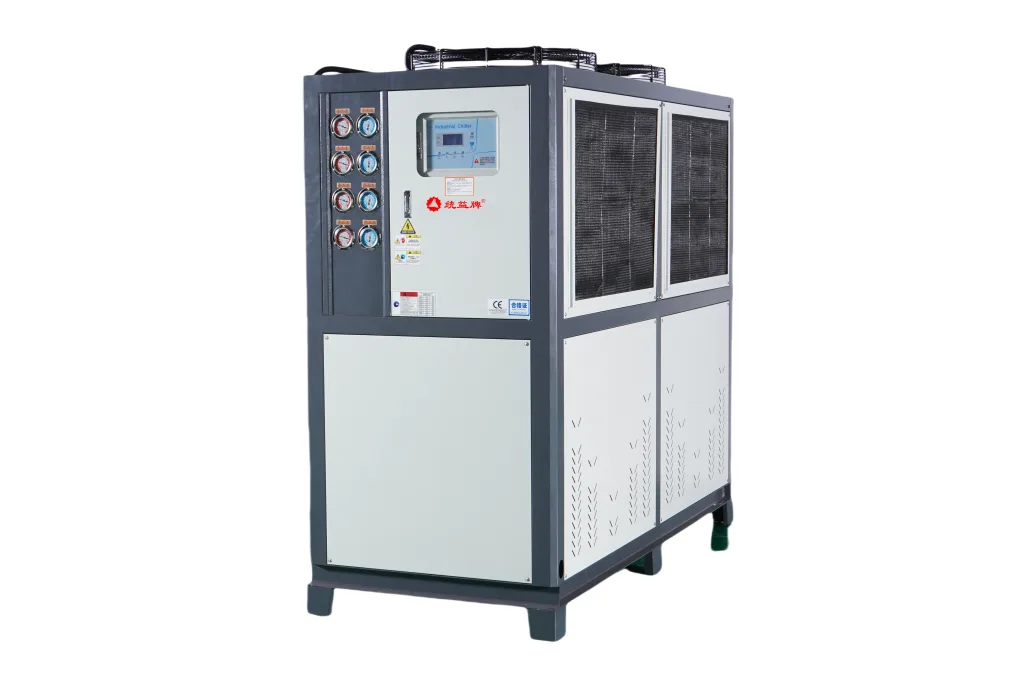
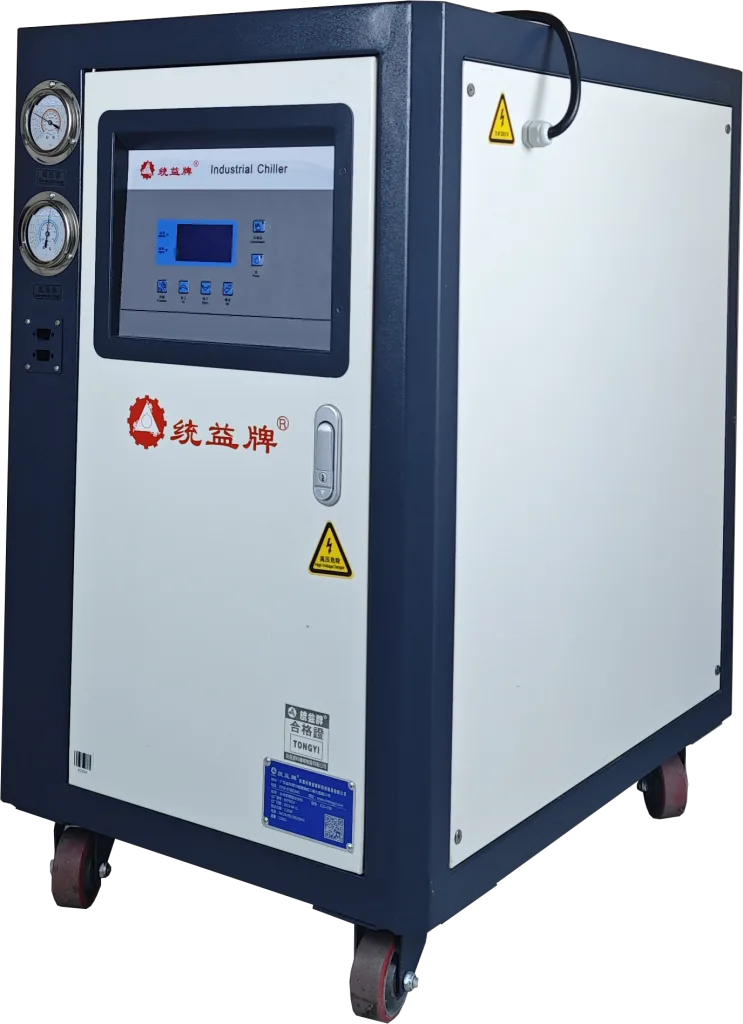
An air-cooled chiller rejects heat directly to the surrounding air; a water-cooled chiller rejects it to a cooling tower or a plant water loop. The water-cooled version is more efficient per kW of cooling, but it needs a tower, make-up water and treatment — which is why most small molding shops use air-cooled units and most large plants use water-cooled.
The decision point is roughly 200 kW of cooling capacity. Below that, the simplicity of air-cooled usually wins; above it, the efficiency gap pays for the tower.
How much more efficient is water cooling?
In typical conditions the difference is 15–25 % of compressor power, because a water-cooled condenser runs at a lower condensing temperature than an air-cooled one. That advantage shrinks in cool climates and grows in hot ones — an air-cooled unit in a 40 °C summer loses capacity and gains power draw at exactly the time you need it most.
| Factor | Air-cooled | Water-cooled |
|---|---|---|
| Power per kW cooling | higher | 15–25 % lower |
| Cooling tower | not required | required |
| Water treatment | none | required |
| Outdoor siting | possible | possible but tower needed |
| Capacity loss in hot weather | significant | minor |
| Maintenance | coil cleaning | coil + tower + water chemistry |
Why does ambient temperature matter so much?
An air-cooled condenser can only approach the ambient dry-bulb temperature. On a 38 °C day in a hall that is warmer than outside, condensing temperature climbs and cooling capacity drops — often by 10–15 % — while compressor power rises. Plants that sized the chiller on a mild day find themselves short of cooling in August.
A water-cooled system rejects heat to a cooling tower, which approaches the wet-bulb temperature and is therefore far less sensitive to a hot afternoon.
What does the cooling tower really add?
Four costs beyond the tower itself: make-up water, water treatment chemicals, periodic cleaning, and the electrical load of the tower fan and circulation pump. In many plants those together offset a third to a half of the efficiency gain, which is why the crossover is around 200 kW rather than immediately.
Where a plant already has a cooling tower for other processes, the calculation changes completely — the incremental cost of connecting the chiller is small.
Can the two be combined?
Yes, and it is common in plants that expand. A hybrid arrangement uses a water-cooled chiller for the base load and air-cooled units for peaks or for isolated machines. This keeps the tower small and avoids a single point of failure.
Where to go next
The air-cooled chiller is the practical choice for small and medium halls without a tower, while the water-cooled chiller is the efficient answer once capacity and load justify the infrastructure.
Send us your total cooling load, ambient conditions and whether a tower exists and our engineers will compare the annual energy cost of both options.