
How to Size a Chiller for Injection Molding Machines
Chiller sizing from shot weight, cycle time and mold cooling load. The three-step calculation, plus the safety margins that prevent summer shortfalls.

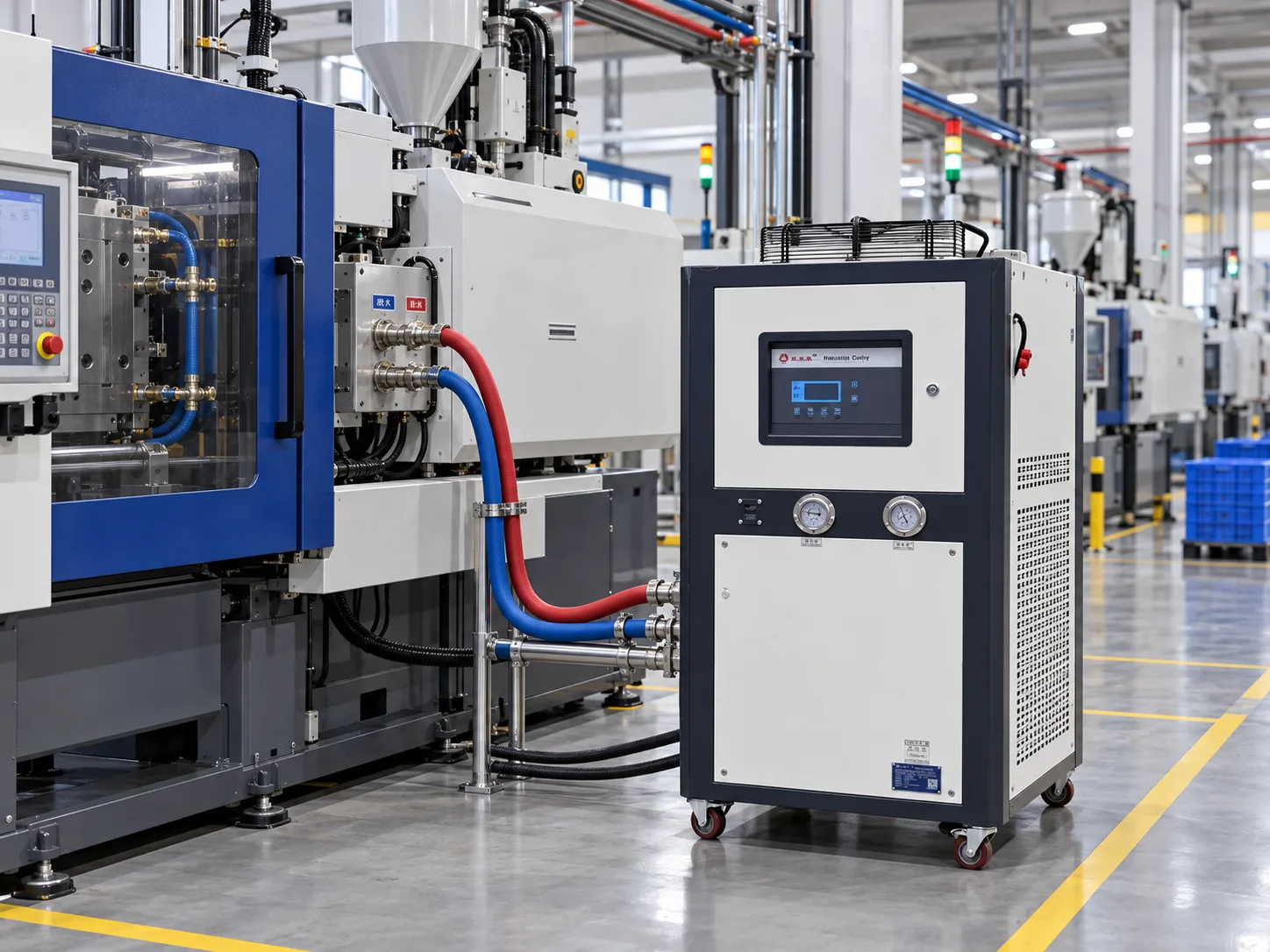
Chiller capacity is sized from the heat the molds must remove, not from the number of machines. The calculation has three steps: heat load per mold, total simultaneous load, and a margin for ambient conditions and future capacity. Skipping step three is why plants run short of cooling in summer.
A useful starting estimate for injection molding is 0.4–0.6 kW of cooling per kW of machine clamping force is wrong in the other direction — too coarse. The reliable method works from the part.
What is the three-step calculation?
Work through it once per product family, then total across the hall.
- Heat per shot — the energy that must be removed is the shot weight × enthalpy change of the polymer. A practical approximation for most commodity and engineering resins is 0.25–0.35 kWh per kg of shot weight cooled from melt to ejection temperature.
- Cooling rate — divide by cycle time. A 200 g shot on a 25 s cycle: 0.2 kg × 0.30 kWh/kg = 0.06 kWh per shot, divided by 25 s (0.00694 h) gives roughly 8.6 kW of cooling for that mold.
- Total and margin — sum across molds running simultaneously, then add 20–30 % for ambient losses, piping gain and hot-weather derating.
The result is the required cooling capacity in kW; chiller models are rated at nominal conditions, so specify the capacity at your actual ambient temperature rather than the catalogue headline figure.
Why is machine tonnage a poor shortcut?
Two 150-tonne machines can differ by a factor of three in cooling load depending on wall thickness and cycle time. A thick part with a long cycle removes heat slowly but in large quantity; a thin part with a short cycle removes less heat per shot but very quickly.
Tonnage correlates with shot size only loosely, which is why a chiller sized on tonnage is usually either oversized (wasting capital and running inefficiently at part load) or undersized (failing in summer).
What margin is actually needed?
| Allowance | Typical value | Reason |
|---|---|---|
| Ambient derating | 10–15 % | air-cooled capacity falls in hot weather |
| Piping and tank gain | 5–10 % | heat pickup between chiller and mold |
| Future capacity | 10–20 % | one or two additional machines |
| Simultaneity | 70–90 % | not every machine runs at full load at once |
Note that simultaneity reduces the total while the other three increase it. Applying a blanket 30 % on top of a full simultaneous load double-counts.
How does chilled water temperature affect capacity?
Lower supply temperature means less cooling capacity per kW of compressor power, because the evaporator runs at a lower pressure. Supplying 7 °C water instead of 12 °C can cost 10–15 % of capacity. Specify the warmest supply temperature that still meets the mold’s cooling requirement, not the coldest the chiller can produce.
Where to go next
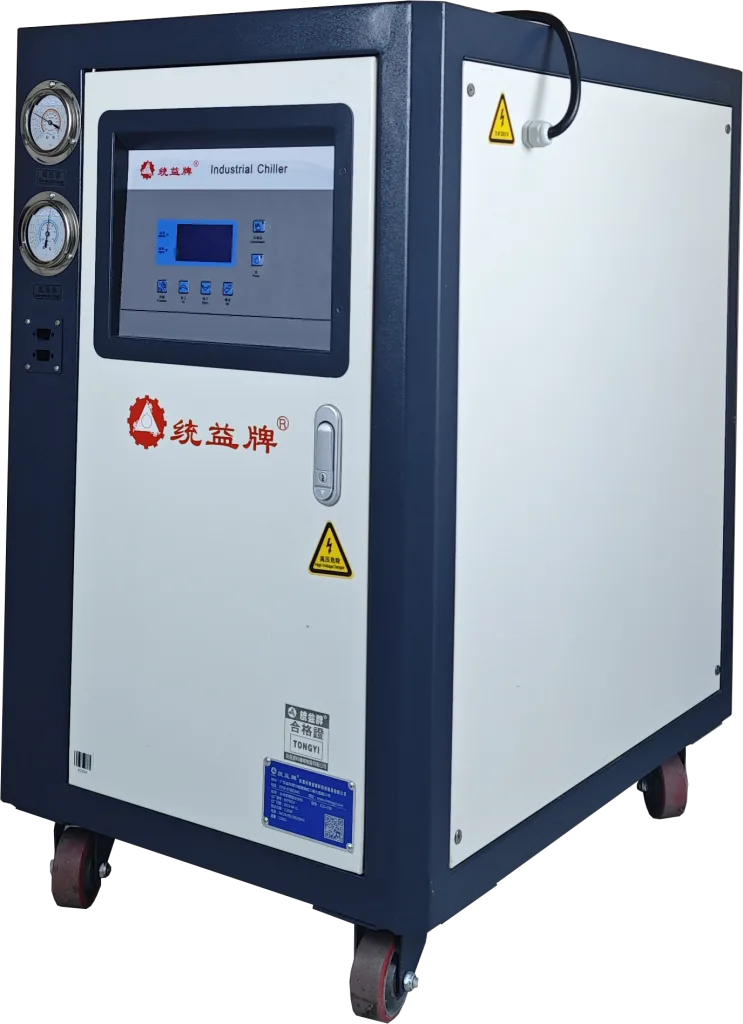
The water-cooled chiller suits plants with a tower and a large total load; the air-cooled chiller suits smaller halls and isolated machines. Where mold temperature is also being controlled, the water type mold temperature controller works with the same chilled water loop.
Send us your shot weights, cycle times and machine list and our engineers will return a cooling load calculation with the recommended chiller capacity at your site conditions.