
RS485 Integration for Mold Temperature Controllers
RS485 is listed for TMC Series communication. Confirm protocol, register map, wiring, and host compatibility with the supplier before planning integration.

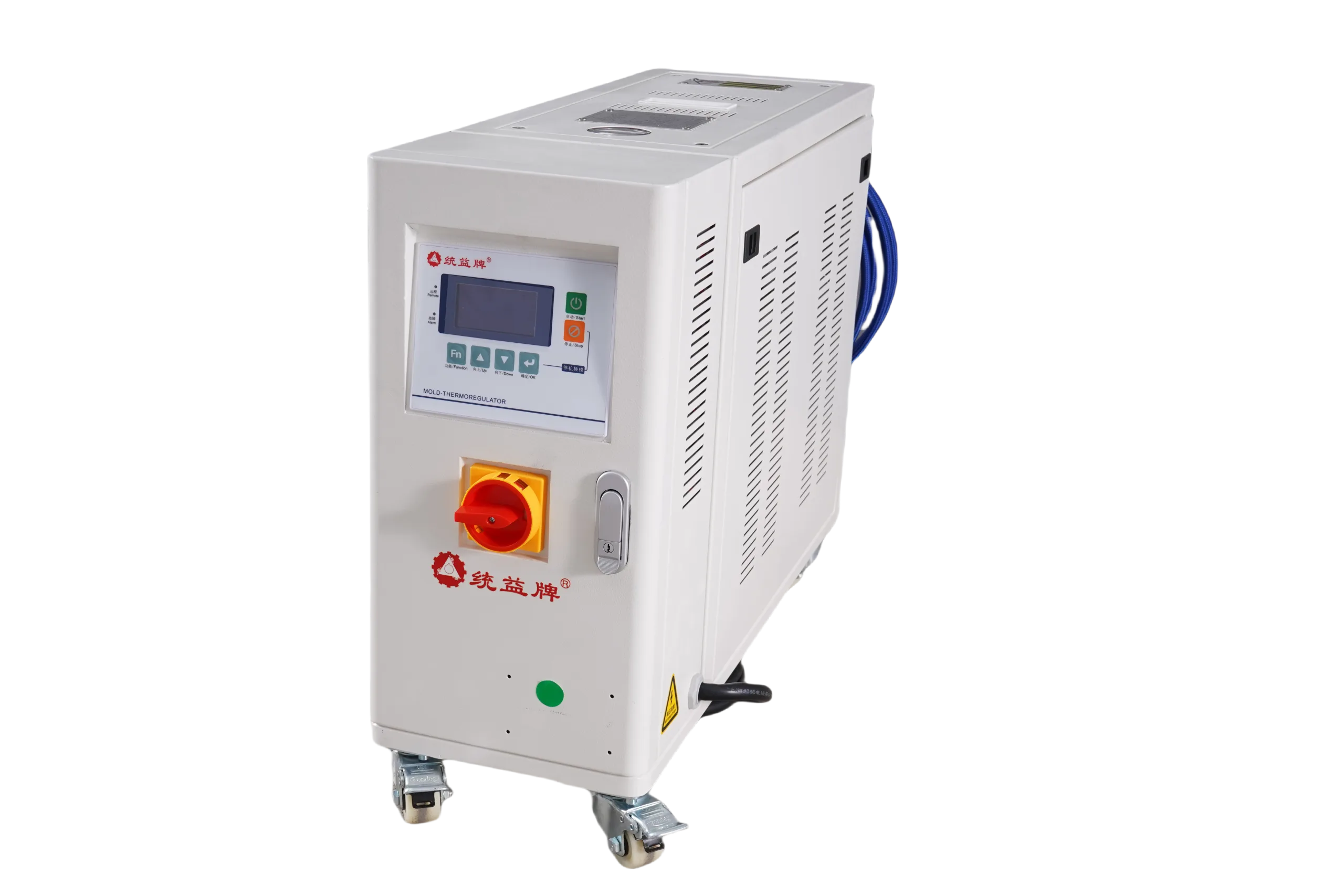
The TMC Series product page lists RS485 communication and says the unit can connect with injection molding machines and centralized control systems. It does not identify a protocol profile, register map, or remote commands. Confirm the supported functions and compatibility with the supplier before planning integration.
Why should a mold temperature controller support RS485 communication?
An RS485 port turns a standalone temperature control unit into an addressable node on a plant network. Instead of an operator walking the floor to check setpoints and alarms on each unit, a supervisory system can poll controllers, log temperature trends, push new setpoints, and flag faults the moment they occur.
For automation engineers, the practical benefits are concrete:
- Centralized visibility: mold temperatures from every machine appear on one screen, making drift and alarm events easier to spot during production.
- Traceability: logged temperature data supports process validation and customer quality documentation, which matters in automotive and medical molding programs.
- Fewer wiring runs: RS485 is a two-wire multidrop bus, so multiple controllers can share one communication loop rather than each requiring its own analog or discrete wiring back to a panel.
- Smoother SCADA or MES rollouts: units with an existing serial bus interface are far easier to bring into a plant-wide monitoring layer later.
The TMC Series mold temperature controller lists RS485 communication as a standard capability and is designed to connect with injection molding machines and centralized control systems. That makes it a candidate when you are building or expanding a networked molding cell, provided the integration details are confirmed up front.
What do you need to confirm with the supplier before buying?
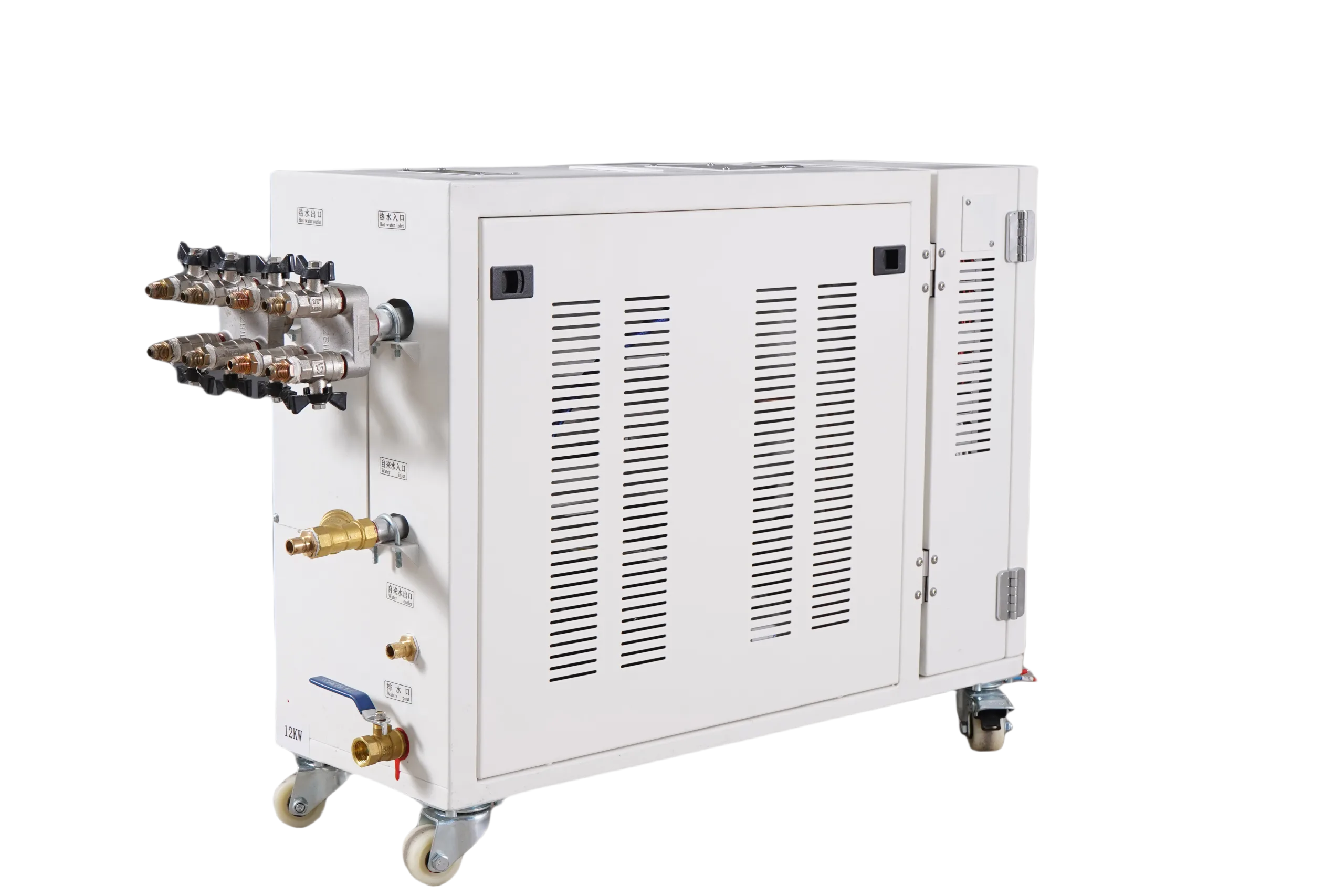
RS485 integration lives or dies on protocol details, and these are exactly the items that must be verified with the supplier rather than assumed:
- Protocol profile: ask which application protocol the RS485 port speaks and whether it matches what your injection molding machine controller or supervisory system expects. Do not proceed on the assumption that any RS485 port is interoperable with any host.
- Register mapping: request the register or parameter list so your controls engineer knows which addresses hold actual temperature, setpoint, and alarm status, and which are writable.
- Cabling and topology: confirm conductor requirements, shielding and grounding practice, maximum bus length for your layout, termination, and how many controllers the supplier recommends per bus segment.
- Addressing scheme: verify how each unit is assigned a unique address so multiple controllers coexist on one loop without conflicts.
- Compatibility with your existing controls: if you run a specific PLC brand or a machine-side controller with its own communication option, describe that environment to the supplier and ask them to confirm interoperability in writing.
Request written protocol, wiring, and compatibility information before ordering. Resolving interface questions early can make integration planning clearer, but commissioning requirements and effort depend on the host system and site configuration.
How does RS485 integration compare with running controllers standalone?
For many buyers, the real selection question is whether to pay for communication capability at all. The honest answer depends on your plant’s monitoring strategy and how quickly you expect to expand.
| Aspect | Standalone operation | RS485 networked operation |
|---|---|---|
| Initial setup | Simplest; no bus design or addressing needed | Requires protocol verification, register mapping, and cabling plan |
| Monitoring | Operator checks each unit at the panel | Supervisory system reads all units continuously |
| Alarm response | Local alarm only; response depends on operator presence | Alarms surface centrally, enabling faster intervention |
| Data traceability | Manual records at best | Automatic temperature logging for quality documentation |
| Expansion | Each added machine repeats the manual workflow | New controllers join the existing bus structure |
If you are running a small shop with no plans for plant-level monitoring, standalone control may be adequate. If you are an automation engineer building a multi-machine cell, or if your customers require process data, RS485 integration is usually worth the additional planning effort.
How does the TMC Series fit into an injection molding machine setup?
The TMC Series is a mold temperature controller offered with RS485 communication, and its product documentation states it can connect with injection molding machines and centralized control systems. In a typical cell, each TMC unit circulates temperature-controlled medium to one mold, while its RS485 port joins a shared communication loop that runs back to a supervisory panel or the machine-side control architecture.
When specifying the TMC Series, put the following in your request for quotation so the supplier can confirm fit:
- Number of molding machines and molds in the cell, and expected future expansion
- Your host system’s communication environment, described factually (serial parameters, host controller type, and any gateway in between)
- Layout sketch showing controller locations and approximate bus routing distances
- Which parameters you need to read remotely (actual temperature, setpoint, alarms) and which you want to write
- Site power supply characteristics and installation environment
Because the verified product information confirms RS485 capability and connectivity with molding equipment but does not publish a specific protocol profile or list of supported PLC brands, treat protocol compatibility as a confirm-with-supplier item, not a datasheet given. This is standard practice for serial bus integration and protects you from a mismatch between controller and host.
What should an integration plan look like step by step?
A disciplined integration sequence keeps commissioning short and predictable:
- Define the host. Identify what will talk to the controllers: a supervisory system, the injection molding machine’s controller, or both. Document its communication requirements.
- Confirm the protocol and register map. Get written documentation from the controller supplier and reconcile it against your host’s requirements before ordering.
- Design the bus. Plan cable routing, addressing, termination, and grounding. Keep RS485 runs clear of high-noise power circuits typical around molding machines.
- Bench-test one loop. Bring up a single controller on your host and verify you can read actual values, write setpoints, and capture alarm states before deploying the full cell.
- Roll out and document. Address each unit, test alarm propagation, and file the register map and cable drawings where future maintenance staff can find them.
Engineers who follow this order rarely encounter the classic failure mode: controllers delivered, bus wired, and only then discovering that the two ends of the link do not speak the same language.
How should you compare suppliers for an RS485-capable mold temperature controller?
For an integrated installation, compare the controller, any required cabling or converters, host-system requirements, and commissioning scope. Ask each supplier to state what is included so quotations can be compared on the same basis.
Use these criteria when comparing quotes:
- Written protocol and register documentation supplied with the quotation
- Willingness to confirm compatibility with your described host environment
- Availability of application engineering support during commissioning
- Clarity of the quotation scope: what is included in the controller, what is optional, and what you must supply (cabling, connectors, host-side hardware)
- Lead time and spare-parts support for your region
Request quotations that itemize these elements so you can compare offers on a like-for-like basis.
Frequently asked questions
Can a TMC Series controller connect directly to any injection molding machine?
The TMC Series is designed to connect with injection molding machines and centralized control systems via RS485, but direct compatibility depends on your machine controller’s communication requirements. Describe your machine and host environment to the supplier and obtain written confirmation of protocol and register compatibility before ordering.
How many controllers can share one RS485 bus?
RS485 is a multidrop bus that supports multiple addressable devices, but the practical number of controllers per segment depends on the supplier’s design recommendations, total cable length, and your plant’s electrical noise conditions. Confirm the recommended devices-per-segment figure and bus length limits with the supplier for your layout.
What documentation should I request for integration?
Request the communication protocol description, the full register or parameter map showing read and write addresses, wiring and termination guidelines, and the addressing procedure. Ask the supplier to confirm in writing how the controller behaves on power-up and after a communication loss so your host logic can handle those states safely.
Do I need special cabling for the RS485 connection?
Yes, plan the cabling deliberately. Use cable suited to serial bus communication with appropriate shielding, follow the supplier’s grounding and termination instructions, and route the bus away from high-noise power circuits near molding machines. Confirm allowable bus length and conductor specifications with the supplier for your specific cell layout.
See the Water Type Mold Temperature Controller TMC Series page for the published model specifications.
Last updated: October 30, 2026