
Thermal Oil Mold Temperature Controller Price
The price of a thermal oil mold temperature controller depends on heater power class, pump specification, control platform, certifications and freight.

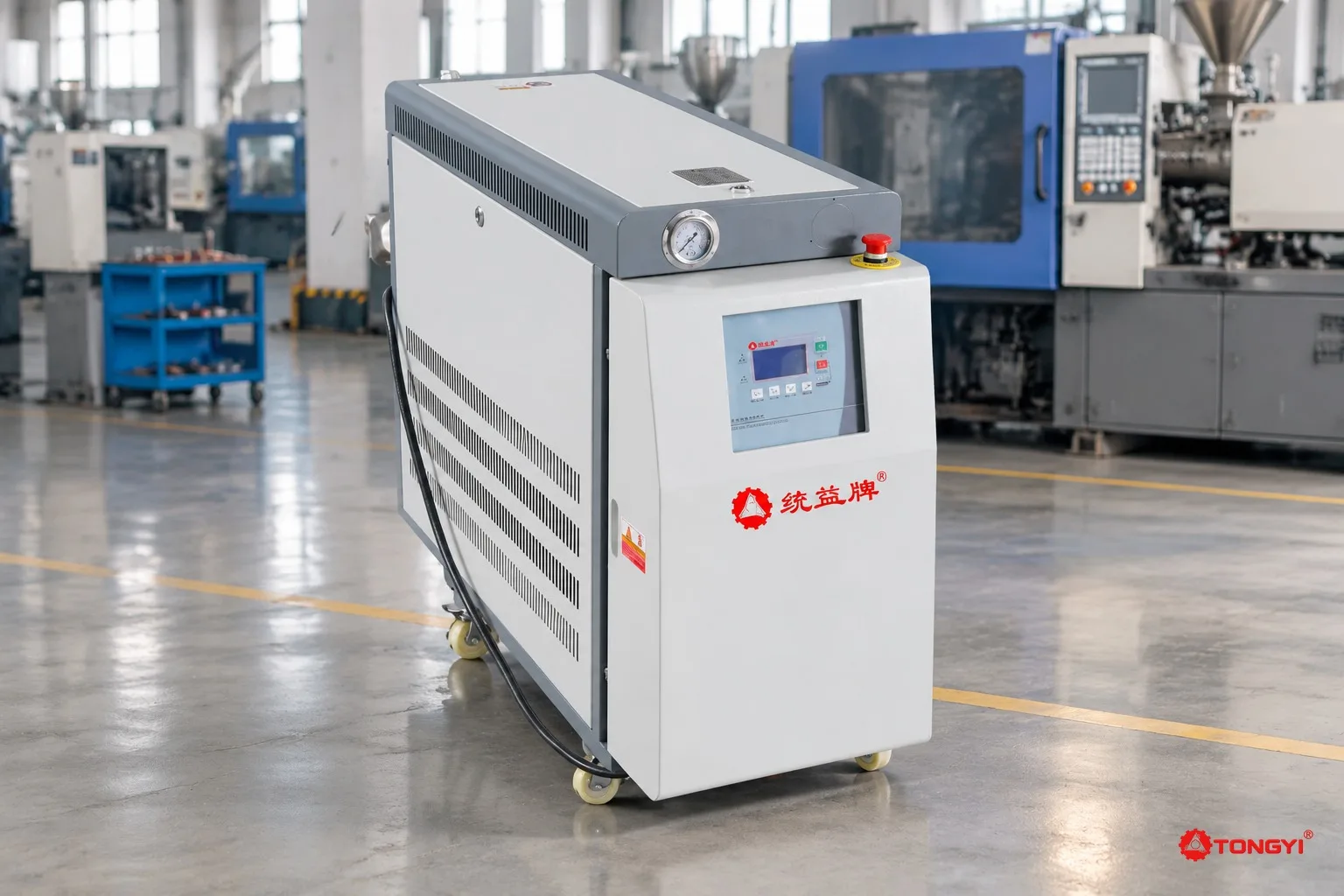
The price of a thermal oil mold temperature controller is driven mainly by five factors: the heat-transfer medium, heater power class, pump specification, control system type, and certification plus freight requirements. Buyers who compare quotes on a like-for-like basis across these five lines typically identify 20–40% of the spread between apparently similar offers before negotiating.
What actually drives thermal oil mold temperature controller price?
The largest cost drivers are heater power, pump capacity, and the control platform. Oil-type units, which typically operate in the 150–300 °C range for engineering resins such as PC, PA and PBT, cost more than water-based units because of the higher sealing, insulation and heater-element demands. Within oil units, the heater power class (commonly 9 kW to 72 kW in standard ranges) and the pump motor size are the two line items with the widest spread between suppliers.
- Heater power class: larger heating elements and contactors raise both component and wiring cost.
- Pump power and seal type: high-temperature oil pumps with mechanical seals cost significantly more than standard centrifugal pumps.
- Control type: a basic PID controller is far cheaper than a PLC-based system with touch-screen HMI, multi-zone control and data logging.
- Build quality details: stainless pipework, insulated panels and brand-name electrical components all show up in the quote.
Water-based vs oil-based units: how does the medium change the price?
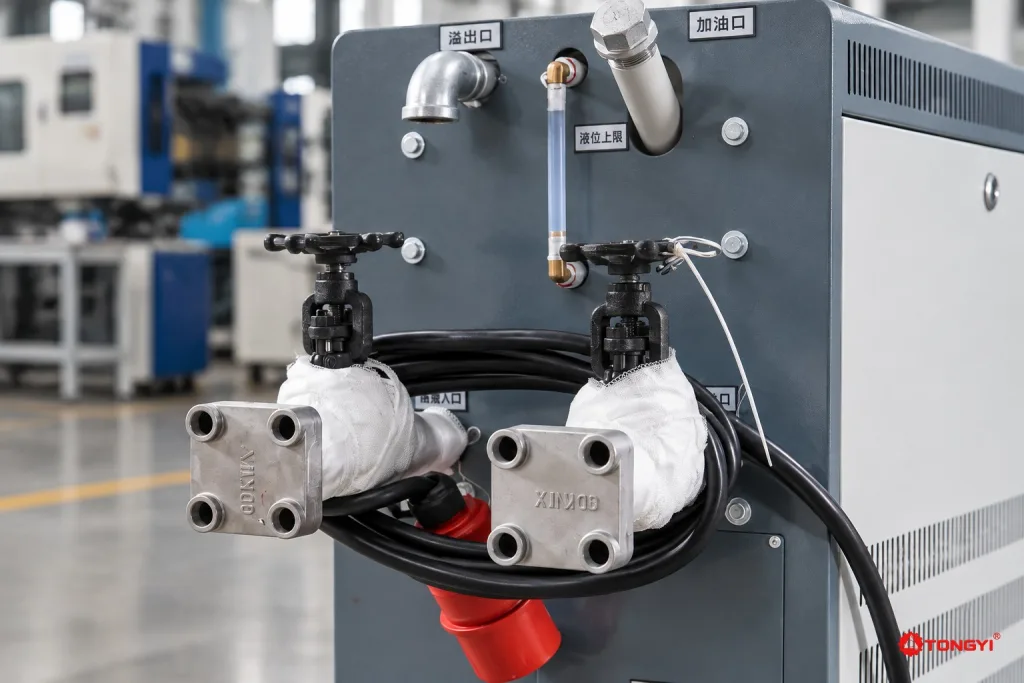
Water units are generally the lower-cost option because they operate under 180 °C and use simpler pumps and seals; oil units command a premium for high-temperature service. The right comparison is not cost alone but temperature coverage: a buyer running ABS at 90 °C does not need an oil unit, while a buyer molding PC at 130 °C or PA66 at 160 °C+ typically does.
| Factor | Water-based unit | Oil-based unit |
|---|---|---|
| Typical operating range | Up to ~180 °C | 150–300 °C |
| Pump and seal cost | Standard, lower | High-temperature, higher |
| Maintenance intensity | Scale management | Oil aging and replacement |
| Typical applications | PP, PE, ABS, PET preforms | PC, PA, PBT, PMMA, BMC |
| Relative unit price | Lower | Higher |
How do control options affect the quote you receive?
The control platform is often the single biggest configurable cost difference between two quotes. A standard PID temperature controller with over-temperature protection covers most single-circuit molding needs. A PLC with an HMI adds recipe storage, multi-zone management, alarm history and remote communication — valuable for automated cells and quality audits, but it changes the price noticeably.
When comparing quotes, ask specifically whether inverter-based (variable-frequency) heating is included. Inverter heating adjusts output to actual demand, reducing energy consumption and thermal stress on the elements; it carries a higher initial cost that many buyers recover through lower running costs on long-running molds.
Why do freight, packaging and certifications widen the price gap?
Export-ready packaging, certifications and Incoterms can shift the landed cost more than buyers expect. Seaworthy wooden cases with proper fixing, humidity protection and shock indicators add real cost but protect a unit containing heaters, pumps and electronics through a multi-week ocean transit.
- Certifications: CE marking for the EU market is standard practice; other destination markets may require additional electrical compliance testing, which suppliers pass through in the quote.
- Incoterms: an FOB quote and a CIF or DDP quote are not comparable without adjusting for freight and insurance. Always normalize to the same Incoterm before comparing.
- Voltage and frequency: 60 Hz markets or non-standard voltages may require different motors and heaters, affecting both price and lead time.
How should procurement teams compare supplier quotes?
Build a one-page comparison matrix and require every supplier to fill in the same fields. A thermal oil mold temperature controller quote that omits pump power, heater class or controller type is not a complete quote — it invites hidden cost later.
A practical checklist for comparing offers:
- Heater power (kW) and number of heating stages
- Pump power (kW) and flow rate at working temperature
- Temperature range and control accuracy specification
- Control platform: PID, PID + HMI, or PLC with data logging
- Inverter heating: included or optional
- Electrical component brands for contactors, breakers and SSRs
- Compliance documentation for your destination market
- Packaging standard, warranty terms and spare-parts list
Quotes that score evenly on this matrix can then be compared on commercial terms — payment schedule, lead time and after-sales support — where the real negotiation happens.
How do you choose the right specification before requesting a price?
Fix three numbers before you ask for quotes: required mold temperature, required heating capacity, and the number of control zones. Mold temperature comes from your resin supplier’s processing data; heating capacity depends on mold mass, shot weight and cycle time, and suppliers can size it from that data; zones follow your mold’s cooling-circuit layout.
Providing these three inputs lets suppliers quote exactly rather than adding contingency margin for uncertainty — usually the fastest legitimate way to lower the offered price without cutting specification.
Frequently asked questions
Is a higher-power heater always better value?
No. Oversized heaters cost more upfront and can cause unnecessary cycling and thermal stress. Correct sizing from mold mass, resin processing temperature and cycle time delivers stable control at the lowest total cost. Ask suppliers to show their sizing calculation with your mold data.
Should I buy a PID or PLC-controlled unit?
PID control is sufficient for most single-zone injection molding applications and keeps cost down. Choose PLC control when you need recipe management, multi-zone coordination, alarm history or communication with a plant monitoring system — typical for automated or audited production environments.
Does inverter heating justify its higher price?
For long-running molds with stable thermal load, inverter heating reduces energy consumption and extends heater element life, so the premium is often recovered over the unit’s service life. For short runs or frequently changed molds, the payback period is longer and standard heating may be more economical.
Why do quotes for the same specification differ so much?
Differences usually come from pump and heater brands, control platform scope, certification requirements, packaging standard and Incoterms. Normalize all quotes to the same technical fields and the same Incoterm, and most of the apparent price spread becomes explainable line by line.
Last updated: November 02, 2026