
Troubleshooting Unstable Mold Temperature
Use a diagnostic checklist for unstable mold temperature, from setpoint and water circulation to sensor checks, alarms, and supplier escalation.

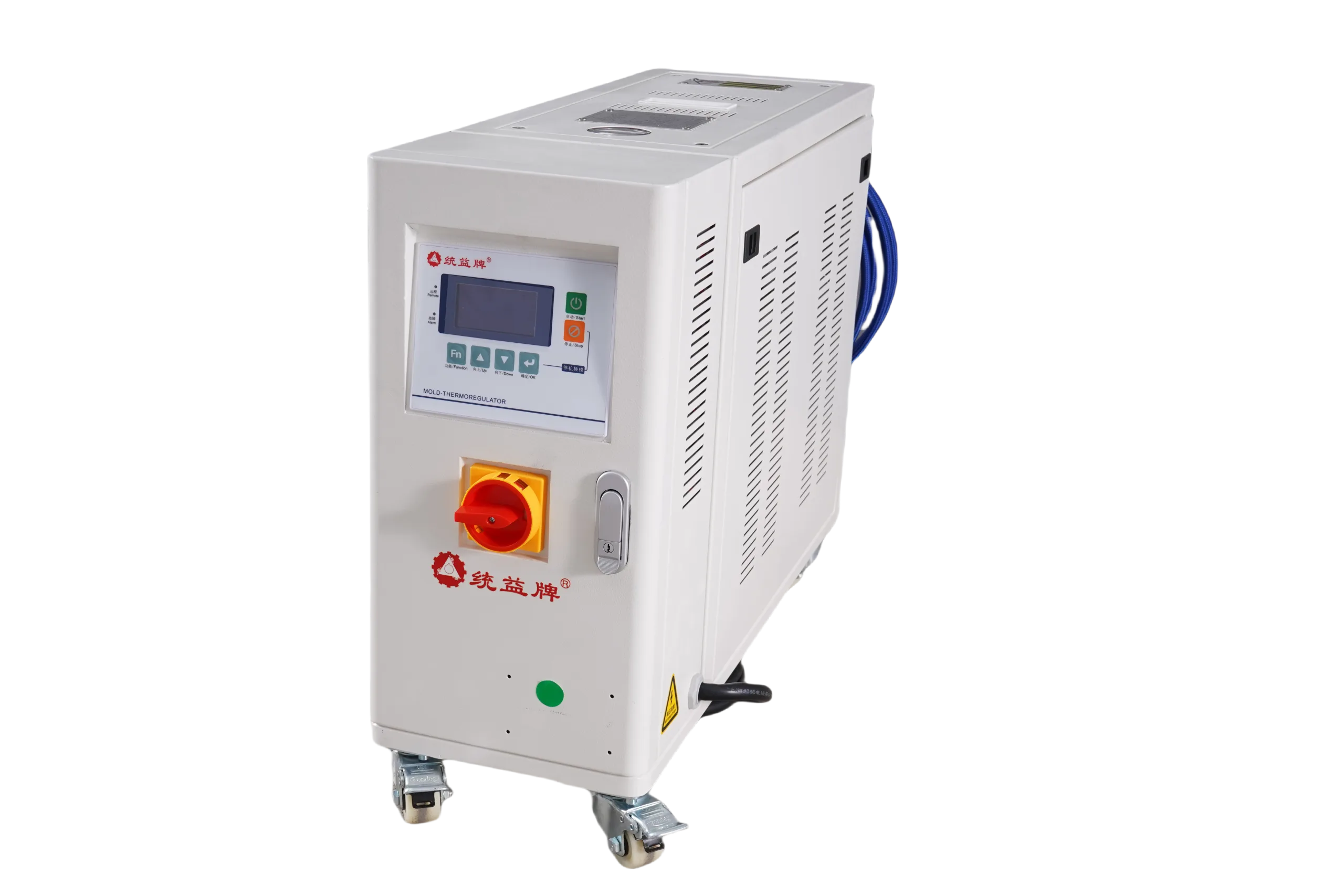
Unstable mold-temperature readings can have several causes, including sensor, circulation, water-level, control, mold, or process conditions. Use the equipment manual and site procedure to check them systematically; do not treat a protection as a diagnostic test.
Why does mold temperature swing when the controller holds setpoint?
If the controller display and mold measurements differ, compare readings at documented measurement points with a suitable reference instrument and review the measurement method. A difference alone does not identify whether the controller, mold, sensor, or process is responsible.
- Matching readings, unstable mold: suspect flow restriction, hose collapse, or manifold scaling on the mold side.
- Controller reading drifting or lagging: suspect the temperature sensor.
- Controller cycling on and off rapidly: suspect pump or circulation problems upstream.
How do you check the thermocouple on a mold temperature controller?
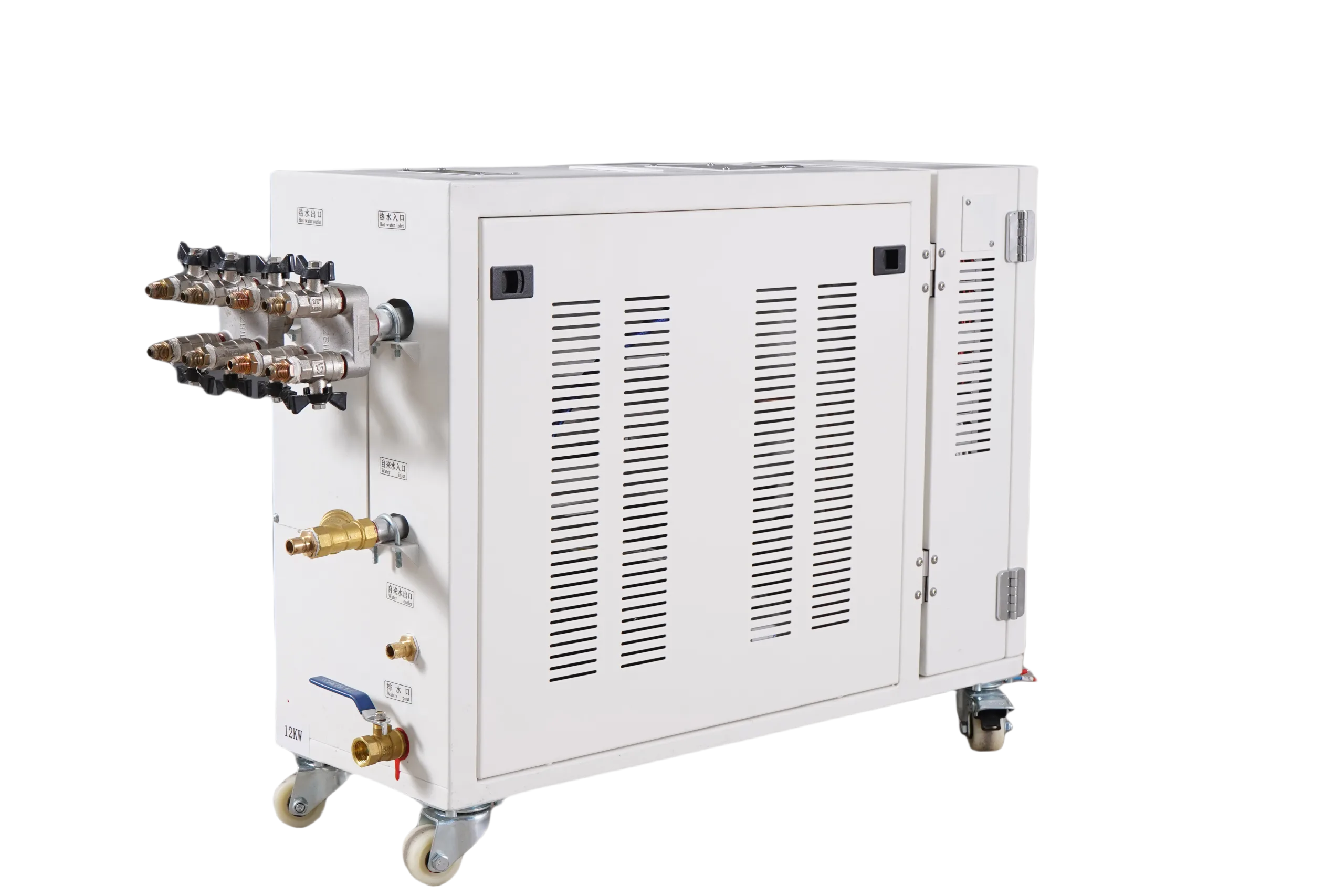
The TMC Series product page lists a K-type thermocouple probe. Confirm the sensor type and input configuration from the equipment manual; do not generalize this specification to other water-type controllers.
- Verify placement. The probe must sit fully in the sensing well with good contact; a loose or partially seated probe reads intermittently.
- Compare against a reference. Use a calibrated handheld probe on the same line near the unit. A consistent offset points to the sensor; a mismatch that changes with flow points elsewhere.
- Inspect the cable and connector. Damaged extension wire or a corroded plug causes intermittent dropouts that look like temperature swings.
If the probe or its connection is damaged, replace it with the correct K-type element specified by the controller manufacturer rather than improvising a generic sensor.
What circulation problems cause unstable mold temperature?
Pump circulation is what carries heat to and from the mold, so any flow restriction shows up as temperature instability. Check in this order:
- Water level. Low water level is a listed protection condition on units like the TMC Series for a reason — insufficient water starves the pump and causes erratic delivery. Top up with clean water and investigate where the loss is coming from.
- Pump overload. Repeated pump overload protection trips indicate mechanical resistance: check for debris in the pump strainer, kinked supply hoses, and partially closed valves.
- Scale and contamination. Mineral buildup in the tank, heater jacket, and mold channels progressively reduces heat transfer. Flush the circuit on a scheduled basis, and use treated or distilled water where plant water hardness is high.
- Air in the loop. After any refill, run the pump to purge trapped air before judging temperature stability.
How do built-in protections help you isolate the fault?
The TMC Series product page lists protections for overheating, pump overload, low water level, and abnormal operating conditions. Treat an indicated protection as a reason to follow the fault procedure in the manual, not as proof of a specific cause.
| Protection that activates | Most likely cause | First check |
|---|---|---|
| Low water level | Leak, evaporation, or blocked makeup | Inspect hoses, fittings, and tank level |
| Pump overload | Flow restriction or pump debris | Check strainer, valves, and hose routing |
| Overheating | Sensor drift or heating control fault | Verify probe against a reference gauge |
| Abnormal operating condition | Multiple interacting issues | Confirm water quality and full circulation path |
Record the displayed protection, operating conditions, and time when an event occurs. A log may help the supplier investigate a recurring issue, but it cannot identify a fault cause within a guaranteed timeframe.
When should you verify the mold and tooling side instead?
If basic checks do not resolve the issue, inspect the mold circuit and connected equipment according to the site procedure and manual. Escalate persistent or unsafe conditions to the supplier or qualified service personnel.
What should you ask for when replacing an unstable controller?
If the unit requires replacement, compare the published requirements for temperature range, medium, heater and pump ratings, sensor, communication, and protections. Confirm the proposed configuration with the supplier rather than relying on a generic feature checklist.
Frequently asked questions
Why does my controller show the right temperature but the mold runs cold?
The controller can only read its own sensing point. If flow to the mold is restricted by scale, collapsed hoses, or throttled valves, the water near the unit reaches setpoint while the tool runs cold. Verify flow and measure the mold directly with a reference probe.
How often should controller water be replaced?
The product page lists clean water as the medium but does not specify a water-treatment method, hardness limit, or cleaning interval. Follow the equipment manual and ask the supplier how to assess contamination or scale for your water supply; do not assume distilled or treated water will extend a service interval.
Can a damaged thermocouple cause temperature swings?
A loose, damaged, or poorly connected probe can affect a reading. Check the sensor, wiring, and input configuration using the manufacturer procedure, then compare readings with an appropriate reference instrument before replacing parts.
What information should a quote request include?
When asking for a troubleshooting or replacement recommendation, provide the setpoint range, circuit and connection details, site water and electrical conditions, and any displayed protection. Ask the supplier to confirm the appropriate configuration in writing.
See the Water Type Mold Temperature Controller TMC Series page for the published model specifications.
Last updated: October 30, 2026