
How Much Does a Water-Type Mold Temperature Controller Cost, and What Does Maintenance Pricing Look Like?
See what a water-type mold temperature controller costs, which specs drive price, and how maintenance pricing shapes total cost.
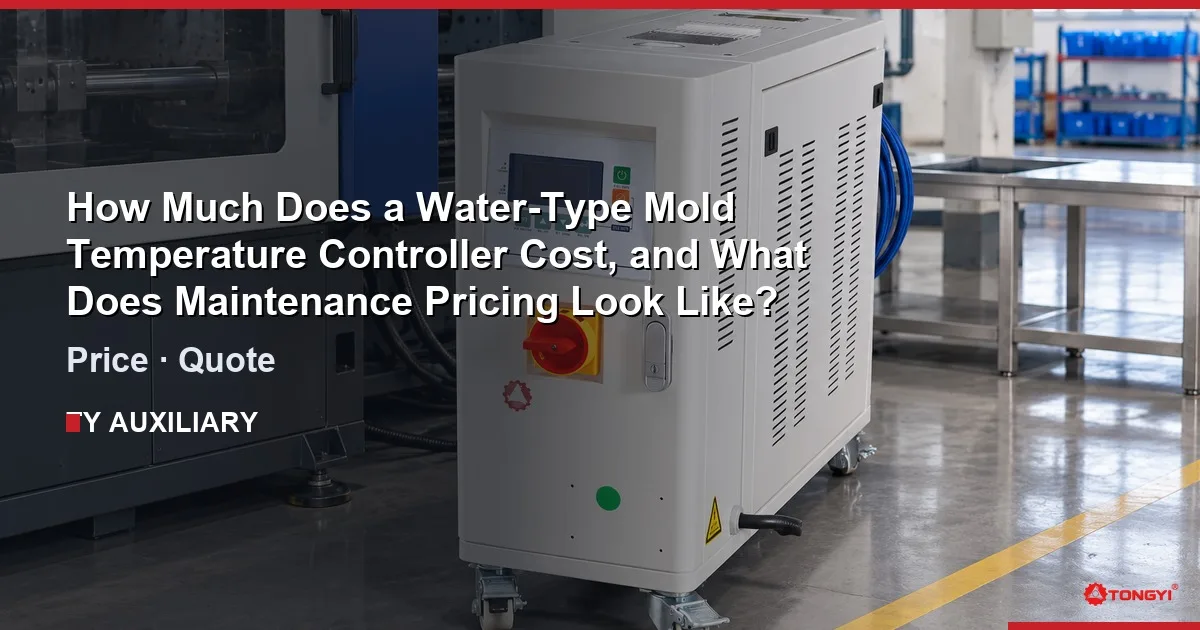
A water-type mold temperature controller typically ranges in cost from a few thousand US dollars for a compact single-zone unit to considerably more for high-flow, high-heating-power models, with the final price driven mainly by heating capacity, pump size, control features, and the level of supplier support built into the quote. Because suppliers rarely publish fixed price lists for industrial thermal equipment, the practical way to budget is to understand what specifications move the price, request quotes against a clearly defined duty, and ask separately for maintenance and spare-part pricing so you can compare total cost of ownership rather than purchase price alone.
What Actually Drives the Price of a Water-Type Mold Temperature Controller
Water-type units circulate clean water as the heat-transfer medium, which makes them the usual choice for molding processes running at moderate temperatures. Their price is shaped by several specification choices, and knowing these helps you read a quote critically rather than comparing only the bottom line.
- Heating capacity (electric heater power). Higher kilowatt ratings cost more but let the controller recover temperature faster on larger molds or higher shot volumes. Under-sizing here is a common procurement mistake: the unit is cheaper, but cycle time and part quality suffer.
- Pump power and maximum flow. Flow determines how much heat the unit can actually deliver to the mold and how well it maintains stability across multiple circuits. Larger pumps also raise the price.
- Maximum operating temperature. For water-type controllers this is typically capped around 120 °C; if your process needs more, you move to oil-type units, which sit at a different price point entirely.
- Cooling method and circuit configuration. Direct cooling versus indirect cooling, and the number of inlet/outlet splits (for example 2-in/2-out versus 1-in/1-out manifolds), affect both hardware cost and installation plumbing.
- Control accuracy, safety features, and build quality. Thermocouple type, controller brand, alarms, and enclosure standards all appear as line items once you ask suppliers to itemize.
- Freight, duties, and commissioning. For US buyers importing from overseas manufacturers, shipping volume, crating, and whether the quote includes remote commissioning support can swing the landed cost significantly.
Why Quoted Prices Vary So Much Between Suppliers
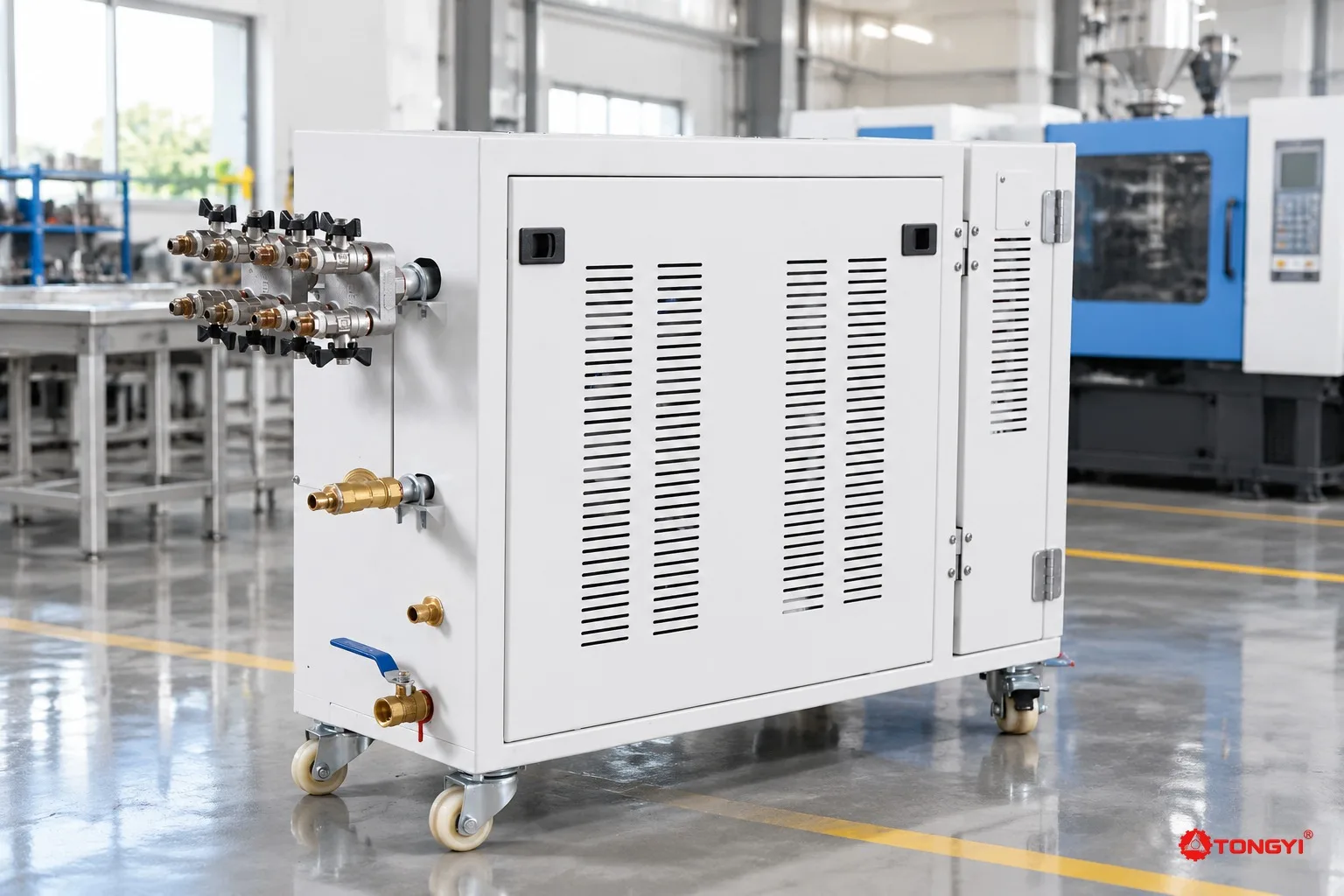
Two suppliers can quote very different figures for what sounds like the same controller. Usually the difference is scope, not margin. One quote may include a higher heater rating, a bigger pump, stainless wetted parts, or documented temperature testing; another may cover a bare-bones unit. The only reliable comparison is like-for-like: send every supplier the same specification sheet and require them to state each rating explicitly.
A published series-level specification worth noting when you compare quotes: the water-type mold temperature controller series is published with a temperature accuracy of ±0.1 °C. This is a series-level published figure, so before you rely on it for a specific model, confirm with the supplier what measurement point and test conditions it applies to. It is also controller accuracy, not temperature uniformity throughout the mold cavity — uniformity depends on your mold’s channel design and flow balance, which no controller rating alone can guarantee.
Model Selection as a Cost Decision: Matching Capacity to Your Molding Process
Because price scales with capacity, selecting the right model is really a cost-optimization exercise. Over-specifying wastes capital and operating budget; under-specifying costs you in cycle time and scrap. The table below compares the key verified ratings across the series so you can see where your duty falls.
| Model | Heater Power | Pump Power | Max Flow | Max Pressure | Circuit Configuration | Piping Connection |
|---|---|---|---|---|---|---|
| TMC 60W | 6 kW | 0.37 kW | 42 L/min | 0.35 MPa | 2-in/2-out | 3/8 inch |
| TMC 90W | 9 kW | 0.75 kW | 60 L/min | 0.4 MPa | 2-in/2-out | 3/8 inch |
| TMC 120W | 12 kW | 0.75 kW | 60 L/min | 0.4 MPa | 4-in/4-out | 3/8 inch |
| TMC 180W | 18 kW | 1.5 kW | 165 L/min | 0.25 MPa | 1-in/1-out | 1 inch |
| TMC 240W | 24 kW | 1.5 kW | 165 L/min | 0.25 MPa | 1-in/1-out | 1 inch |
| TMC 360W | 36 kW | 2.2 kW | 310 L/min | 0.3 MPa | 1-in/1-out | 1.2 inch |
All models in this series use clean water as the medium, offer a maximum temperature of 120 °C, use direct cooling, and employ K-type probe thermocouples for medium inlet/outlet temperature sensing, with a 15 mm return-water port. The minimum controllable temperature is cooling water temperature plus 5 to 30 °C, which matters if your plant’s chilled water runs cold: the controller cannot regulate below that offset.
Reading the trade-offs in the ratings
Two specifications deserve close attention when you weigh price against performance. First, heating power and flow rise together across the range: the TMC 60W provides 6 kW of heating with a 0.37 kW pump delivering up to 42 L/min, while the TMC 360W steps up to 36 kW of heating and a 2.2 kW pump delivering up to 310 L/min. If your mold needs fast heat-up and stable temperature across several large circuits, the higher-flow models justify their premium; a small single-cavity mold does not need that flow and you should not pay for it.
Second, note that maximum flow and maximum pressure are separate ratings and move differently across the range. The TMC 90W carries a maximum pressure of 0.4 MPa, the highest in the series, whereas the TMC 180W and TMC 240W, despite much larger flow (165 L/min) and heating power, are rated at 0.25 MPa maximum pressure. If your mold’s cooling channels are long or restrictive and need higher system pressure to push adequate flow through, a large-flow, lower-pressure unit may not be the right fit — check your circuit pressure drop with the supplier before ordering. Circuit configuration also shifts with size: the mid-range TMC 120W uses a 4-in/4-out manifold on 3/8 inch connections for multi-circuit molds, while the larger TMC 180W, 240W, and 360W move to single-circuit 1-in/1-out arrangements with 1 inch and 1.2 inch piping, which changes your plant-side plumbing and installation cost.
What to Include in a Quote Request to Get Comparable Prices
To make supplier quotes genuinely comparable, specify the following in every request:
- Required medium outlet temperature and your plant’s cooling water supply temperature, so the supplier can confirm the minimum controllable temperature offset is achievable.
- Estimated mold heat load or mold weight and material, so heater power can be sized rather than guessed.
- Number of mold circuits and required flow per circuit, so pump size and manifold configuration are matched to the mold.
- Available power supply (voltage, phase, frequency) at your US facility — a mismatch discovered after shipment is an expensive fix.
- Itemized scope: controller, shipping terms (Incoterms), crating, documentation, remote commissioning, and warranty terms.
Understanding Maintenance Costs on a Water-Type Unit
Purchase price is only part of the picture; the maintenance side of water-type controllers is generally modest but not zero, and it is worth negotiating upfront. Water systems avoid the oil replacement and disposal costs of oil-type units, but water quality, scale, and pump wear become the recurring cost items instead.
- Consumables and wear parts. Ask for a published spare-parts price list covering items such as pump seals, heaters, thermocouples (the series uses K-type probe thermocouples), solenoid valves, and gaskets. Having unit prices in hand turns an emergency repair into a planned, budgeted one.
- Water treatment. Scale buildup on heaters and in channels degrades performance and shortens heater life. Budget for water treatment or filtration on the supply side; suppliers can advise on acceptable water hardness, and you should confirm their recommendation in writing.
- Preventive maintenance scope. Typical items include checking pump operation, verifying temperature sensing against a reference, cleaning strainers, and inspecting the cooling valve. Ask each supplier what their recommended PM interval is and whether they offer service contracts — the answers are often revealing about their support capability.
- Downtime cost. The cheapest maintenance plan is one that prevents unplanned stops. Units with clear alarms, accessible components, and documented troubleshooting reduce your reliance on factory service visits, which for imported equipment can be slow and costly.
When comparing suppliers, ask for maintenance pricing as a separate, itemized document: cost of the annual spare-parts kit, hourly service rates if applicable, and lead times for common wear parts. A supplier who answers these questions quickly and concretely is usually the one who will support you well after the sale.
A Practical Next Step for Buyers
If you are evaluating a water-type mold temperature controller, start by defining your mold’s heat load, circuit count, and target temperature, then send those parameters to two or three suppliers for itemized quotes against models of the appropriate size — for example the TMC 90W for smaller multi-circuit work or the TMC 240W for larger single-circuit molds — and request the maintenance and spare-parts price list in the same request. If you need to move beyond 120 °C, ask the same supplier about their mold temperature controller range for higher-temperature oil-type alternatives, since the price and maintenance profile change materially at that point.
Frequently Asked Questions
The questions below are the ones buyers most often raise when budgeting for a water-type mold temperature controller. Note: pricing questions are answered here in terms of cost drivers and quote-request practice, since actual figures depend on specification, volume, and freight terms.
What information should I give a supplier to get an accurate price?
Provide your target process temperature, estimated mold heat load or mold weight, number of cooling circuits, available electrical supply, and plant cooling water temperature. With these inputs a supplier can size heater power, pump flow, and circuit configuration properly, which is what makes the quote accurate — and makes multiple quotes comparable.
Why is there such a wide price spread between quotes for similar controllers?
Quotes differ because the specifications behind them differ: heater kilowatts, pump size, control components, build quality, warranty scope, and freight terms all move the number. Always require suppliers to quote against an identical specification sheet and to itemize what is included, including shipping terms and commissioning support.
How much maintenance does a water-type mold temperature controller need?
Routine upkeep focuses on water quality, scale prevention, pump and seal inspection, and periodic verification of temperature sensing. Water-type units avoid oil replacement costs, but you should budget for water treatment, a spare-parts kit (heaters, thermocouples, seals, valves), and agreed preventive-maintenance intervals with your supplier.
Is a higher-flow, larger model always the better investment?
Not necessarily. Larger models such as the TMC 360W deliver up to 310 L/min of flow and 36 kW of heating, which suits large or multi-circuit molds, but they cost more to buy and to operate. Match flow and heater power to your actual mold duty, and check that the model’s maximum pressure rating suits your circuit’s pressure drop.
Can a water-type controller run below room temperature or on chilled water?
Water-type units of this kind have a minimum controllable temperature defined as cooling water temperature plus 5 to 30 °C, so they cannot cool below your supply water temperature plus that offset. Confirm your chilled water temperature and the specific minimum offset with the supplier before specifying a unit for low-temperature work.
How does temperature accuracy in the spec translate to part quality?
The series is published with ±0.1 °C temperature accuracy, but this is controller-level accuracy at the sensing point, not temperature uniformity across the mold cavity. Uniformity depends on mold channel design and flow balance, so discuss both your accuracy requirement and your mold’s circuit layout with the supplier.