
Drying PET and Regrind Without Hydrolysis Damage
PET needs 0.005 percent moisture and minus 40 C dew point. Here is how to dry preform resin and regrind without degrading molecular weight.

PET is the most moisture-sensitive resin in common use. Its target moisture before processing is around 0.005 % — an order of magnitude tighter than PA or PC — and the consequence of missing it is not cosmetic splay but chain scission: the polymer loses molecular weight and the preform or bottle fails in strength testing days later.
Getting there requires three things simultaneously: air at −40 °C dew point, residence time of four to six hours, and a temperature inside the supplier’s window. Missing any one of the three produces resin that looks dry and is not.
Why is PET more sensitive than other engineering resins?
The ester bond in the PET chain reacts with water at melt temperature. Each reaction cuts one polymer chain, and the resulting shorter chains lower intrinsic viscosity (IV). The part still forms, still looks clear, and fails later — which is why bottle plants measure IV rather than inspect visually.
PA and PC suffer the same mechanism but tolerate more water before the damage becomes visible. PET’s margin is narrow because its processing temperature is high and its target moisture is very low.
What dew point and temperature does PET actually need?
Standard preform grades dry at 150–170 °C for four to six hours with air at −40 °C. Below that dew point the resin reaches an equilibrium above target moisture and simply stops drying, no matter how long the hopper runs.
| Application | Drying temp. | Time | Target moisture | Dew point |
|---|---|---|---|---|
| Bottle-grade PET | 160–170 °C | 4–6 h | < 0.005 % | −40 °C |
| Sheet / film PET | 150–170 °C | 4–6 h | < 0.005 % | −40 °C |
| Recycled PET flake | 160–175 °C | 5–8 h | < 0.01 % | −40 °C |
| PETG | 65–75 °C | 3–5 h | < 0.02 % | −20 °C |
Why does regrind need a longer cycle?
Regrind has more surface area per kilogram and more paths for water ingress: every cut edge is an entry point, and flake holds moisture on the surface as well as inside. A plant drying virgin PET for four hours typically needs five to eight for flake at the same temperature.
Two rules keep regrind out of trouble. First, dry it separately from virgin rather than blending wet flake with dry granule. Second, cap the regrind ratio at a level you can actually dry — 100 % regrind in a dryer sized for virgin is a common cause of unexplained IV loss.
What happens if you over-dry PET?
Over-drying is real and it also costs IV. Excessive time at high temperature causes thermal degradation independent of moisture, and the visual symptom is yellowing rather than splay. Once the resin is dry, holding it at 170 °C for many extra hours does damage rather than good.
The correct target is “dry and stable”, not “dry as long as possible”. A dew point controller that holds set point and a residence time matched to throughput achieves that; a dryer left running overnight on a full hopper does not.
How do you verify PET is actually dry?
Measure, do not infer. Three methods are practical:
- Karl Fischer titration — the reference method, used for incoming inspection and for settling disputes with a resin supplier.
- Gravimetric moisture analyser — fast enough for per-shift checks, accurate enough to catch drift.
- IV measurement — measures the damage directly rather than the cause; the definitive test for bottle and sheet applications.
A practical routine is a gravimetric check at the start of each shift plus periodic IV testing on finished parts, which catches hydrolysis that a moisture reading on the hopper misses.
Where to go next
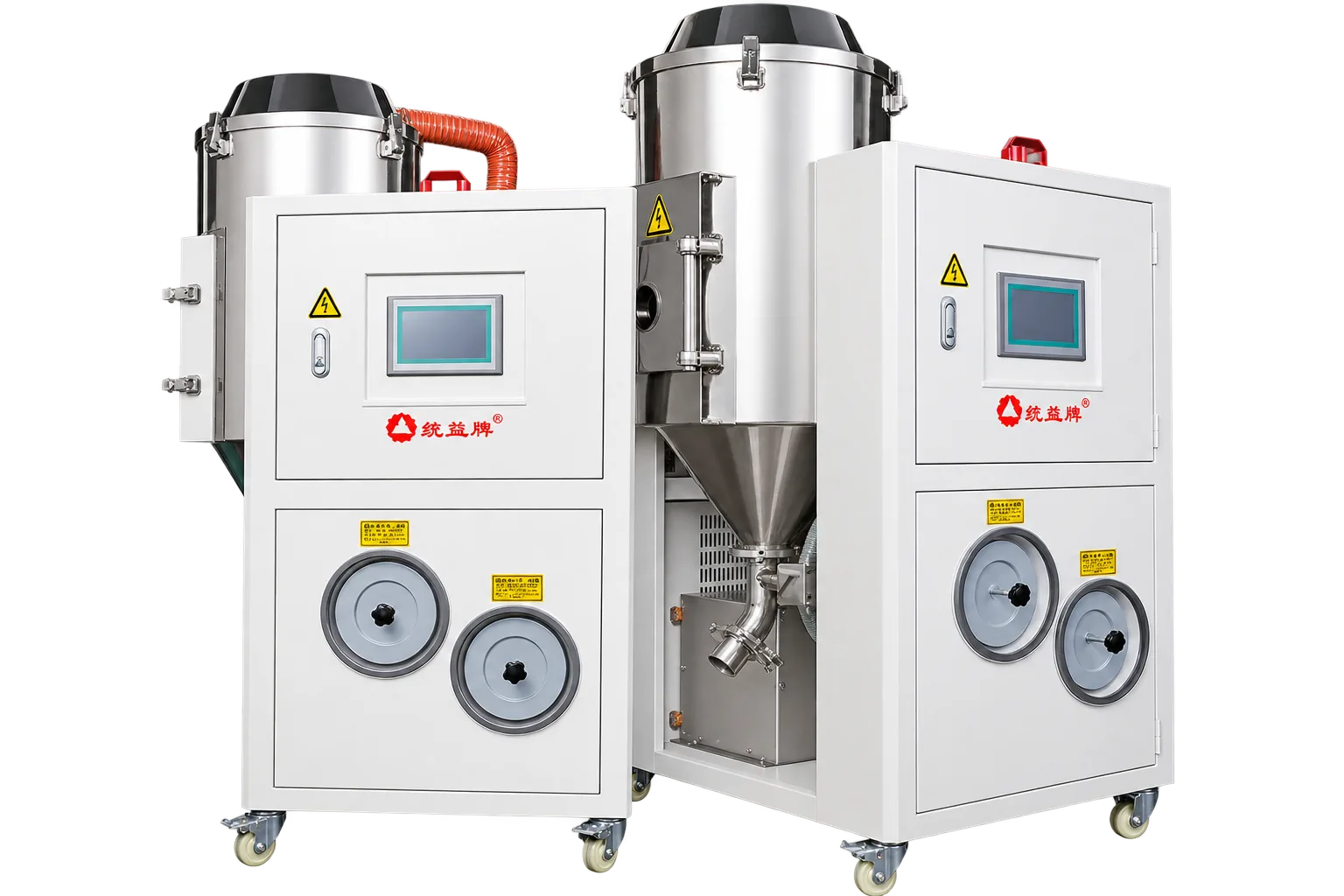
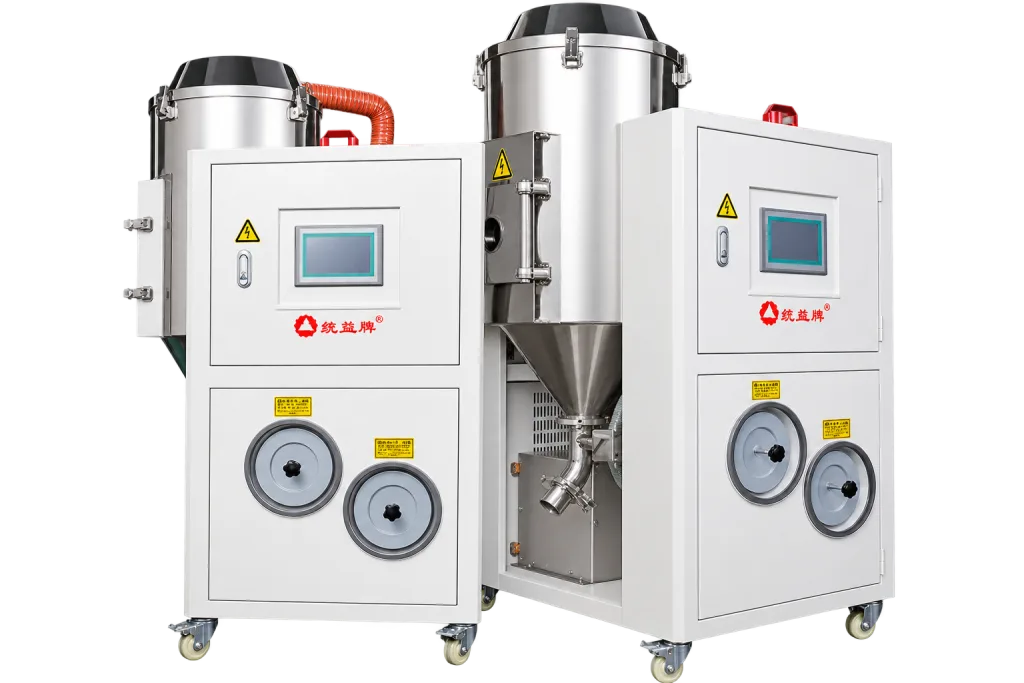
PET drying needs a dryer specified for −40 °C dew point with a hopper sized to the full residence time. The three-in-one dehumidifying dryer covers drying and conveying for preform lines, and the honeycomb rotor dehumidifier is the standalone option where conveying already exists.
Tell us your throughput, regrind ratio and target IV and our engineers will size the dryer and residence time for your line.