
Industrial Oil Type Mold Temperature Controller
Understand the five factors that drive oil type mold temperature controller price, from heater power class and pump selection to control type.

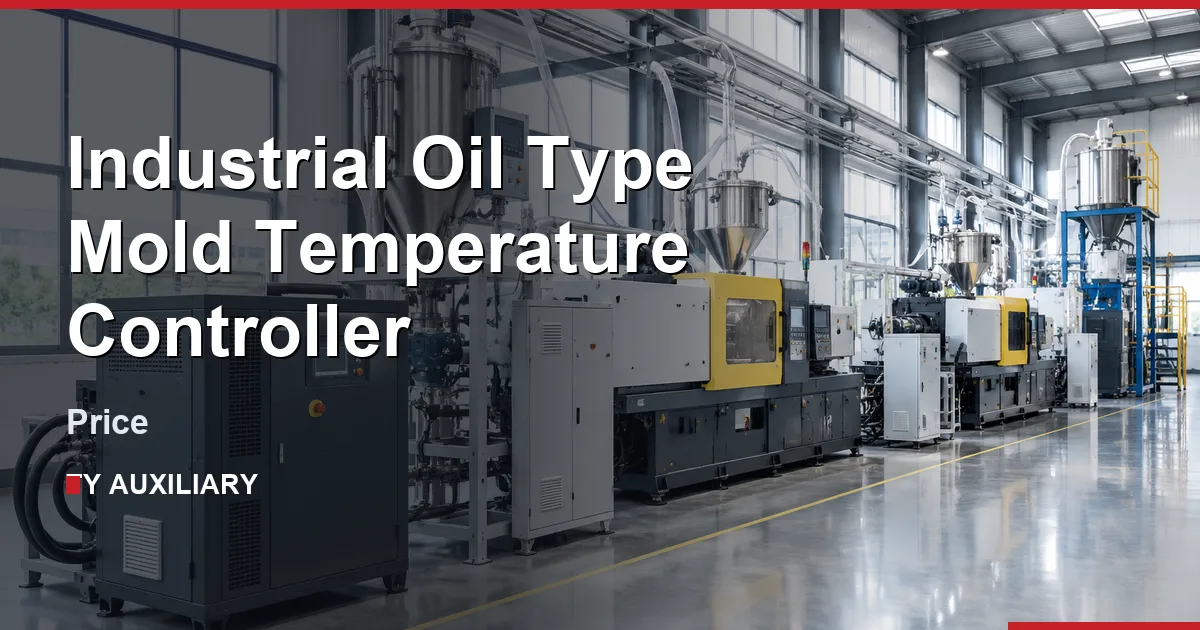
The price of an oil type mold temperature controller is driven by five factors: heater power class, pump specification, control system (PID versus PLC), optional inverter heating, and required certifications with export packaging. Because these variables differ from project to project, suppliers quote case by case, and buyers comparing quotes should first align on configuration before comparing numbers.
What actually drives an oil type mold temperature controller price?
The single largest cost driver is the heating power class. A unit sized for a small injection mold may need 9–12 kW of heating, while large die-casting or compression molds can require 36 kW or more, which means bigger heaters, heavier contactors or thyristors, and a larger oil circulation pump. Pump power follows a similar logic: higher flow and pressure needed to push oil through long, narrow mold channels adds cost.
Control architecture is the second major lever. A basic PID controller with a single setpoint is the most economical option. A PLC-based system with touchscreen HMI, multi-zone control, data logging, and communication protocols (Modbus, OPC UA) raises the price but pays off in process monitoring and traceability. Inverter-driven heating, which adjusts output to actual demand instead of cycling full power, typically adds to the initial quotation but reduces running cost over the equipment life.
How do water and oil units differ in cost and application?
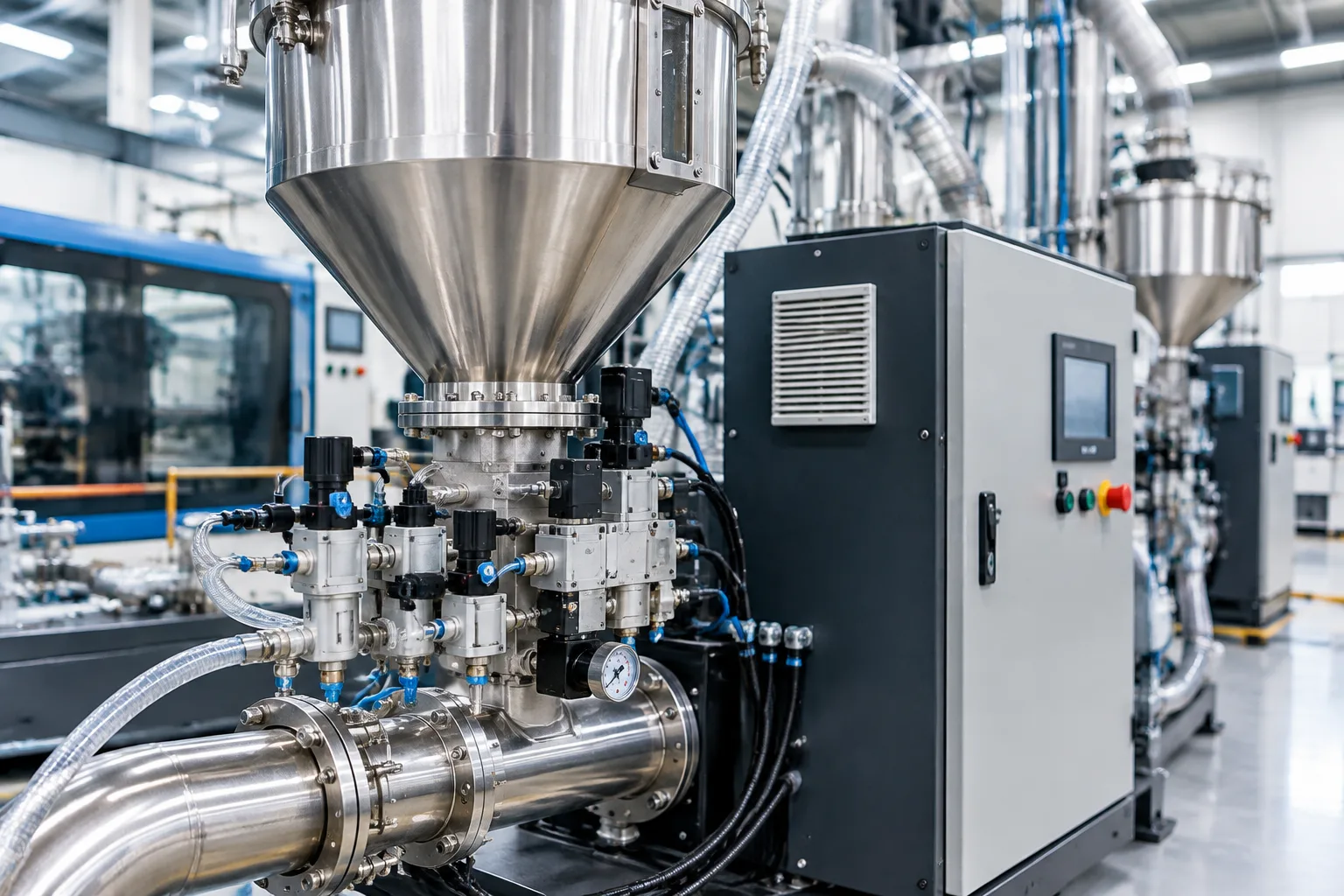
Water type units are cheaper and cover mold temperatures up to roughly 90–120 °C under pressure, while oil type units typically operate from about 90 °C up to 180 °C or higher, since oil does not boil at these temperatures. If your process targets below 100 °C, a water unit is usually the more economical choice; above that range, oil becomes the only practical medium.
| Factor | Water type unit | Oil type unit |
|---|---|---|
| Typical operating range | Up to ~90–120 °C (pressurized) | ~90–180 °C and above |
| Heat-transfer medium cost | Low (water) | Higher (heat-transfer oil, periodic replacement) |
| Relative purchase cost | Lower | Higher, due to seals, expansion tank, and heater rating |
| Typical applications | Thin-wall packaging, general injection molding | Optics, automotive parts, die casting, BMC/thermoset molding |
| Maintenance burden | Scale management | Oil condition checks, leak inspection |
Buyers often request quotes for both configurations when their product mix spans both temperature ranges, so it is worth confirming which medium the quoted unit uses before comparing figures.
How much heater and pump power does your application need?
Heater power should be sized from the mold’s heat demand: mold mass, target temperature, cycle time, and the heat lost to ambient and to cooling circuits. As a practical starting point, many molding shops size the temperature control unit at roughly 20–30% above the calculated steady-state demand to allow for fast heat-up between production runs. Undersizing shows up as a controller that never reaches setpoint at production speed; oversizing wastes money upfront and can cause unnecessary oil cycling.
Pump selection matters just as much. Oil is more viscous than water, and long or small-diameter mold channels demand higher pump head. When requesting quotes, provide the mold channel diameter, connection layout, and estimated flow requirement so the supplier can specify pump power correctly instead of defaulting to a standard model.
Why do certifications and export packaging change the quotation?
Overseas buyers frequently overlook freight and compliance as cost drivers. Units shipped to markets requiring CE or other regional compliance must include conforming electrical components, safety interlocks, and documentation, which the supplier will price in. Likewise, seaworthy export packaging — wooden crates with moisture protection — adds to the landed cost but prevents transit damage that is far more expensive to resolve after delivery.
Heater power class also interacts with electrical supply. Units built for your plant’s voltage and frequency (for example, 380 V/50 Hz versus 460 V/60 Hz) avoid field modification costs. Always state your site electrical data in the inquiry so the quotation reflects a ready-to-install machine.
How should procurement teams compare supplier quotes?
The most common mistake is comparing quotations on unit price alone. Two quotes for an oil type mold temperature controller can differ by 30% simply because one includes inverter heating, a stainless pump, and CE-compliant components while the other is a bare-bones PID unit. Build a like-for-like comparison sheet covering:
- Heating power (kW) and heating method (direct vs. inverter modulated)
- Pump power and rated flow/pressure
- Operating temperature range and control accuracy
- Controller type: single-loop PID, multi-zone PID, or PLC + HMI
- Included sensors, safety devices, and alarms
- Certifications, documentation, and spare parts list
- Export packaging, Incoterms, and delivery lead time
- Warranty scope and remote technical support
Suppliers who respond to this level of detail with a clear, itemized quotation are generally better long-term partners than those returning a one-line figure.
How do you get an accurate quotation from a manufacturer?
Send the supplier four pieces of information: your process type and target mold temperature, the mold’s heating demand or dimensions, your site electrical supply, and any required certifications or communication protocols. A capable manufacturer will return a configuration proposal — not just a price — within a few working days. Ask for the proposed heater and pump ratings in writing so you can verify the sizing logic against your own heat-load calculation.
If your team is gathering quotes for an upcoming project, start by defining the temperature range and control scope first; those two decisions narrow the field faster than any price negotiation and make every subsequent quotation directly comparable.
Frequently asked questions
Why is an oil type unit more expensive than a water type unit?
Oil units require higher-temperature seals, an expansion tank, more powerful heaters to reach 120–180 °C, and components rated for the oil medium. Heat-transfer oil itself adds an ongoing consumable cost that water units do not have.
Does inverter heating justify the higher initial price?
For continuous production with stable heat demand, inverter control reduces energy consumption by modulating output to actual need rather than switching full power on and off. For intermittent or low-duty operation, the payback period may be longer and a standard PID unit may be sufficient.
What information should I include in my inquiry?
Provide the target mold temperature, mold heating demand or dimensions, site voltage and frequency, required certifications, and any communication protocol for factory integration. Complete inquiries receive accurate, comparable quotations much faster.
Can one controller serve multiple molds?
A single-loop unit serves one mold circuit. If you need different temperatures on different zones or machines, either choose a multi-zone PLC-controlled unit or install separate controllers per circuit to keep temperatures independent and stable.
Last updated: October 29, 2026