Retrofitting an Existing Plant with Central Feeding and Drying
Retrofitting a running plant is a sequencing problem, not an equipment problem. Phasing, shutdown windows and the four things that always take longer.

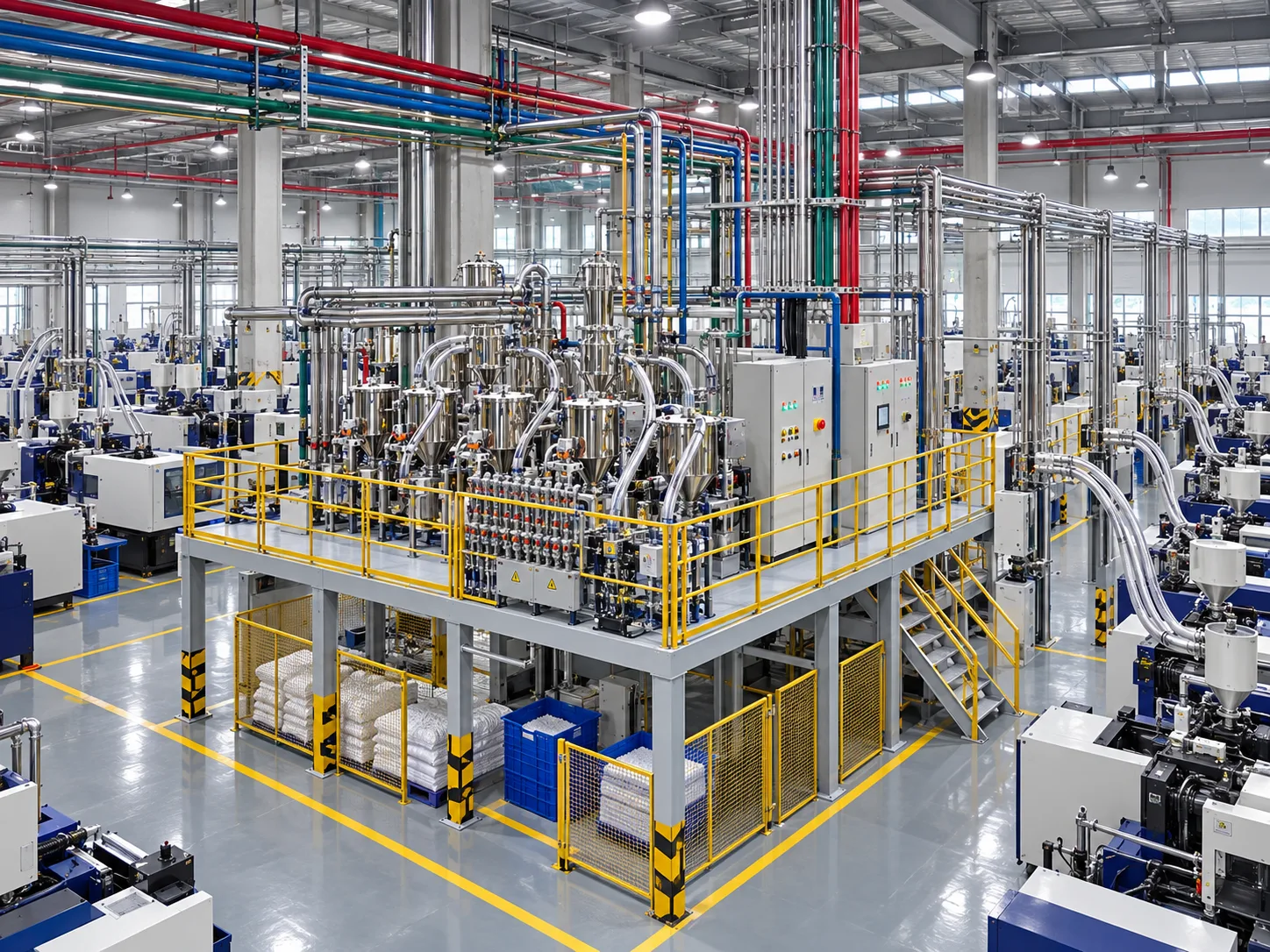
Retrofitting central feeding and drying into a running plant fails for schedule reasons far more often than technical ones. The equipment is the same as a new installation; what differs is that production cannot stop, access is constrained, and every connection has to be made during a shutdown window.
Planning the sequence, not the equipment list, is what determines whether the retrofit finishes on time.
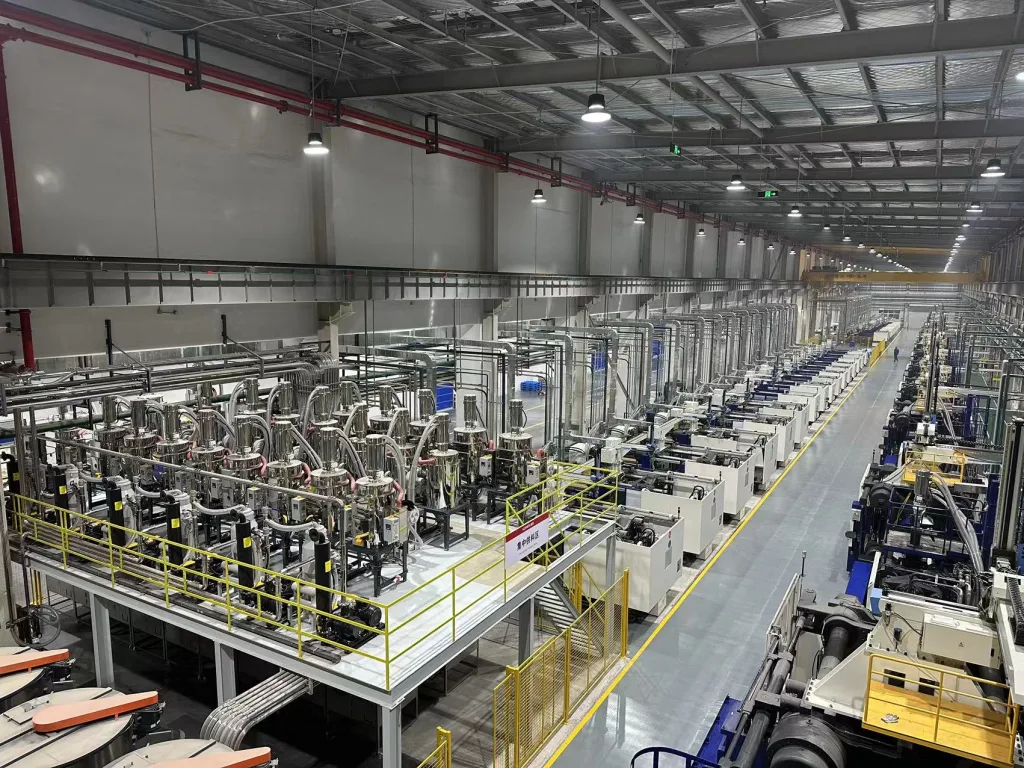
What are the phases of a retrofit?
Four phases, each with its own shutdown requirement:
| Phase | Work | Production impact |
|---|---|---|
| 1. Survey and design | measure routes, confirm machine connections | none |
| 2. Infrastructure | install spine piping, headers, supports | partial, planned stops |
| 3. Connection | tie each machine into the new system | per machine, one at a time |
| 4. Cut-over | switch from local to central supply | one shift per line |
Connecting machines one at a time rather than all at once is what keeps the plant running. Each machine returns to production on the new system before the next one is touched.
What always takes longer than planned?
Four things, consistently:
- Route clearance — existing cable trays, water headers and lighting are rarely where the drawings say.
- Machine connection points — older machines have non-standard inlets, and adapters are made, not bought.
- Shutdown windows — production rarely stops exactly when planned, and the slip compounds.
- Commissioning the controller — routing logic, material assignments and alarm limits take longer than the physical installation.
A schedule that assumes no slippage in those four will be wrong by weeks, not days.
How should the retrofit be phased to keep production running?
The pattern that works is to build the new system alongside the old one and cut over line by line. Concretely: install the spine and central station first while machines continue on local loaders, then connect machines in order of least disruption, and leave the highest-output machine until last when the team has practice.
Keeping the old equipment as a fallback for the first weeks after cut-over costs little and removes the risk of a total stoppage if the new system needs adjustment.
What should be measured before and after?
A retrofit has a business case, and it should be verified. Four measurements are enough: labour hours per shift spent on material handling, material loss from spillage and moisture, reject rate, and floor space freed by removing local containers and dryers.
Recording those numbers before the work starts is the only way to demonstrate afterwards that the investment did what it promised.
Where to go next
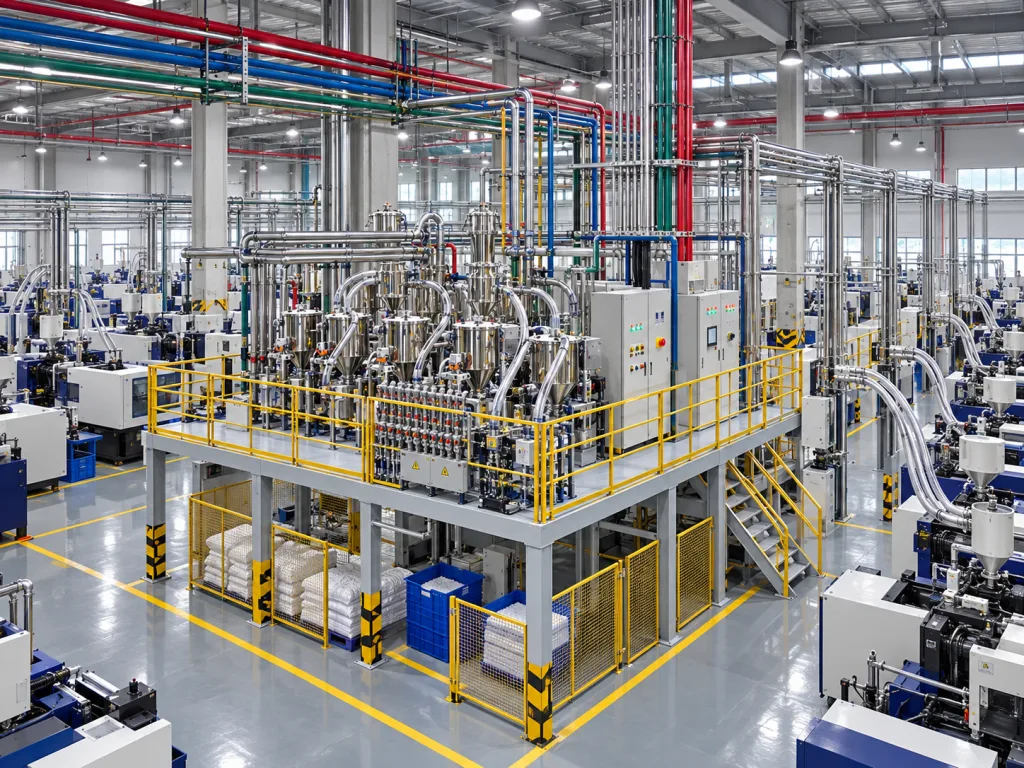
The centralized feeding system and controller are the core of the retrofit, with desiccant drying added where hygroscopic resins are involved. Our engineering team can survey an existing hall and produce a phased plan with shutdown windows marked.
Send us a hall plan, machine list and your production calendar and we will propose a sequence that keeps output running.