
Solution Detail
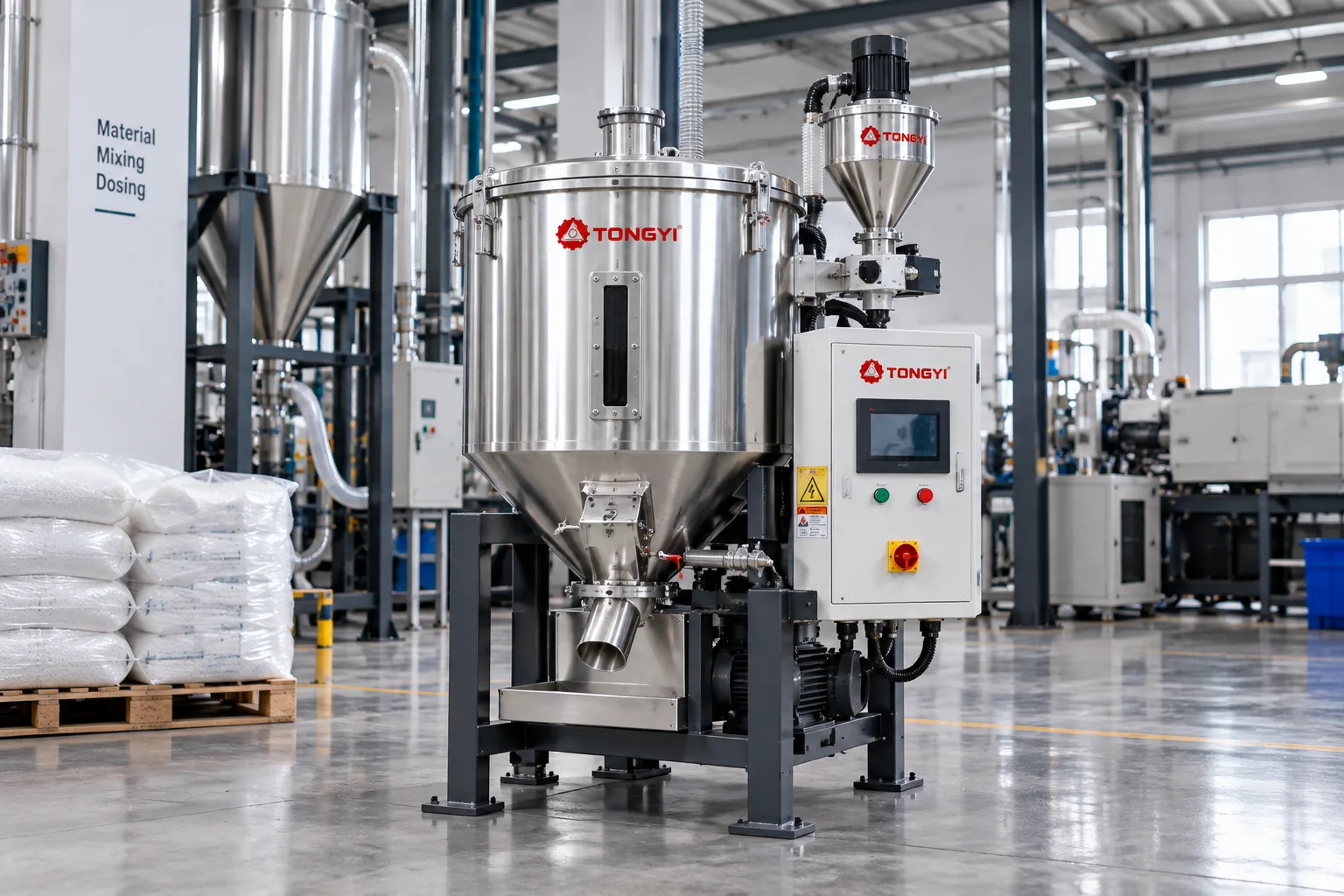
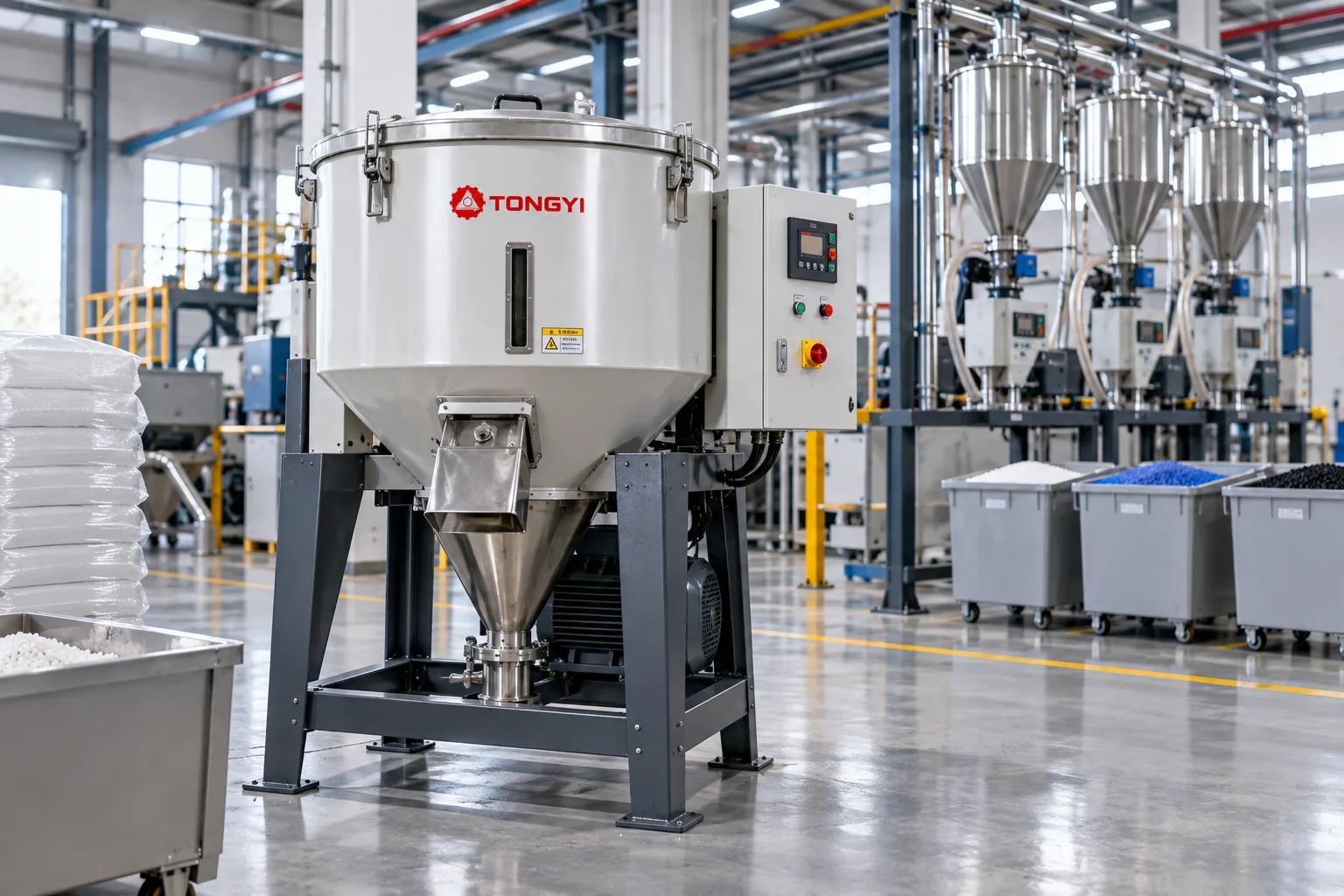
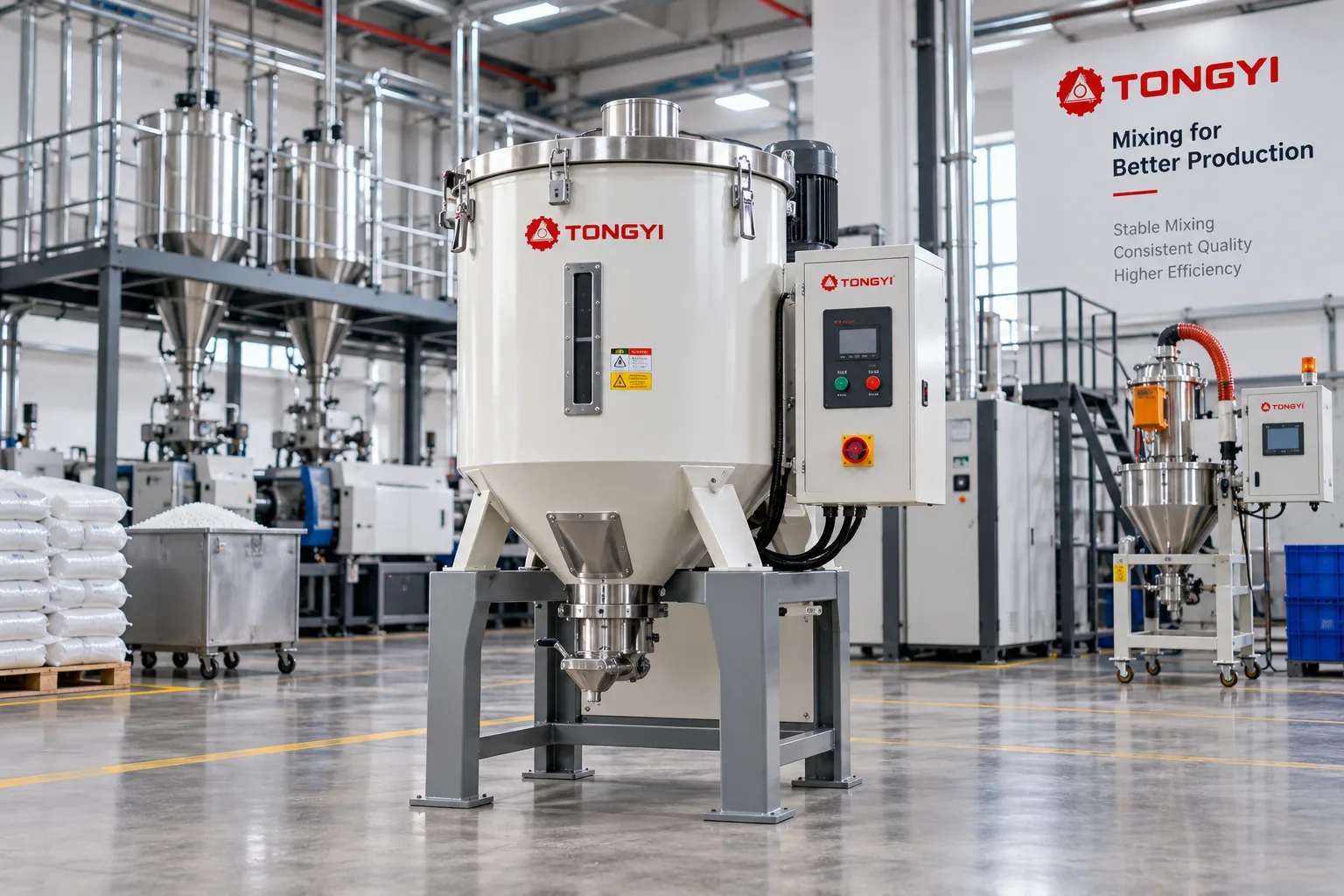
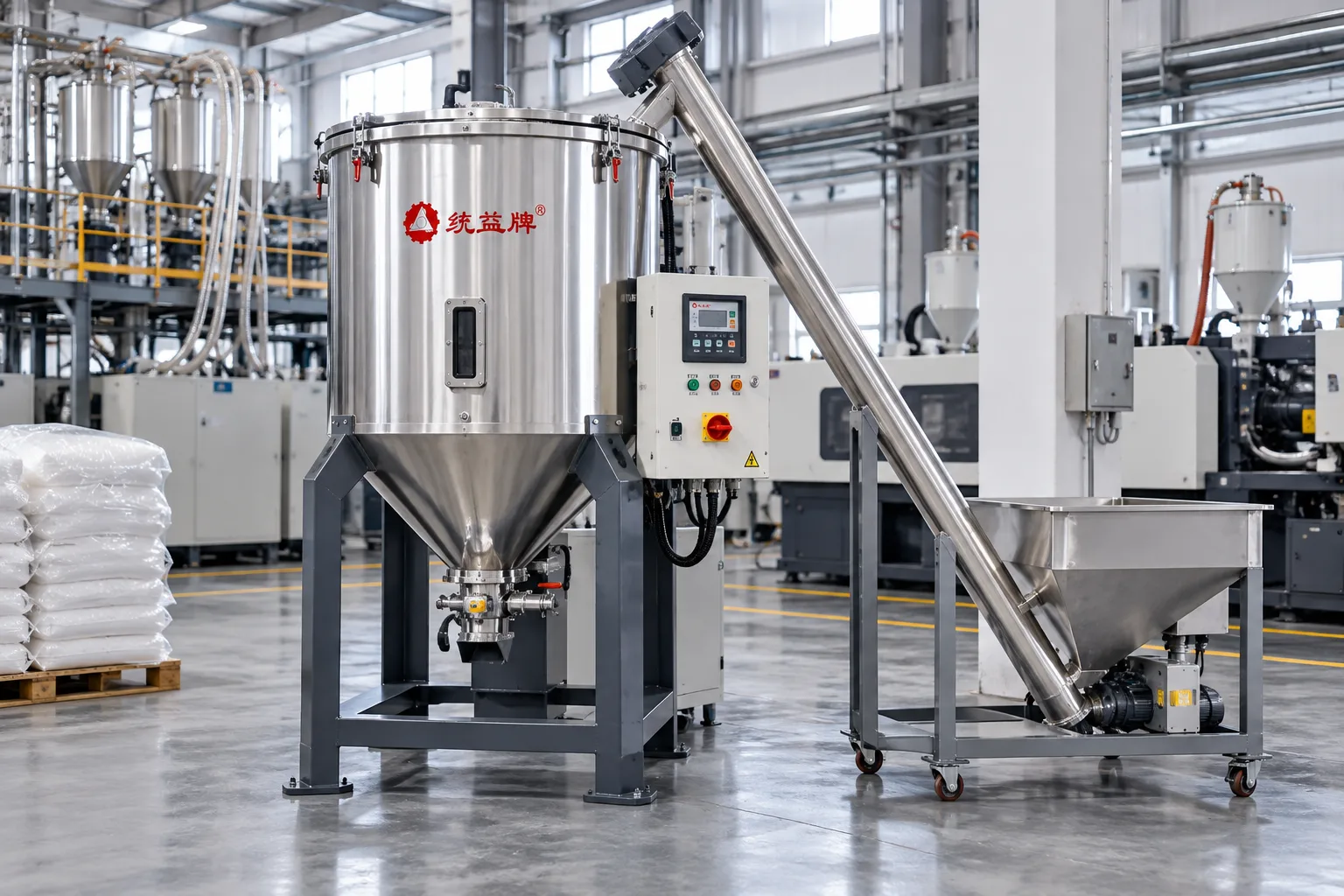
Dosing and Mixing Systems for Repeatable Recipes
Prepare base resin, masterbatch, additives and regrind through a controlled recipe and material-handling sequence.
Business Problem
Reduce recipe variation and manual addition errors
Manual additions and isolated mixers can make recipe control, changeover and material accountability difficult. A planned system defines how each component is stored, measured, combined, verified and delivered.
Risks addressed during planning
- Low-percentage additives may require a different dosing method from the base resin.
- Material bridging or inconsistent bulk density can affect feed stability.
- Poor changeover access can increase contamination and cleaning time.
- Recipe and lot records may be incomplete when controls are not integrated.
Suitable production environments
Masterbatch and additive dosing
Repeatable addition of color or functional additives to a base resin.
Multi-component blending
Recipes combining several materials with controlled proportions.
Regrind integration
Processes that return controlled regrind into the material recipe.
System Architecture
Identify, measure, mix and deliver
Each component follows a defined path from storage to the processing machine.
-
01
Component supply
Keep each material identified and available at the required condition.
-
02
Dosing
Select the measurement method for the required ratio and material behavior.
-
03
Mixing
Combine components with suitable batch size and mixing action.
-
04
Recipe control
Manage settings, alarms, changeovers and records according to production needs.
Equipment Categories Used
Equipment categories connected to this system
Use these category pages to review the equipment families that normally make up this solution.
Dosing & Mixing System
Repeatable additive dosing and multi-material blending.
Explore Dosing & Mixing System equipmentDesign Inputs
Information required before equipment selection
Recipe limits and material behavior determine the appropriate measurement method.
| Design Item | Example | Engineering Use | Notes |
|---|---|---|---|
| Recipe structure | Components and percentage range | Doser and blender configuration | Include minimum and maximum recipes. |
| Material properties | Pellet, powder, density and flow behavior | Feed mechanism and hopper design | Identify difficult-flow materials. |
| Throughput | Average and peak hourly demand | Batch size and cycle selection | Include startup conditions. |
| Changeover and records | Cleaning frequency and traceability | Access, controls and data requirements | Define operator permissions if needed. |
Core Equipment
Select the method for the recipe and material
Volumetric, gravimetric and mixing equipment should be reviewed against the complete recipe range.
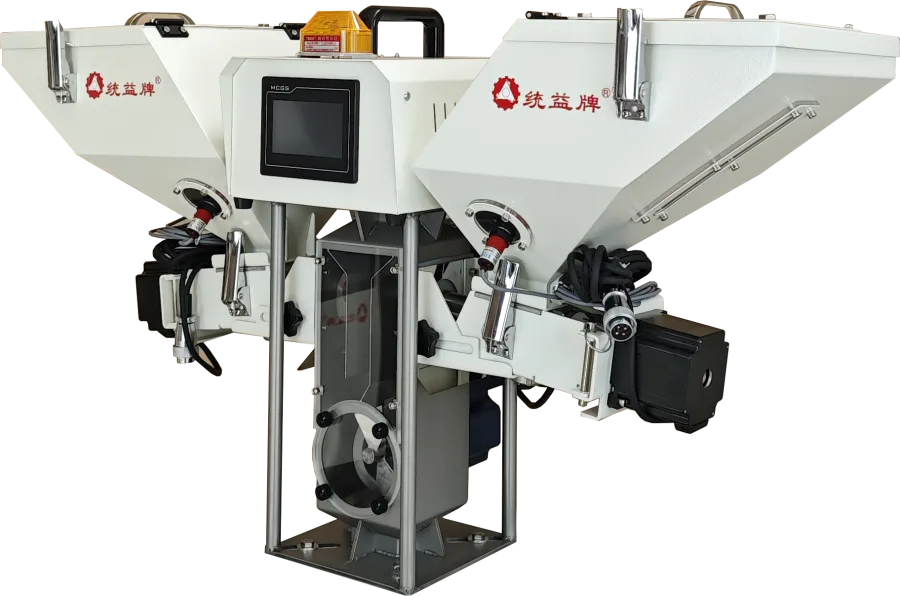
Color Masterbatch Screw Doser
Precision screw dosing system for automatic proportional feeding of masterbatch, regrind, and additives, with metering accuracy within ±1%, single- and double-color configurations,…
View Product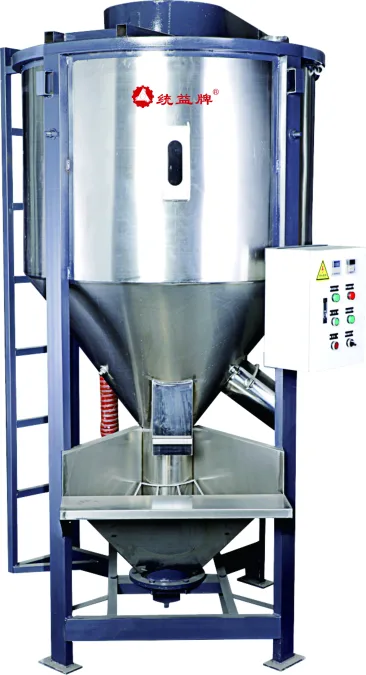
Large Vertical Mixers
Large-capacity spiral vertical mixer for uniform blending of plastic granules, virgin resin, regrind, and masterbatch, with mixing capacities from 500 to 5,000…
View Product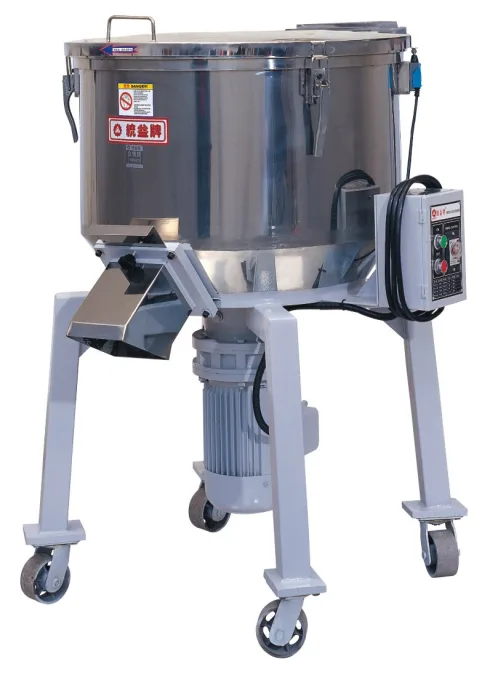
Vertical Mixers
Vertical mixer for fast and uniform mixing of plastic granules, virgin resin, regrind, and masterbatch, with capacities from 25 to 300 kg…
View ProductPlanning FAQ
Dosing and mixing questions
It is useful when the process requires weight-based proportioning, automatic correction or stronger recipe accountability across several components.
Yes, when its particle size, bulk behavior, allowable ratio and quality controls are defined.
Ratio range, feed mechanism, material flow, refill behavior, vibration, calibration and the consistency of the incoming material all matter.