
Solution Detail
Temperature Control Systems for Stable Plastic Processing
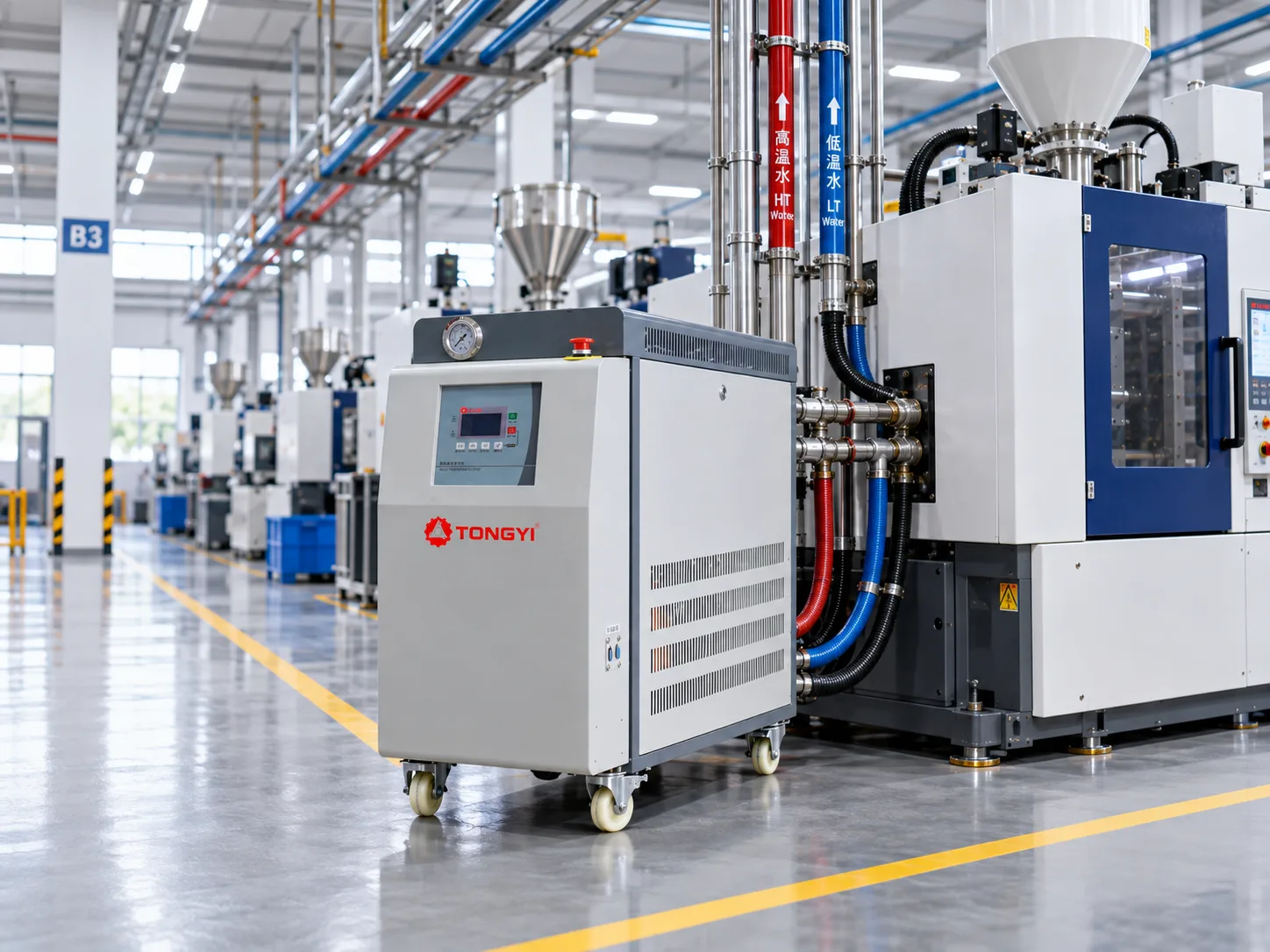
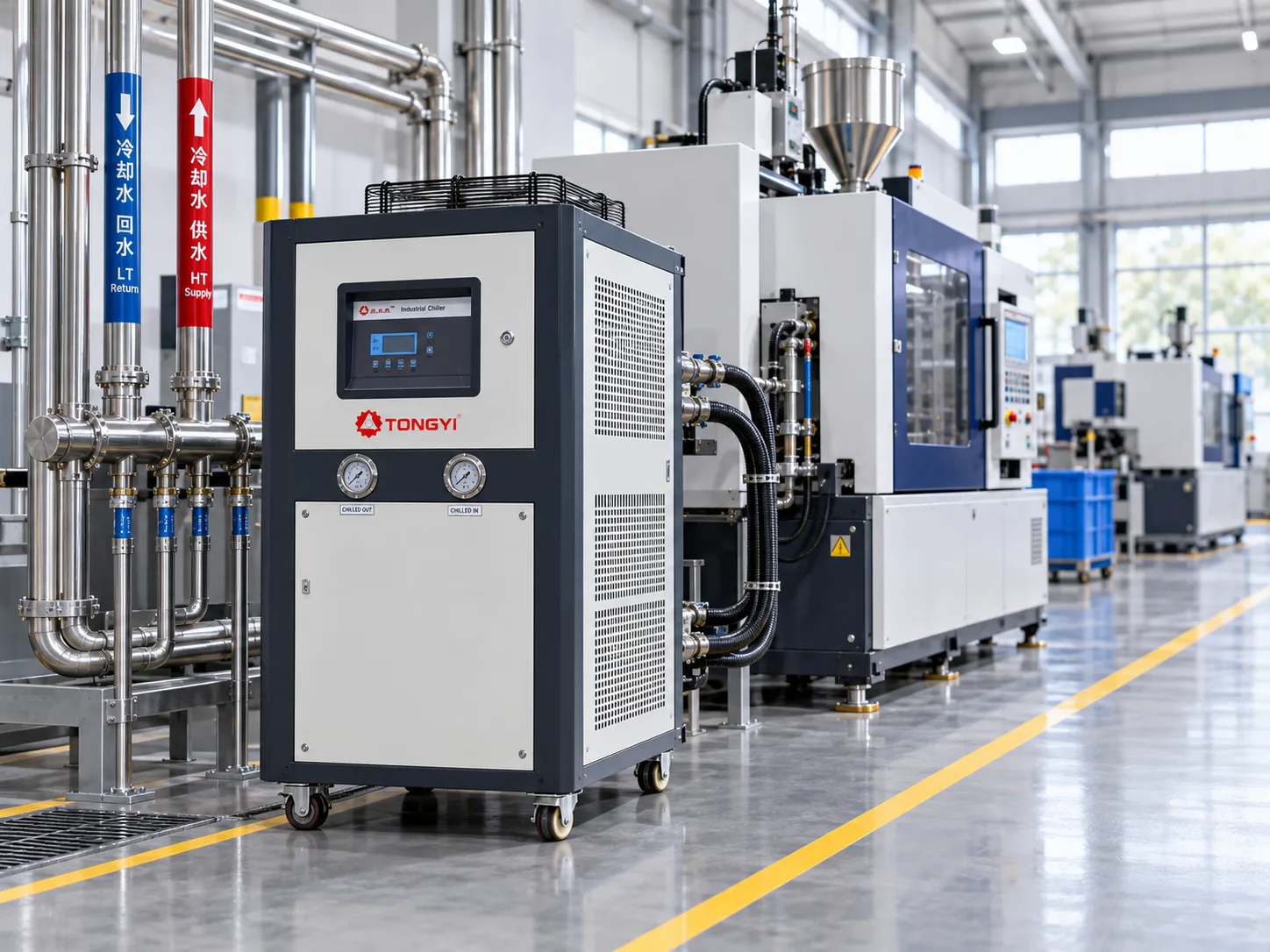
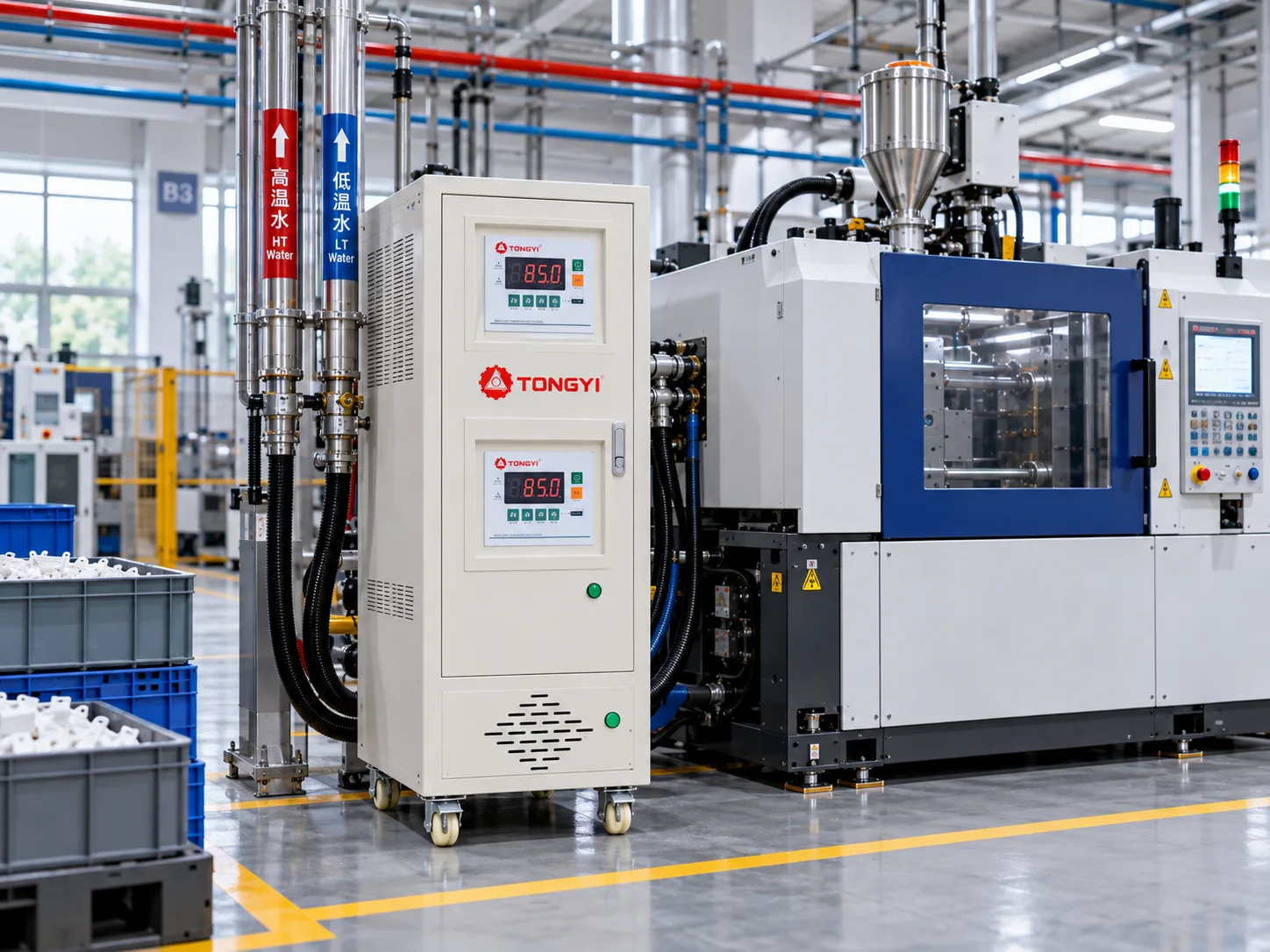
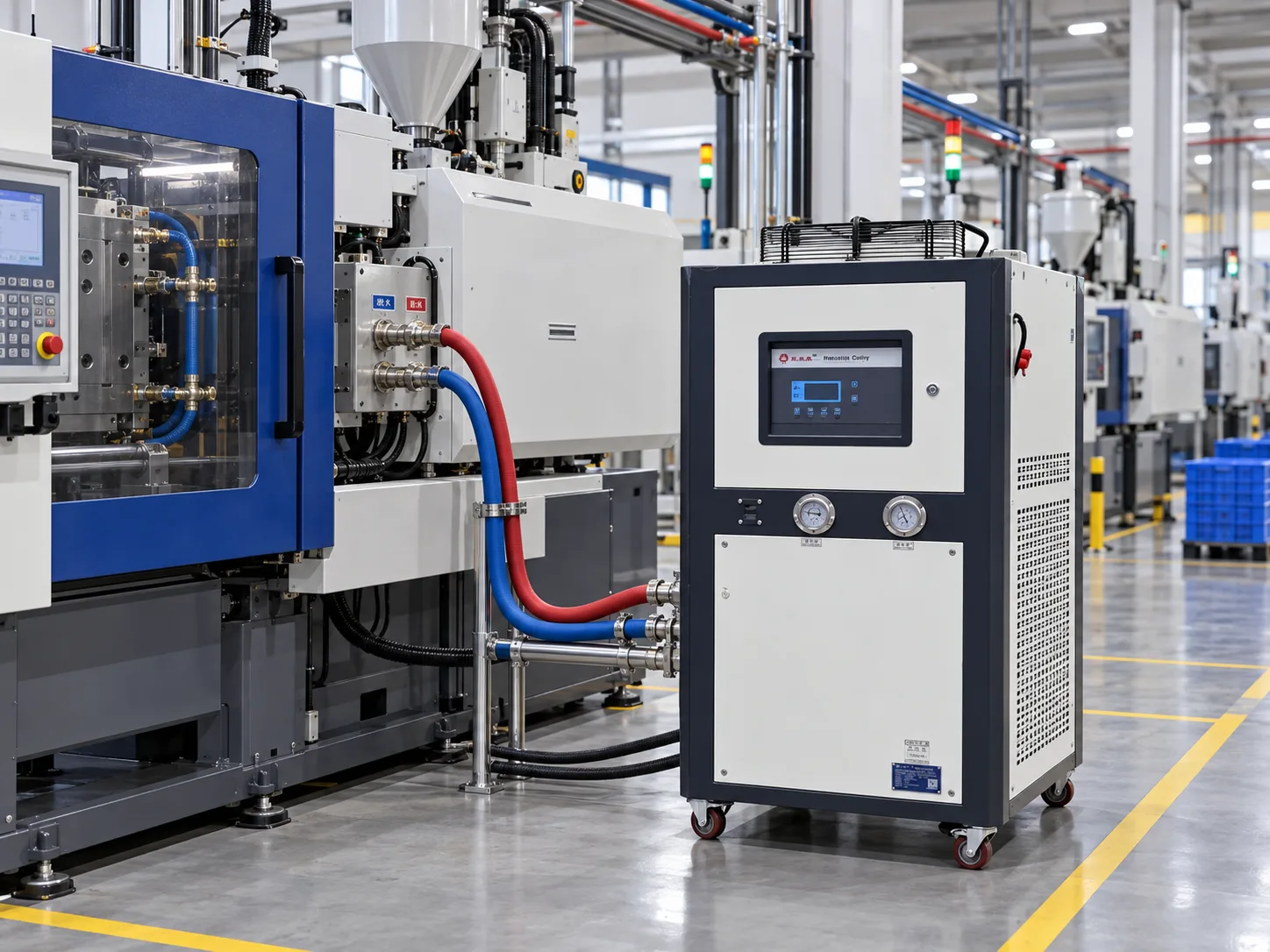
Coordinate heating, cooling, circulation and monitoring to keep molds and process equipment within the required operating range.
Business Problem
Reduce temperature variation and slow process recovery
A controller selected only by setpoint can still be limited by insufficient flow, undersized cooling, poor piping or unstable utility water. System planning connects the required temperature range to the actual heat load and circulation conditions.
Risks addressed during planning
- Insufficient flow can create uneven temperature even when the controller reaches setpoint.
- Utility temperature and pressure can limit cooling performance.
- Long or restrictive piping can reduce circulation and extend recovery time.
- Fluid choice and operating temperature affect safety, maintenance and component selection.
Suitable production environments
Mold temperature control
Injection molding processes requiring repeatable heating and cooling conditions.
Process equipment circuits
Rollers, tooling or other equipment requiring a controlled circulating medium.
Central cooling coordination
Plants that need controller selection aligned with available chilled or cooling water.
System Architecture
Generate, circulate and reject heat
The operating range is maintained through a matched heating, pumping and cooling loop.
-
01
Process assessment
Confirm setpoint range, heat load, warm-up and stability requirements.
-
02
Medium selection
Choose water or oil according to temperature, equipment and maintenance needs.
-
03
Circulation design
Match pump flow and pressure to the circuit and piping.
-
04
Cooling integration
Verify utility conditions and heat-rejection capacity.
Equipment Categories Used
Equipment categories connected to this system
Use these category pages to review the equipment families that normally make up this solution.
Cooling & Heating System
Precise mold and process temperature management.
Explore Cooling & Heating System equipmentDesign Inputs
Information required before equipment selection
Setpoint alone is not enough; heat load and circulation details are required.
| Design Item | Example | Engineering Use | Notes |
|---|---|---|---|
| Temperature range | Startup, normal and maximum setpoints | Medium and component selection | Include process limits. |
| Heat load | Tool mass, cycle and process heat | Heating and cooling capacity | State required recovery time. |
| Circuit data | Channels, pipe size and distance | Pump and pressure review | Note restrictions and manifolds. |
| Utilities | Cooling-water temperature and pressure | Heat-rejection feasibility | Use measured operating values. |
Core Equipment
Match the controller to the complete circuit
Related controllers and chillers should be confirmed against the process and utility data.
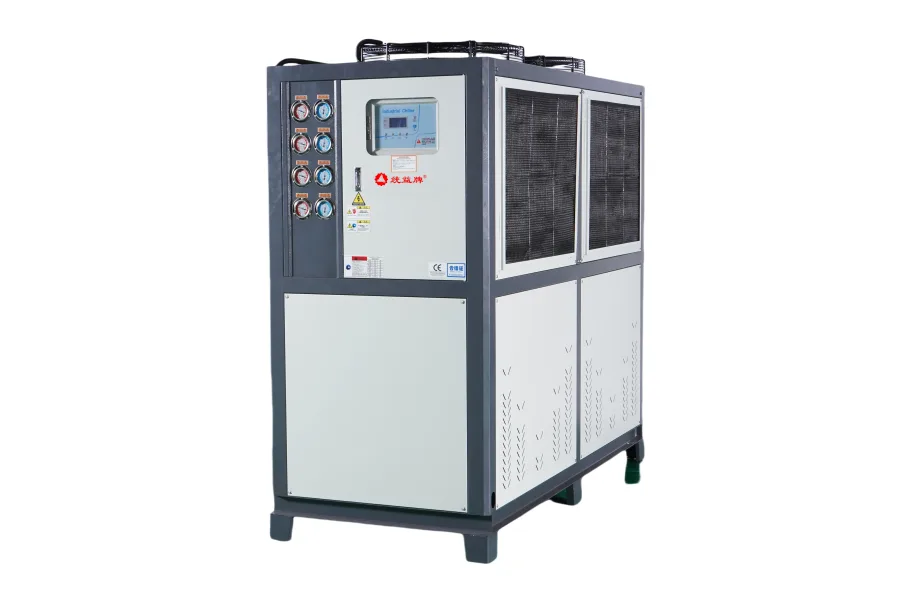
Air Cooled Chiller
Industrial air-cooled chiller with 5–35°C temperature control, ±1°C accuracy, cooling capacity up to 108 kW, and efficient air-cooled heat dissipation without the…
View Product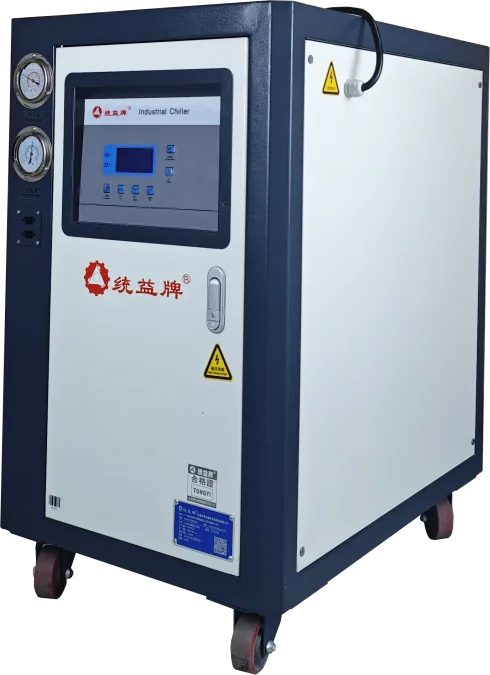
Water Cooled Chiller
Industrial water-cooled chiller with 5–35°C temperature control, ±1°C accuracy, cooling capacity up to 108 kW, efficient heat exchange, and reliable operation for…
View Product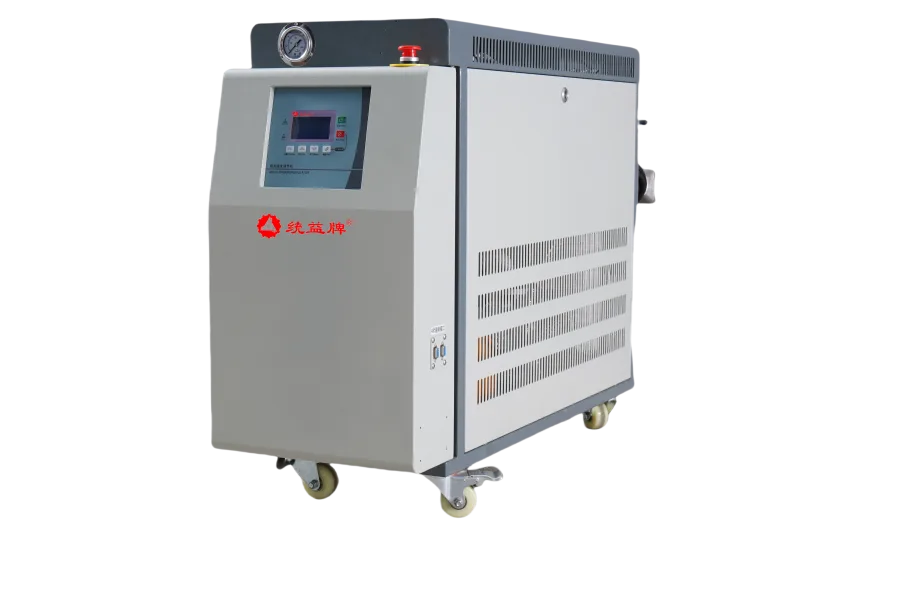
High Temp. Oil Type Mold Temperature Controller
High-temperature oil mold temperature control up to 300°C with precise PID regulation, high-flow circulation, return oil temperature monitoring, and two-stage heating.
View Product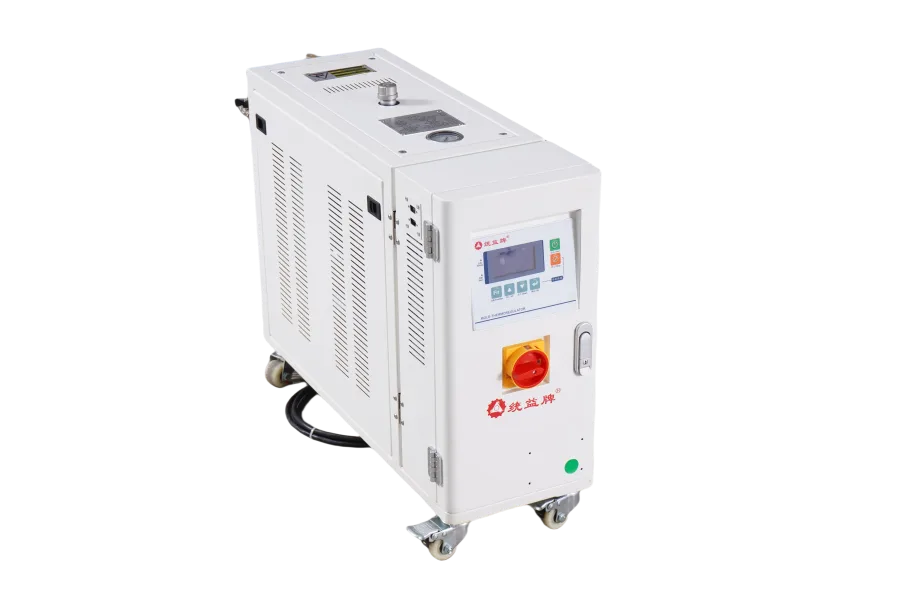
Oil Type Mold Temperature Controller
200°C Oil Type Mold Temperature Controller | TMC Series
View Product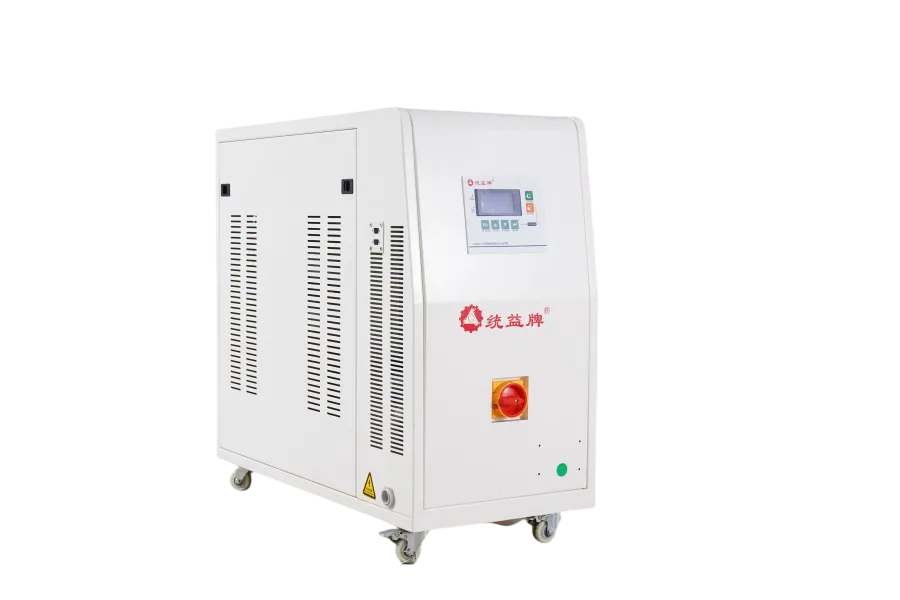
High Temp. Water Temperature Controller Series
High-temperature water mold temperature control up to 160°C with ±0.1°C precision, rapid heating, stable circulation, and reliable safety protection for injection molding…
View Product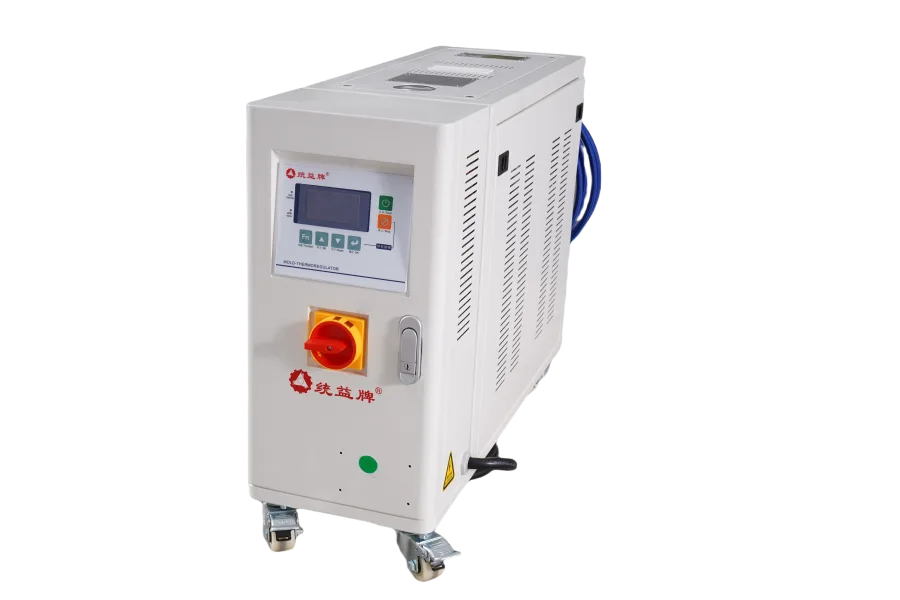
Water Type Mold Temperature Controller
Precise water temperature control up to 120°C with fast heating and cooling, stable performance, and reliable operation for injection molding applications.
View ProductPlanning FAQ
Temperature-control questions
The choice depends on required temperature, heat-transfer needs, equipment compatibility, safety and maintenance practices.
Temperature stability requires adequate circulation through the mold or process circuit; setpoint accuracy does not compensate for low or uneven flow.
Provide available cooling-water temperature, pressure, flow, ambient conditions and any plant operating variation.