
Solution Detail
Material Conveying Systems for Stable Machine Supply
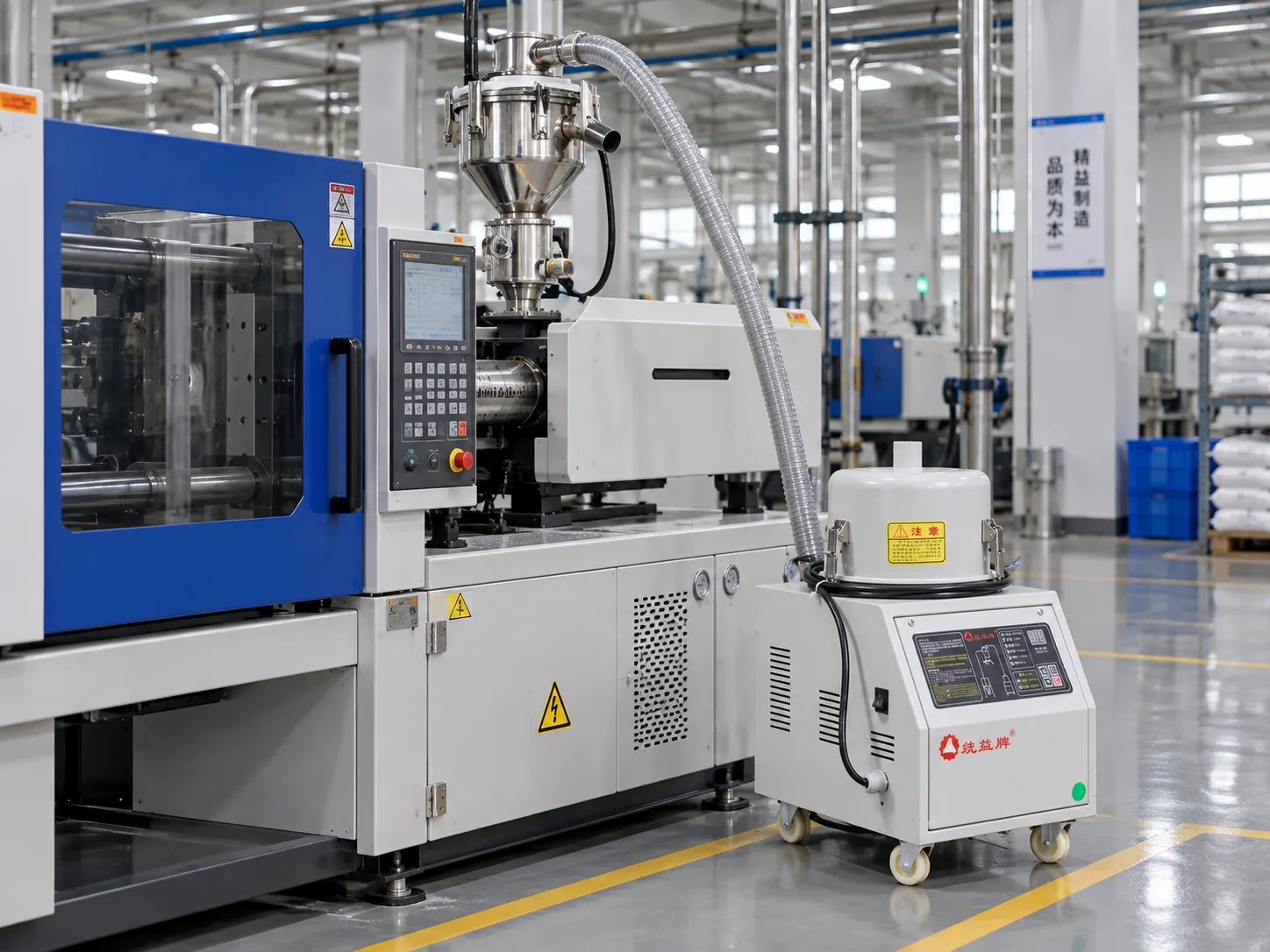
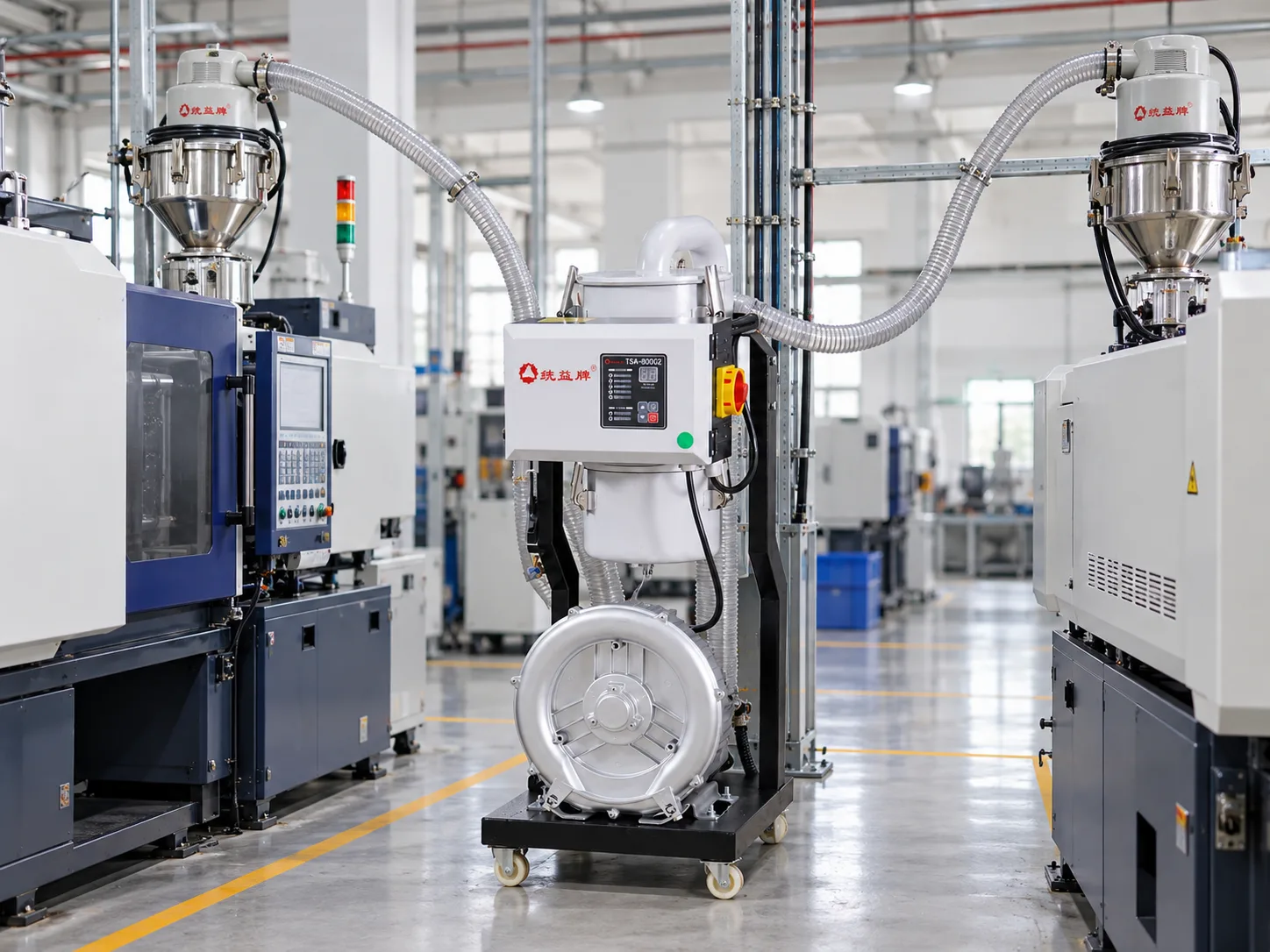
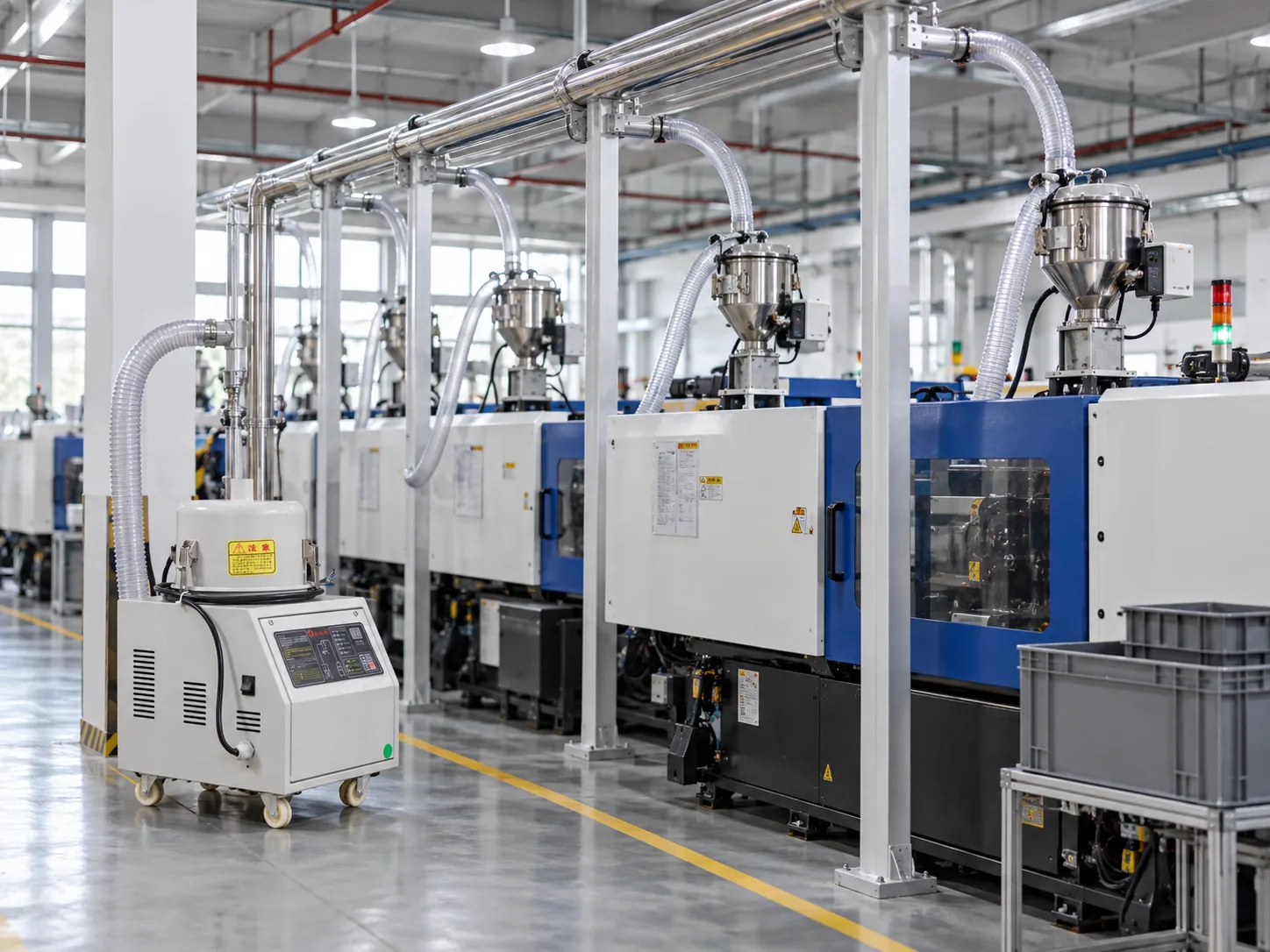
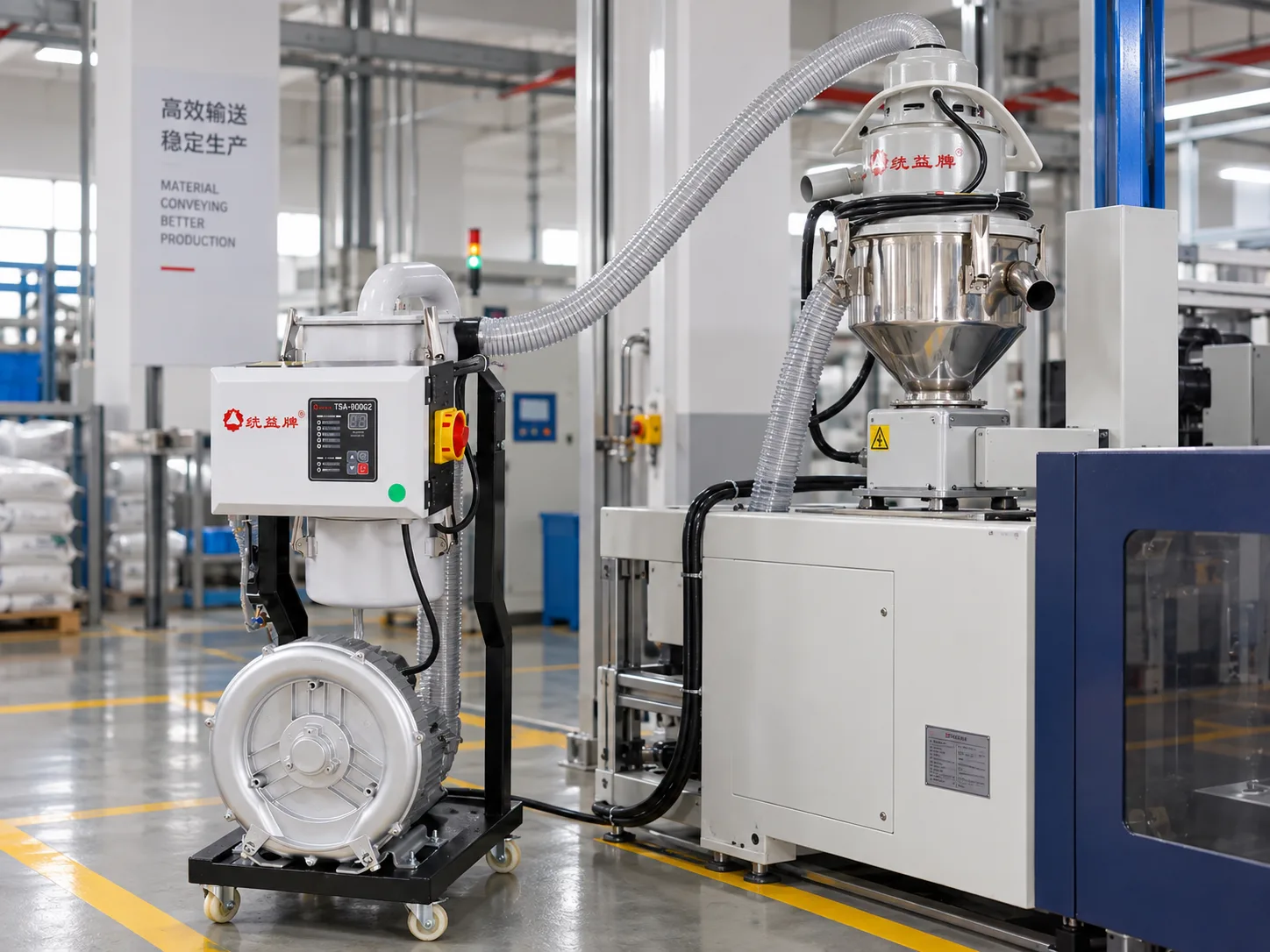
Move resin between storage, preparation and processing equipment through a controlled conveying path sized for actual demand.
Business Problem
Prevent material shortages, dust and unstable transfer
Undersized sources, long pipe routes and poorly matched receivers can create slow transfer, alarms and excessive wear. The system should be calculated as a network and arranged so filters, valves and receivers remain accessible.
Risks addressed during planning
- Peak demand from several machines can exceed source or pipeline capacity.
- Abrasive, dusty or irregular materials can affect filters and conveying stability.
- Excessive bends, lift or distance can increase pressure loss and material damage.
- Inaccessible filters and receivers can extend routine maintenance time.
Suitable production environments
Machine-side loading
Automatic supply to individual molding machines, dryers or day bins.
Central conveying networks
Shared vacuum sources and distribution routes serving several machines.
Plant layout upgrades
Replacing manual transport while working within existing access and utility constraints.
System Architecture
From pickup point to receiver
The network is sized around the most demanding credible operating condition.
-
01
Pickup and separation
Define the source container, pickup method and material identification.
-
02
Vacuum generation
Match source capacity and duty cycle to simultaneous demand.
-
03
Pipeline network
Plan diameter, bends, lift, supports and cleaning access.
-
04
Receiving and control
Coordinate receivers, filters, level demand and alarm handling.
Equipment Categories Used
Equipment categories connected to this system
Use these category pages to review the equipment families that normally make up this solution.
Feeding & Conveying System
Flexible conveying and material transfer for production lines.
Explore Feeding & Conveying System equipmentCFS & Water, Electricity, Air System
Centralized material storage, conveying and machine distribution.
Explore CFS & Water, Electricity, Air System equipmentDesign Inputs
Information required before equipment selection
The layout and demand schedule are as important as nominal throughput.
| Design Item | Example | Engineering Use | Notes |
|---|---|---|---|
| Material behavior | Pellet shape, density, dust and abrasiveness | Velocity, filter and pipe selection | Include regrind percentages. |
| Required throughput | Demand by destination | Source, receiver and cycle sizing | Identify simultaneous peaks. |
| Route geometry | Horizontal distance, lift and bends | Pressure-loss review | Provide an updated layout. |
| Control sequence | Priority and alarm behavior | Demand scheduling and operator interface | Define critical machines. |
Core Equipment
Select sources and receivers as a network
Equipment selection follows the route calculation, demand schedule and material assessment.
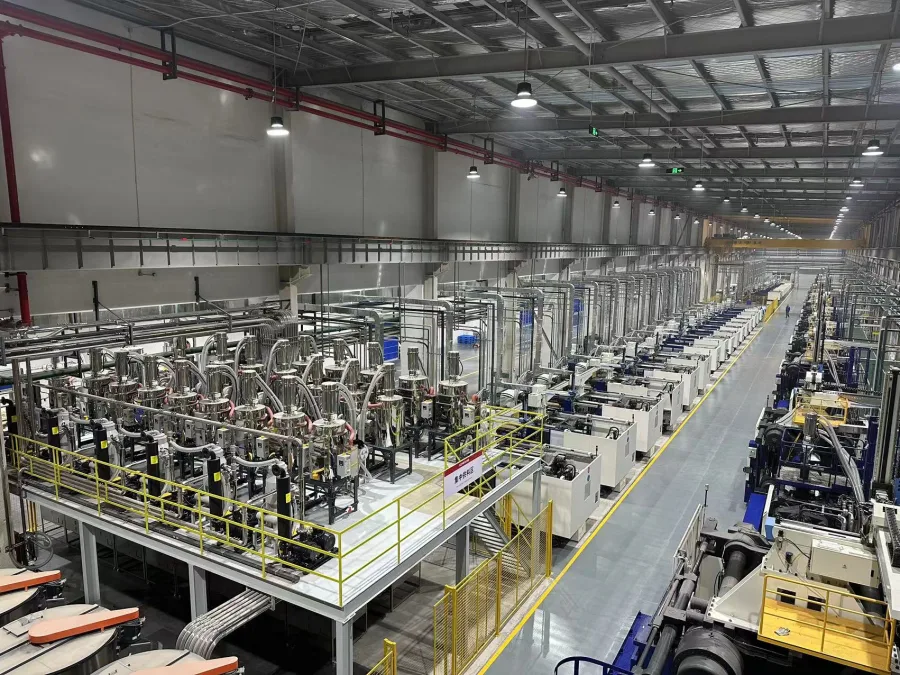
Centralized Feeding System
Turnkey centralized feeding system for automatic storage, drying, conveying, distribution, and management of plastic raw materials across multiple injection molding machines.
View Product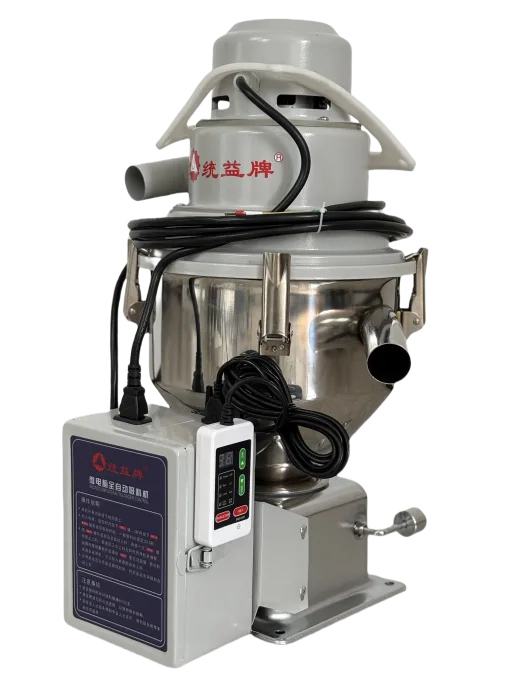
Single Autoloaders
Compact single autoloader with automatic vacuum conveying, up to 350 kg/h conveying capacity, 4 m conveying height, and direct installation on hopper…
View Product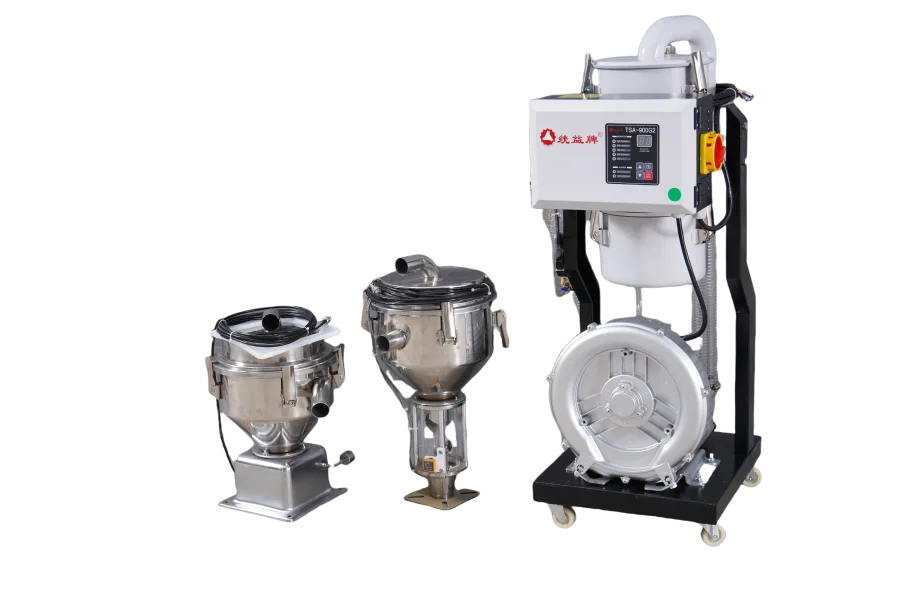
Automatic Vacuum Loading Series
Open-type detachable autoloader for automatic plastic material conveying, with conveying capacity up to 2,000 kg/h, loading distance up to 10 m, and…
View ProductPlanning FAQ
Material conveying questions
Material density and behavior, route length, lift, bends, pipe size, vacuum source, receiver cycle and simultaneous demand all contribute.
Possibly, after confirming its diameter, routing, condition, supports, leakage and suitability for the required material and throughput.
Pickup design, conveying velocity, filtration and maintenance access are reviewed according to material dust level and operating conditions.