
Solution Detail
Drying and Dehumidifying Systems for Plastic Materials
Prepare moisture-sensitive plastics with controlled heat, airflow, dew point and residence time before processing.
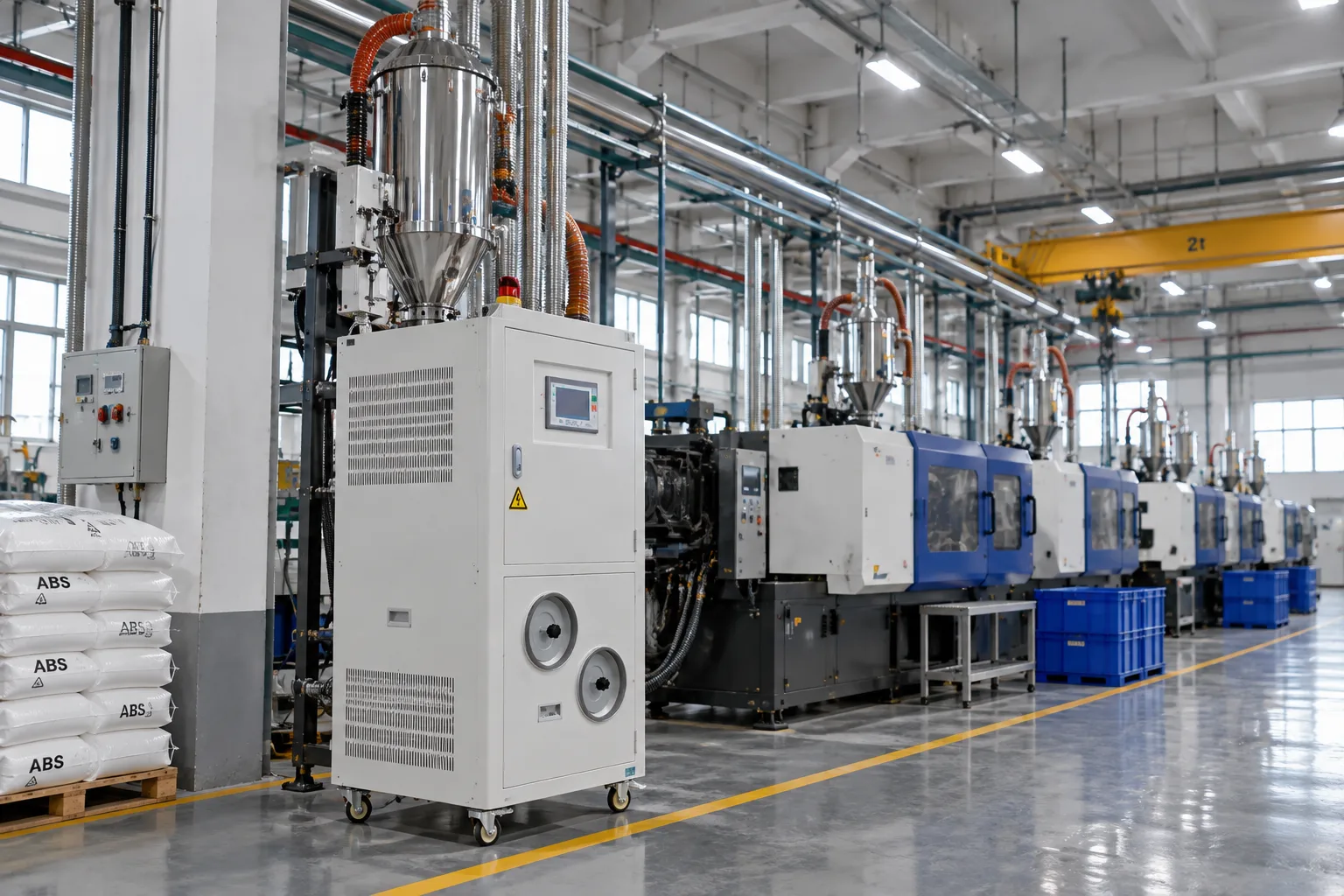
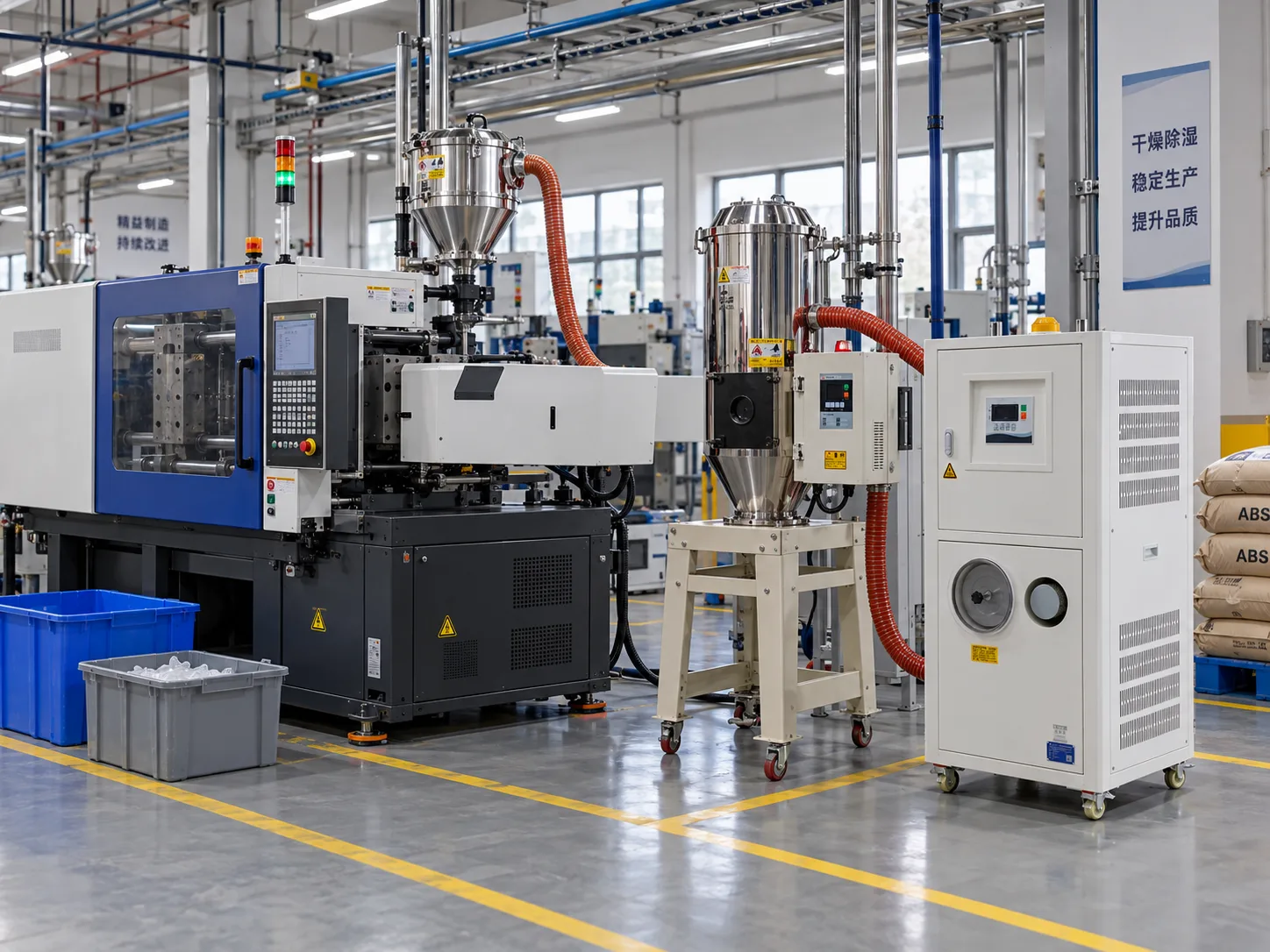
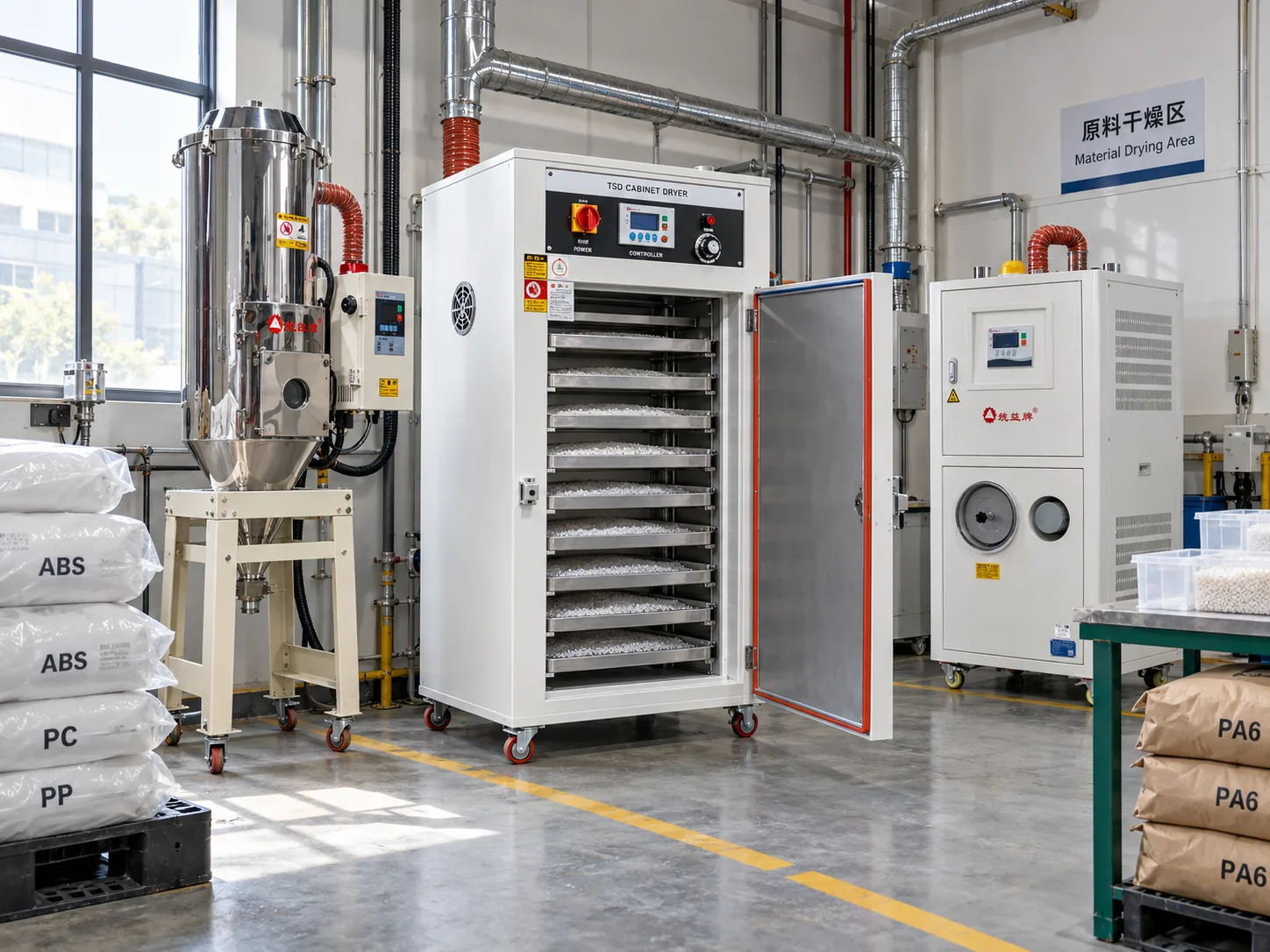
Business Problem
Control moisture without overheating or interrupting production
Incomplete drying can contribute to visual defects and unstable properties, while excessive temperature or residence time may damage material. Stable preparation requires controlled conditions and a material path that prevents re-absorption.
Risks addressed during planning
- Wet material may enter production when throughput changes faster than drying capacity.
- Ambient air and open transfer can allow dried material to absorb moisture again.
- Incorrect temperature or residence time can affect sensitive resins.
- Shared systems need clear rules for material compatibility and cleaning.
Suitable production environments
Hygroscopic engineering plastics
Production using materials that require controlled low-moisture preparation.
Continuous high-demand lines
Processes where drying capacity must remain aligned with sustained consumption.
Central material rooms
Facilities combining drying, conveying and distribution in one planned material area.
System Architecture
Dry, protect and deliver the material
The design connects air treatment, heating, material holding and closed transfer.
-
01
Material assessment
Confirm resin grade, initial moisture, target condition and allowable temperature.
-
02
Air preparation
Select the drying or dehumidifying method required by the material.
-
03
Heating and residence
Size airflow, heat and hopper capacity for real consumption.
-
04
Closed delivery
Move conditioned material to production while limiting exposure to ambient air.
Equipment Categories Used
Equipment categories connected to this system
Use these category pages to review the equipment families that normally make up this solution.
Drying & Dehumidifying System
Stable low-dew-point preparation for hygroscopic resins.
Explore Drying & Dehumidifying System equipmentDesign Inputs
Information required before equipment selection
Material supplier recommendations and production demand define the starting point.
| Design Item | Example | Engineering Use | Notes |
|---|---|---|---|
| Resin specification | Grade and supplier drying guidance | Temperature, dew point and time targets | Confirm limits for sensitive materials. |
| Consumption profile | Average and peak hourly use | Hopper and air-volume sizing | Include startup and changeover demand. |
| Initial condition | Packaging, storage and ambient exposure | Drying load assessment | Note opened bags and outdoor storage. |
| Delivery route | Distance from dryer to machine | Closed conveying and insulation plan | Review re-absorption risk. |
Core Equipment
Match the dryer to material and throughput
The related products are starting points; verified resin data determines the final configuration.
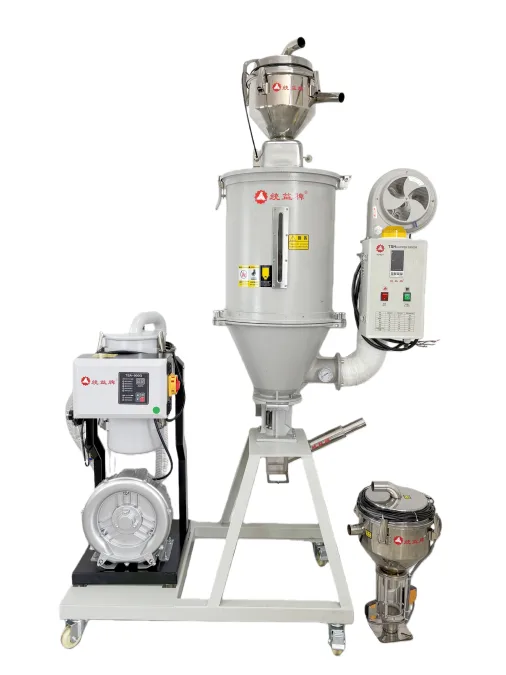
Hopper Dryer
Hot-air hopper dryer designed for efficient and stable drying of plastic materials.
View Product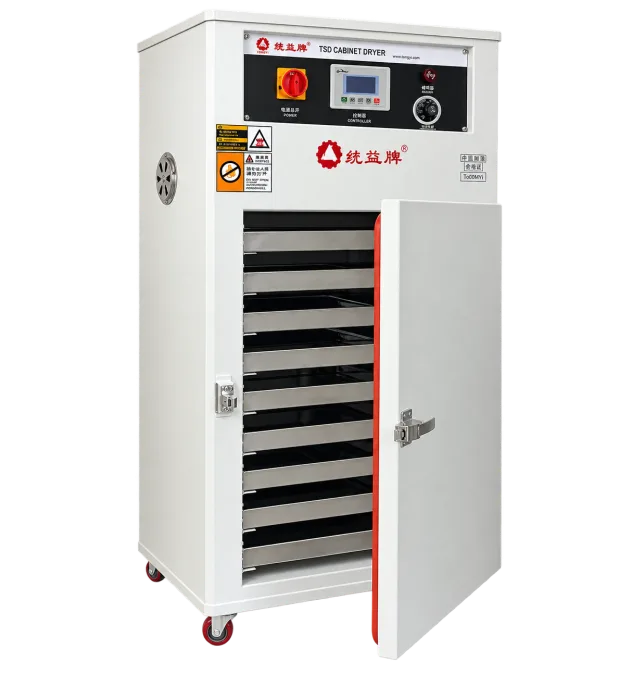
Cabinet Dryer
High-temperature cabinet dryer designed for small-batch, multi-material and trial-production drying applications.
View Product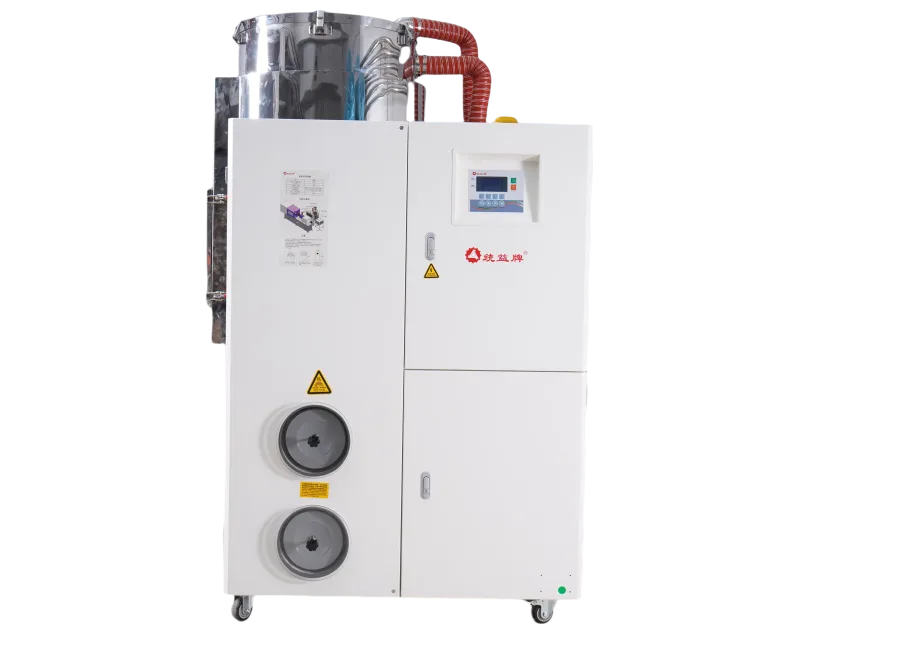
3 in 1 Heatless Compact Dehumidifying Dryer – Energy Saving Type
Energy-saving 3 in 1 system integrating heatless dehumidifying, drying and material conveying in one compact unit.
View Product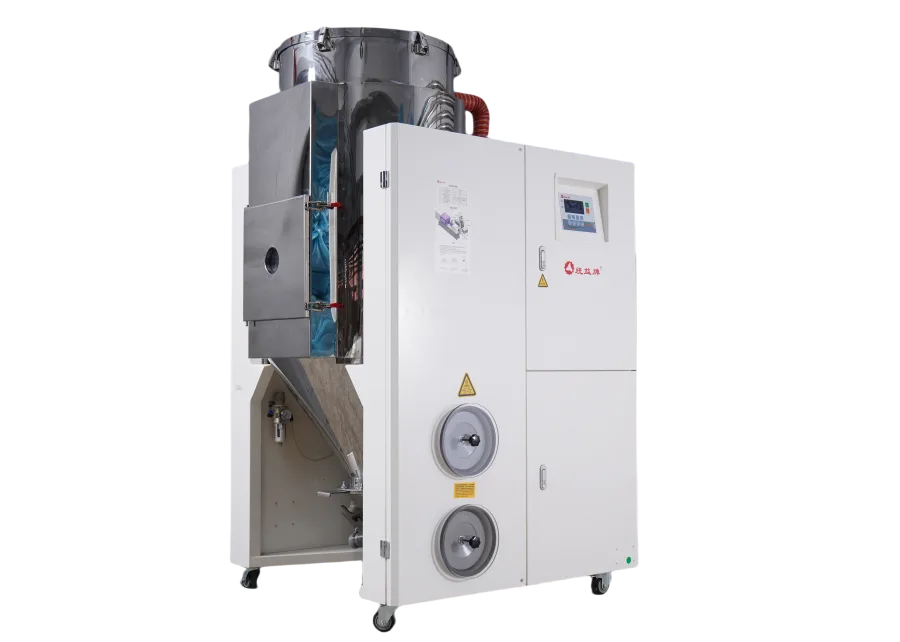
3 in 1 Compact Dehumidifying Dryer – Honeycomb Rotor Type
Integrated dehumidifying, drying and material conveying in one compact system for hygroscopic plastic materials.
View Product
EU Hopper Dryer
Double-layer stainless-steel hopper dryer designed for uniform and efficient drying of plastic materials.
View Product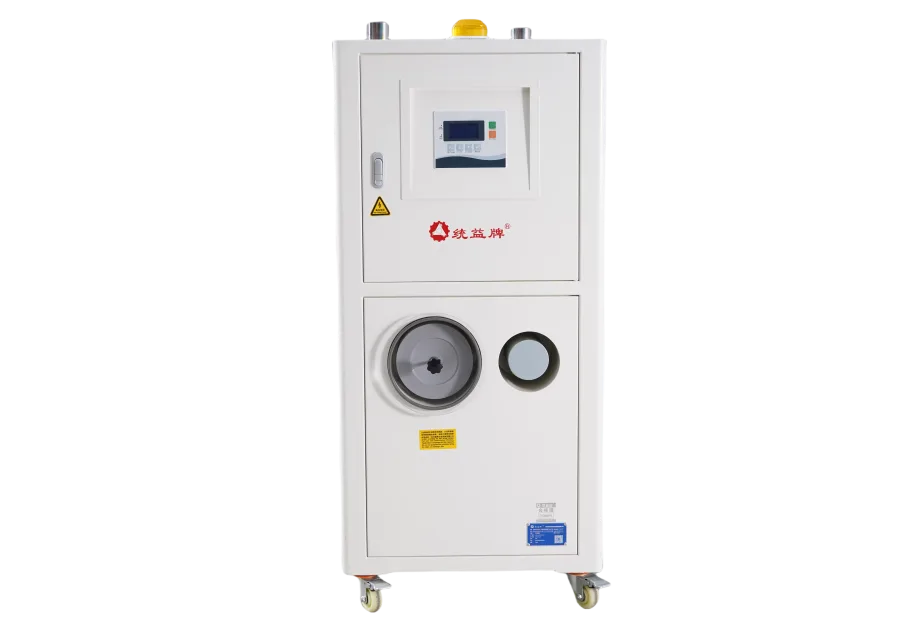
Honeycomb Rotor Dehumidifier
Honeycomb rotor dehumidifier designed to work with hopper dryers for stable low-dew-point drying of hygroscopic engineering plastics.
View ProductPlanning FAQ
Drying and dehumidifying questions
It is commonly used for hygroscopic materials that require controlled low-moisture air. The resin supplier specification should define the required condition.
Hopper size should reflect real hourly consumption, bulk density and required residence time, with allowance for production variation.
It can, when material compatibility, temperature ranges, cleaning, cross-contamination and scheduling are addressed in the design.