
PLANT-WIDE AUTOMATION
Plant-wide Automation for Integrated Plastic Processing
Coordinate material handling, conditioning, process support and production interfaces through one engineered plant-wide automation plan.
Business Problem
Replace isolated auxiliary processes with coordinated plant-wide operation
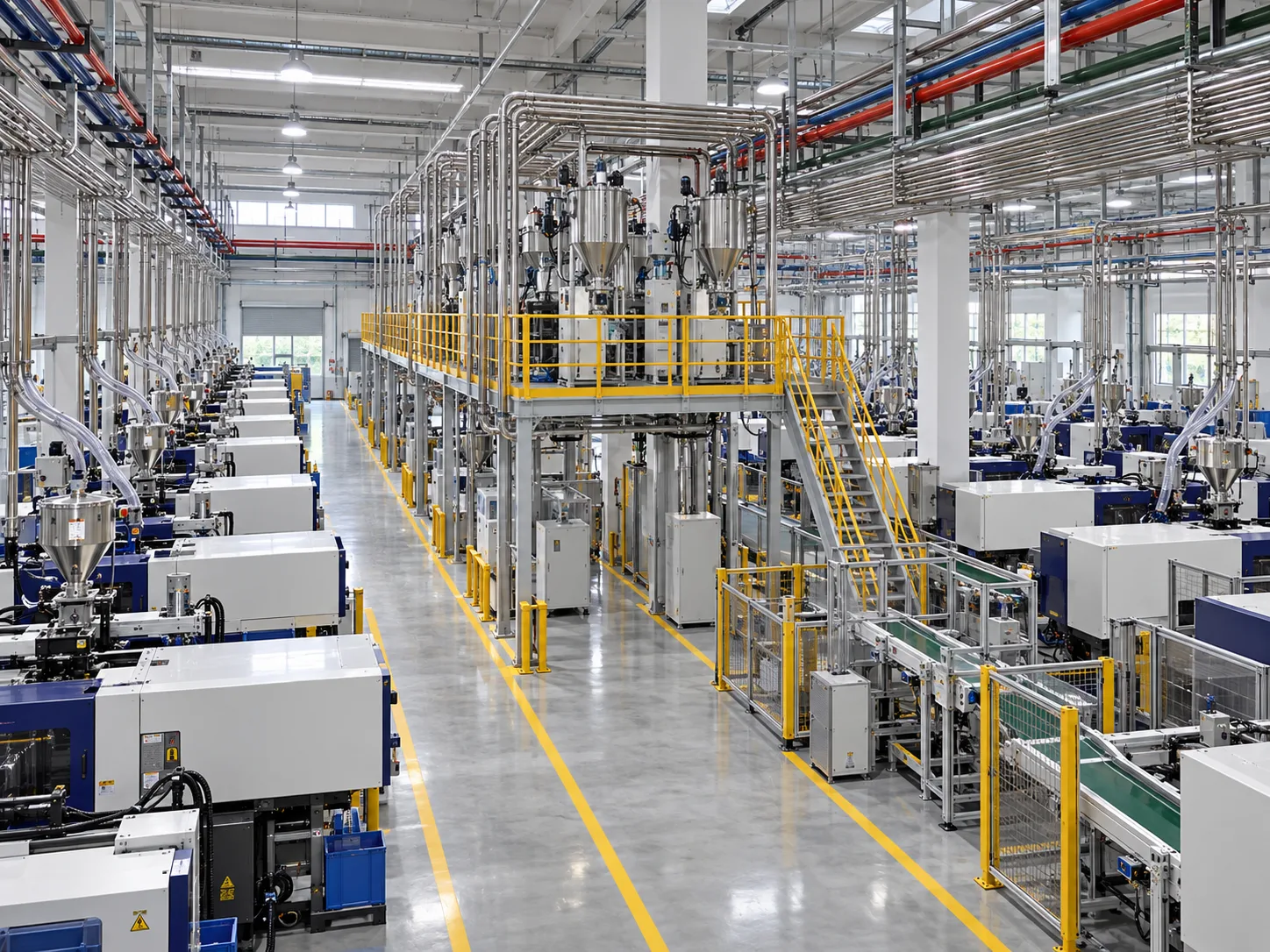
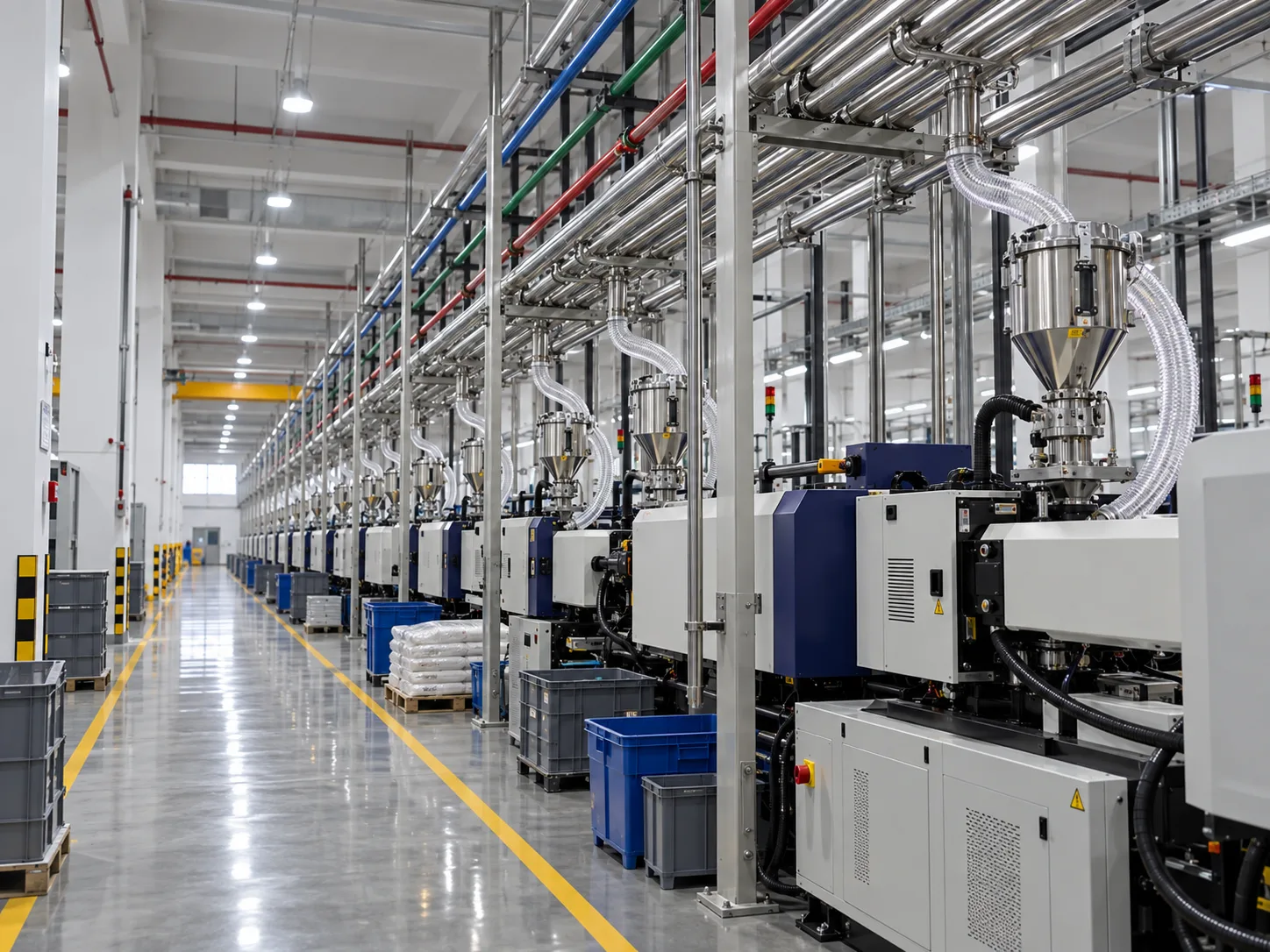
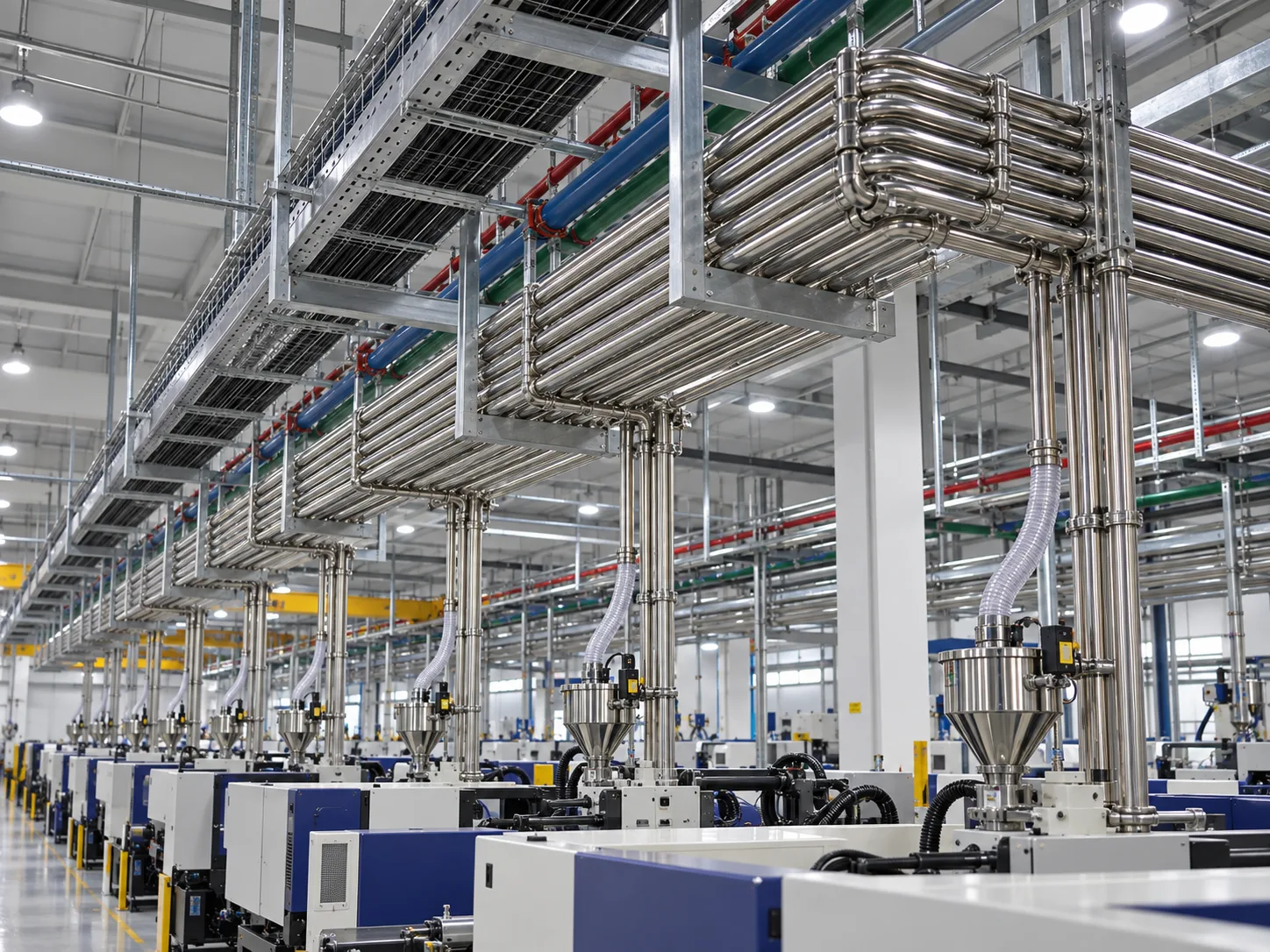
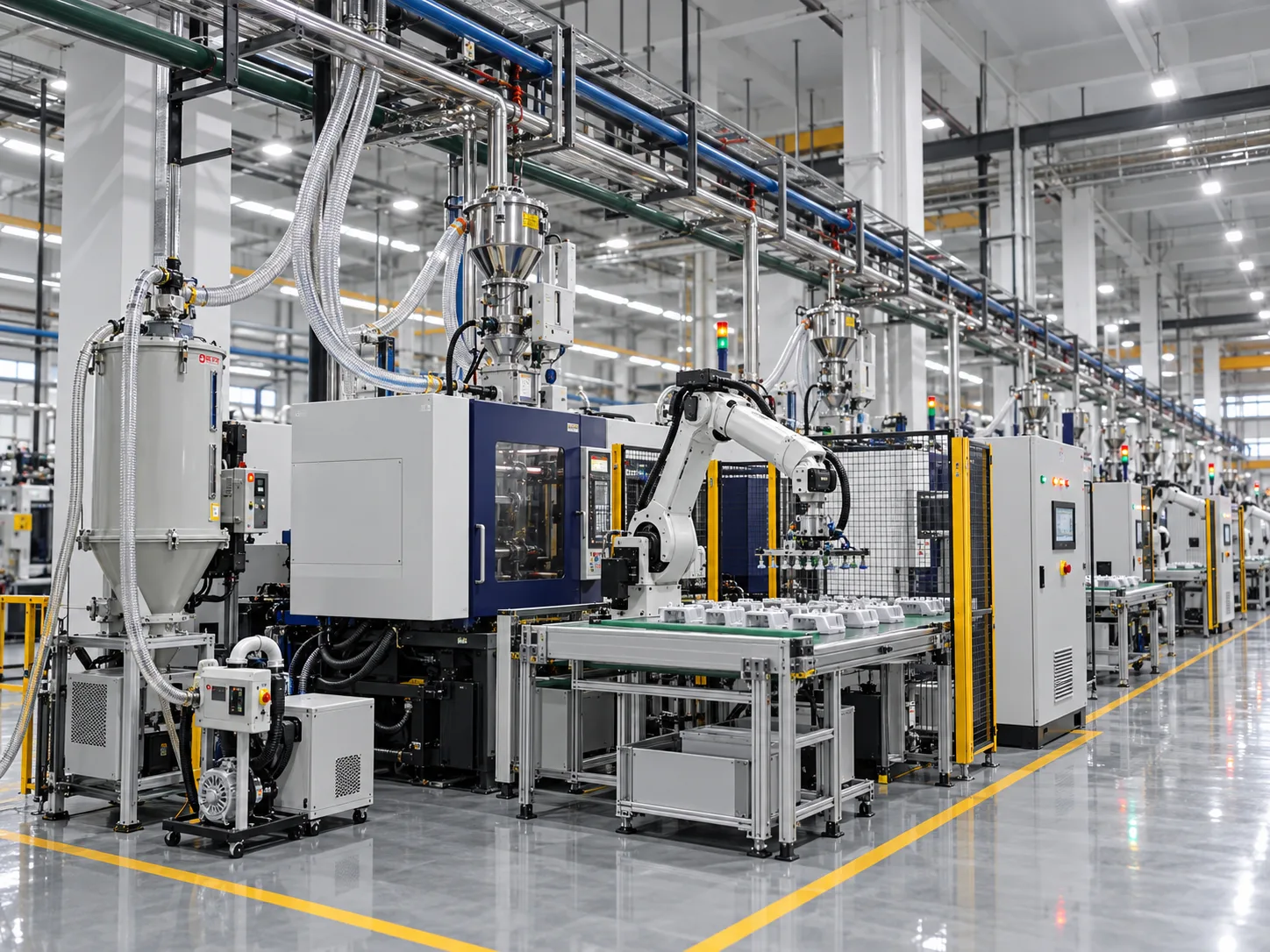
A plant-wide plan defines how equipment, material routes, utilities, controls and production interfaces work together before final equipment selection.
Operational issues to address
- Independent equipment operating without coordinated status visibility
- Manual handoffs between material handling and production processes
- Inconsistent alarm, interface and maintenance practices
- Utilities and routing planned separately from equipment requirements
- Future expansion constrained by undocumented interfaces
Planning scenarios
New Factory Planning
Coordinate equipment, utilities, routes and controls before installation.
Production Expansion
Add machines and auxiliary processes through defined interfaces.
Centralized Operations
Organize status, alarms and operating responsibilities across the plant.
System Retrofit
Connect retained equipment with a reviewed automation architecture.
System Architecture
Five coordinated plant-wide layers
Each layer is defined from approved process, equipment, layout and control requirements.
-
1
Material Intake
Storage, receiving and material identification.
-
2
Conditioning
Drying, mixing and preparation requirements.
-
3
Distribution
Conveying routes, valves and receiving points.
-
4
Process Support
Temperature, recycling and machine-side interfaces.
-
5
Central Control
Status, alarms, permissions and data interfaces.
Equipment Categories Used
Equipment categories connected to this system
Use these category pages to review the equipment families that normally make up this solution.
Cooling & Heating System
Precise mold and process temperature management.
Explore Cooling & Heating System equipmentCrushing & Recycling
Controlled size reduction and in-process material recovery.
Explore Crushing & Recycling equipmentDosing & Mixing System
Repeatable additive dosing and multi-material blending.
Explore Dosing & Mixing System equipmentFeeding & Conveying System
Flexible conveying and material transfer for production lines.
Explore Feeding & Conveying System equipmentDesign Inputs
Information required for a coordinated automation plan
Plant-wide engineering begins with reviewed production, equipment, utility, layout and control information.
| Design Item | Example | Engineering Use | Notes |
|---|---|---|---|
| Production scope | Processes and operating stages | Define system boundaries | Confirm retained and new equipment |
| Machine list | Models, interfaces and demand | Define connection points | Include planned expansion |
| Materials and recipes | Material routes and changeovers | Plan handling and preparation | Confirm separation requirements |
| Factory layout and utilities | Routes, levels and available services | Coordinate installation | Use approved drawings |
| Control interfaces | Signals, alarms and data exchange | Define automation architecture | Confirm responsibilities |
Performance Evidence
Measured outcomes from a comparable project
Comparable project: Cleanroom Utility & Centralized Feeding Project for Cosmetic Packaging Production
Connected injection molding machines
Centralized feeding and factory utilities were integrated for 32 injection molding machines.
Documented production facility
The project scope covers the recorded 3,000 m2 cosmetic packaging workshop.
Recorded project cycle
The documented utility and material handling project cycle was nine weeks.
Results vary by project configuration and operating conditions.
Industries
Where this solution is commonly applied
Review the production environments where this solution is most commonly configured.
Automotive
Stable auxiliary systems for precision automotive components.
See Automotive applicationsElectronics
Clean, accurate material preparation for electronics molding.
See Electronics applicationsPackaging
High-throughput support for caps, containers and thin-wall parts.
See Packaging applicationsRelated Projects
See this solution in real production
These project pages show how similar systems were configured, installed and measured.
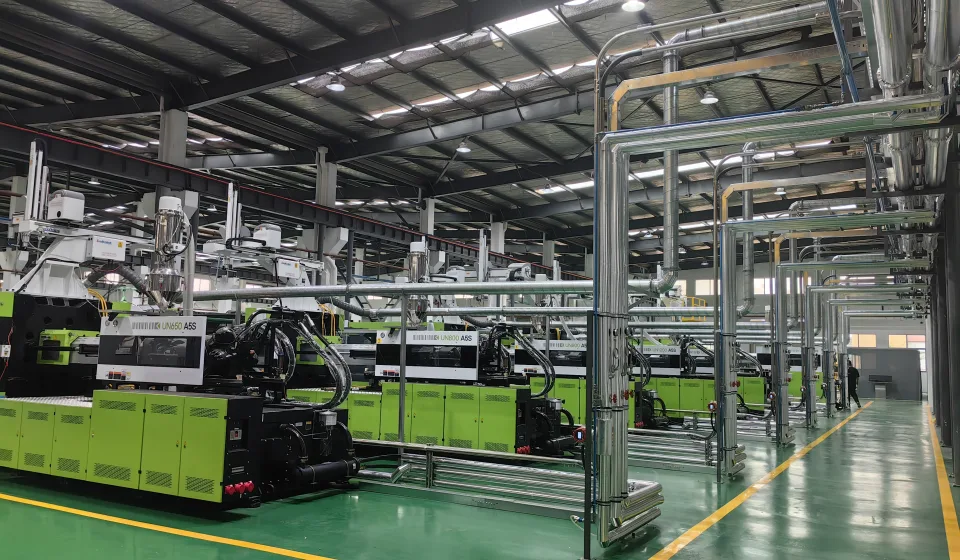
Packaging
Cleanroom Utility & Centralized Feeding Project for Cosmetic Packaging Production
A turnkey utility and centralized feeding project for a 3,000 m² cosmetic packaging injection molding workshop in Nantong, integrating material drying and conveying, cleanroom-oriented…
View Case Study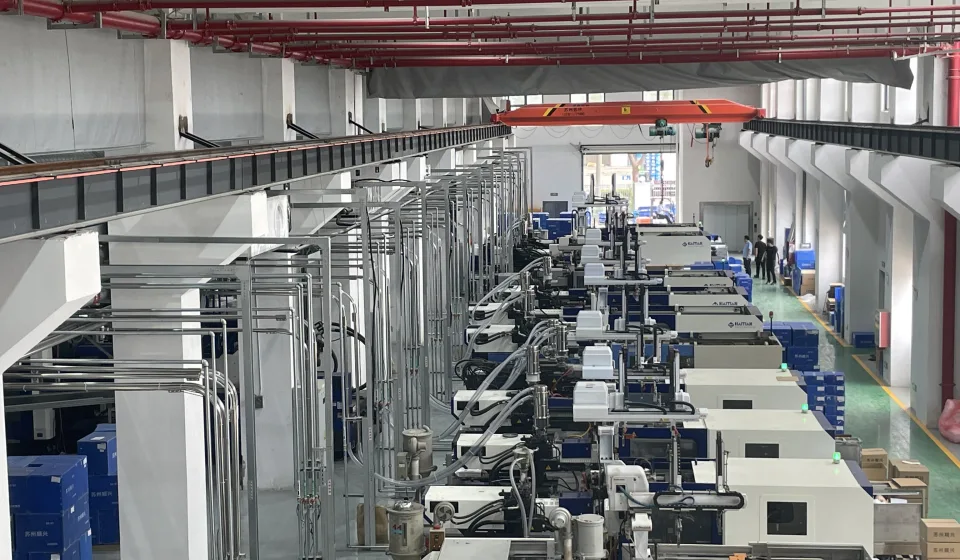
Home Appliances
NanJing 30 IMM Central Feeding System with utility planning
A turnkey whole-factory utility and centralized feeding project in Nanjing, covering the layout of 30 injection molding machines, centralized material feeding, chilled water, electricity,…
View Case Study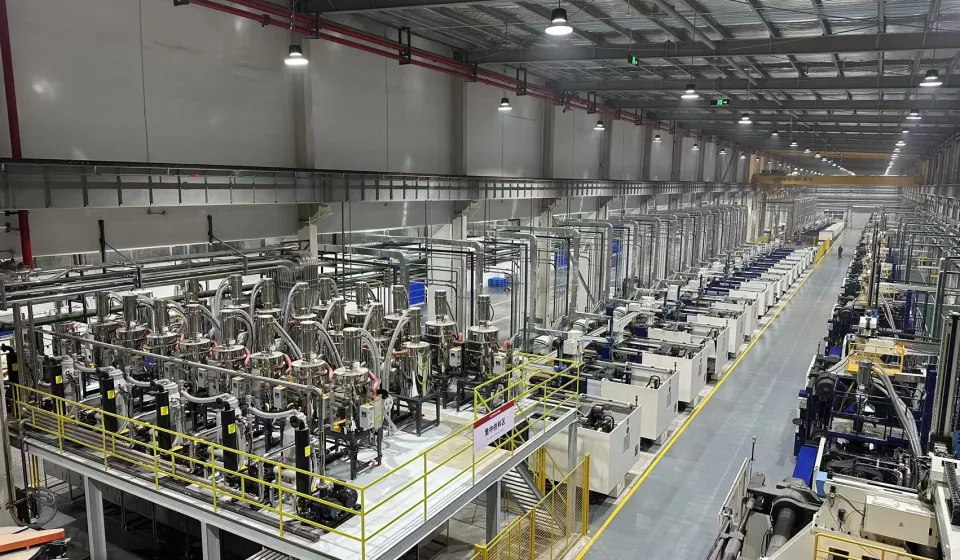
Automotive
Smart Utility & Material Handling System for a 108-Machine Injection Molding Plant
Demand-Based Cooling & Error-Proof Material Handling for 108 Injection Molding Machines
View Case StudyFAQ
Plant-wide automation planning questions
The scope is defined from material handling, auxiliary processes, production interfaces, utilities, controls and the approved factory layout.
Existing equipment can be reviewed for mechanical, electrical and control compatibility before the integration scope is confirmed.
Planned machines, routes, utilities and interface capacity should be identified during the design review.
Provide the machine list, process flow, materials, layout drawings, utility conditions and control interface requirements.