
Solution Detail
Crushing and Recycling Systems for In-process Recovery
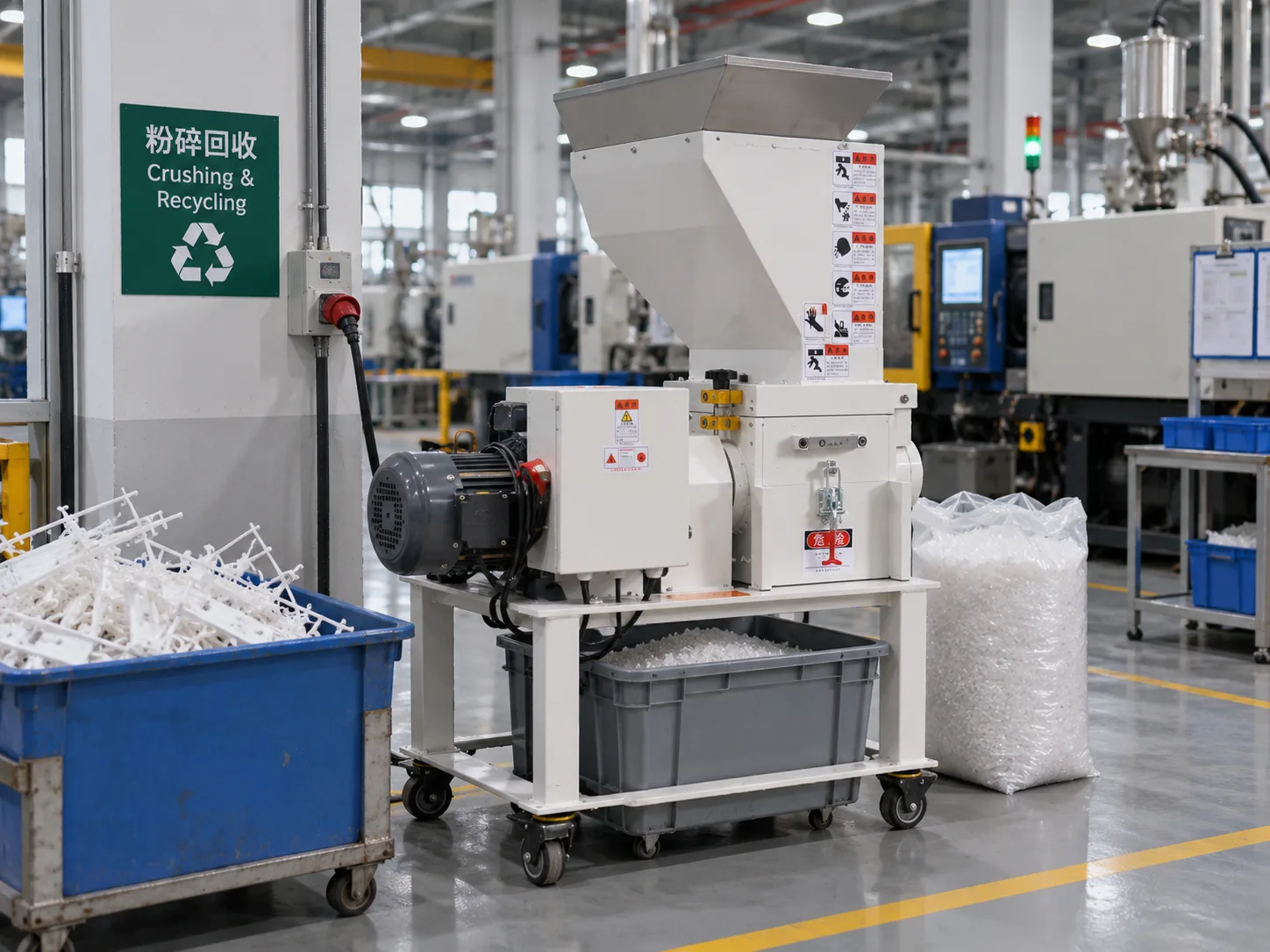
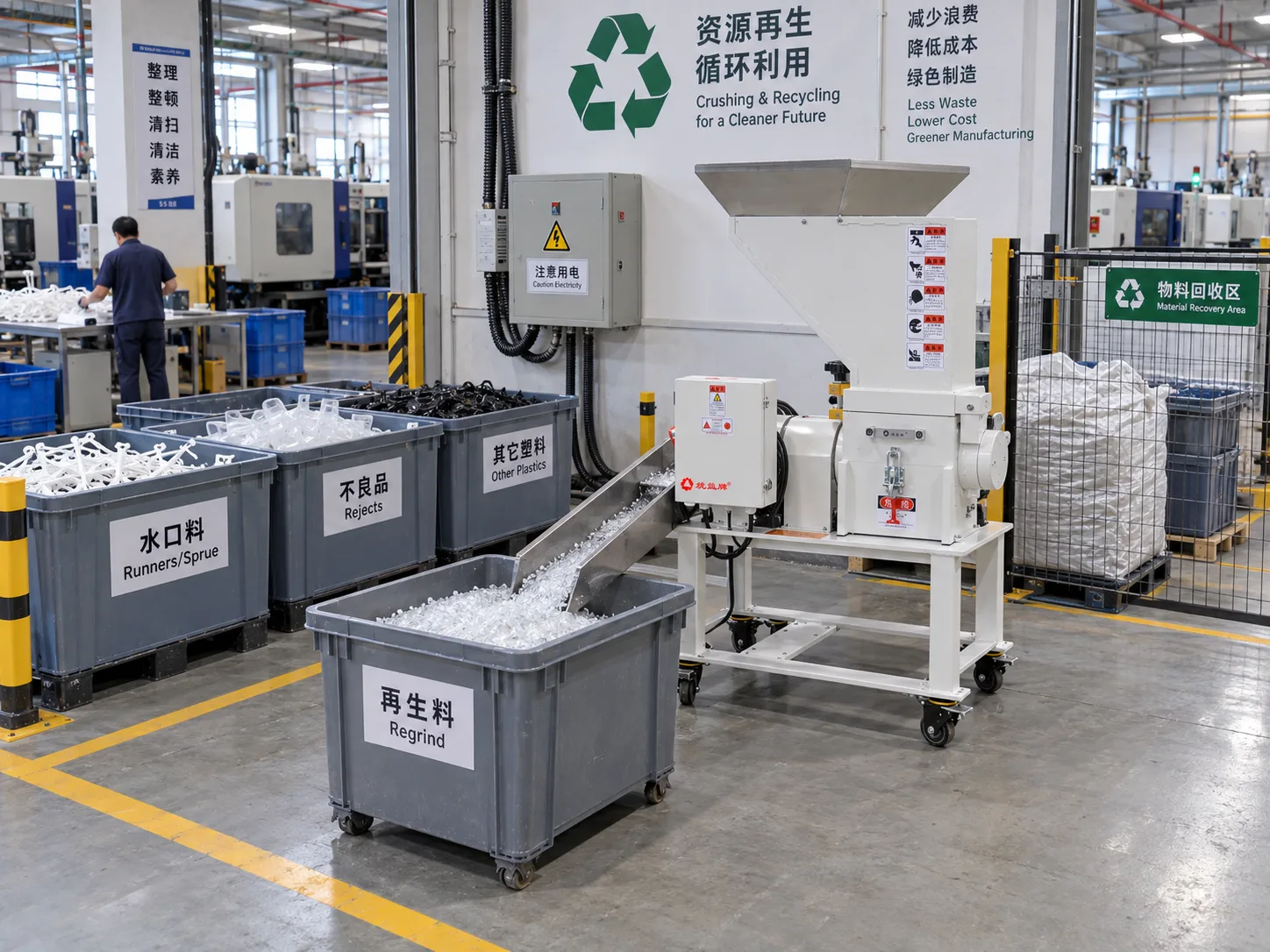
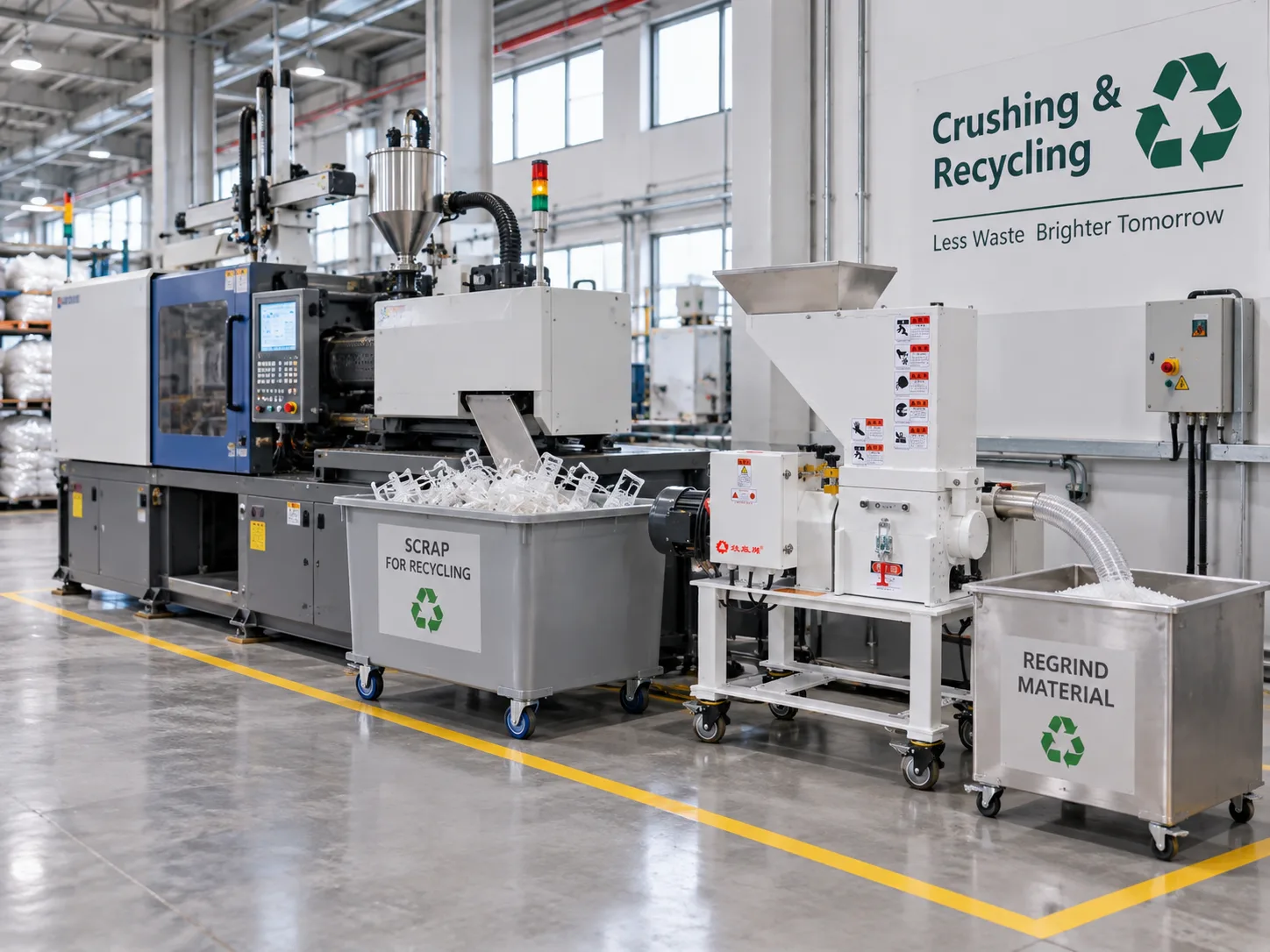
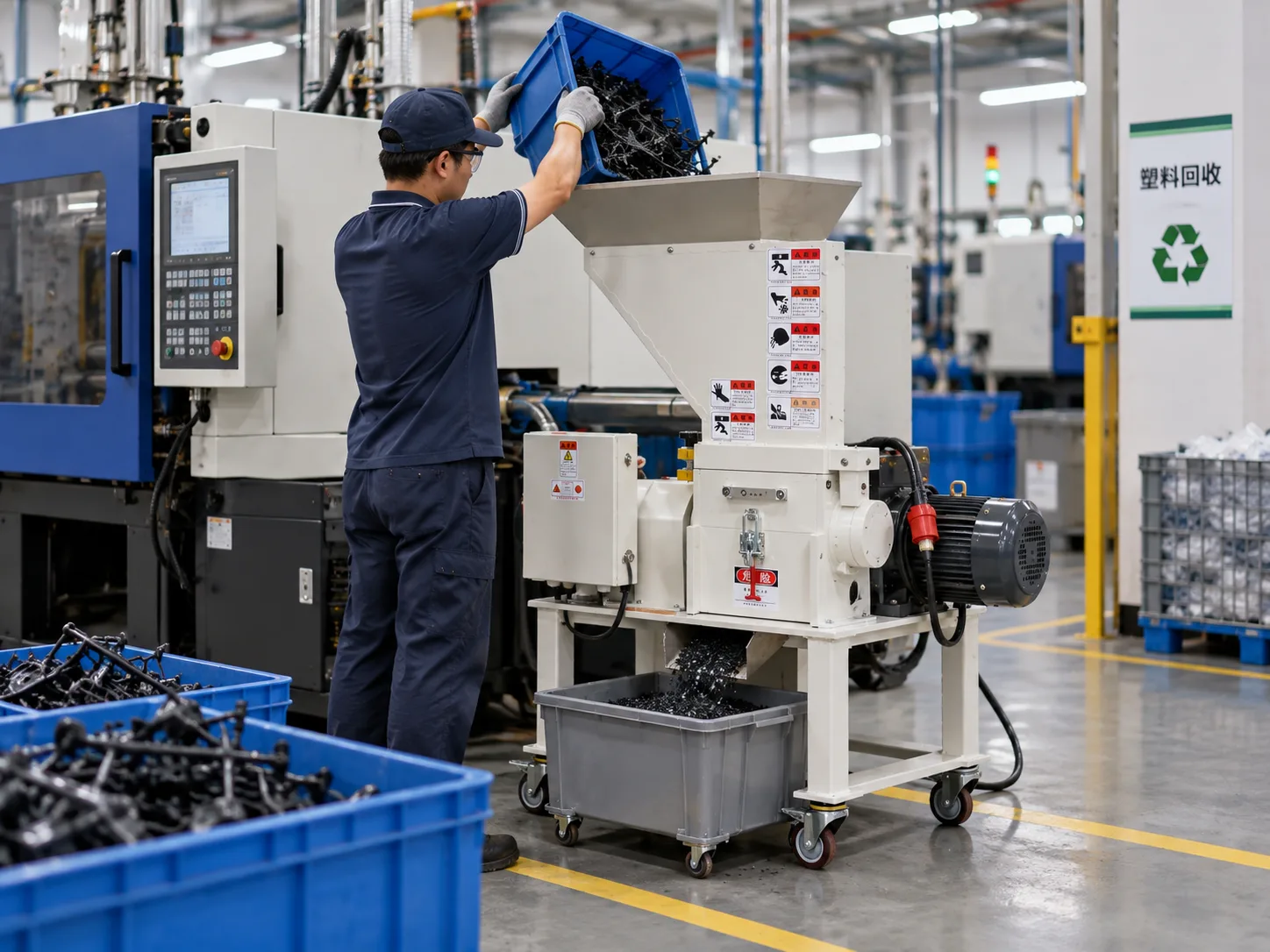
Reduce runners and rejected parts to a controlled form for collection or approved return to the production process.
Business Problem
Recover material without creating a new quality risk
A crusher selected only by motor size may produce unsuitable particles, excess dust, noise or unstable feeding. The recovery path should be designed from part geometry through collection, separation and approved reuse.
Risks addressed during planning
- Oversized or irregular parts may bridge at the inlet or overload the cutting chamber.
- Excess fines and dust can affect handling and downstream quality.
- Mixed colors or materials can make recovered material unsuitable for reuse.
- Poor access can make cleaning and blade maintenance unnecessarily slow.
Suitable production environments
Runner recovery
Machine-side size reduction for clean runners and sprues.
Rejected-part processing
Controlled crushing of nonconforming molded parts before collection or reuse.
Central recycling areas
Shared processing where sorting, dust, noise and maintenance can be managed together.
System Architecture
Sort, reduce, collect and return
The material path keeps identification and reuse limits visible to operators.
-
01
Sorting
Separate material by resin, color and contamination status.
-
02
Size reduction
Match chamber, cutters and speed to the incoming part.
-
03
Collection
Control dust and move the regrind into identified containers or conveying.
-
04
Approved reuse
Return material only under the defined quality and blend-ratio rules.
Equipment Categories Used
Equipment categories connected to this system
Use these category pages to review the equipment families that normally make up this solution.
Crushing & Recycling
Controlled size reduction and in-process material recovery.
Explore Crushing & Recycling equipmentDesign Inputs
Information required before equipment selection
The largest part and the required output quality are key selection inputs.
| Design Item | Example | Engineering Use | Notes |
|---|---|---|---|
| Part geometry | Maximum dimensions, wall thickness and shape | Inlet and chamber selection | Provide representative photos or samples. |
| Material | Resin, fillers and temperature | Cutter, speed and wear review | Identify abrasive fillers. |
| Required throughput | Expected mass per hour and feeding pattern | Machine capacity and duty | Note intermittent peaks. |
| Reuse standard | Particle requirement and permitted blend ratio | Screen, collection and dosing integration | Confirm with process quality requirements. |
Core Equipment
Match the granulator to the incoming part
Final selection should be checked against real part geometry, material and the required recovered-particle condition.
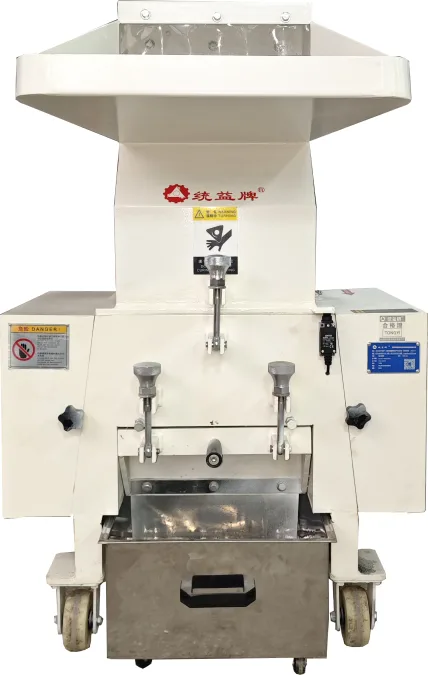
Powerful Granulator
Heavy-duty plastic granulator for high-capacity recycling of runners, defective parts, pipes, profiles, sheets, and large plastic products, with capacities up to 1,600…
View Product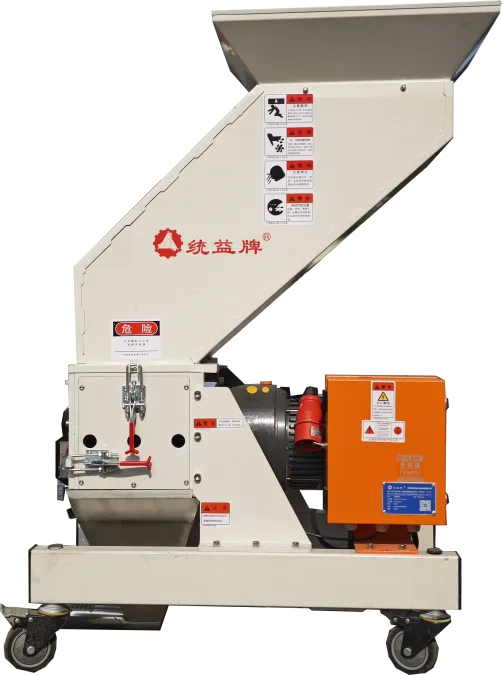
Middle Speed Granulator
Middle-speed granulator for beside-the-machine recycling of plastic runners, sprues, and defective parts, featuring 140 RPM operation, 50–200 kg/h capacity, reduced noise, and…
View Product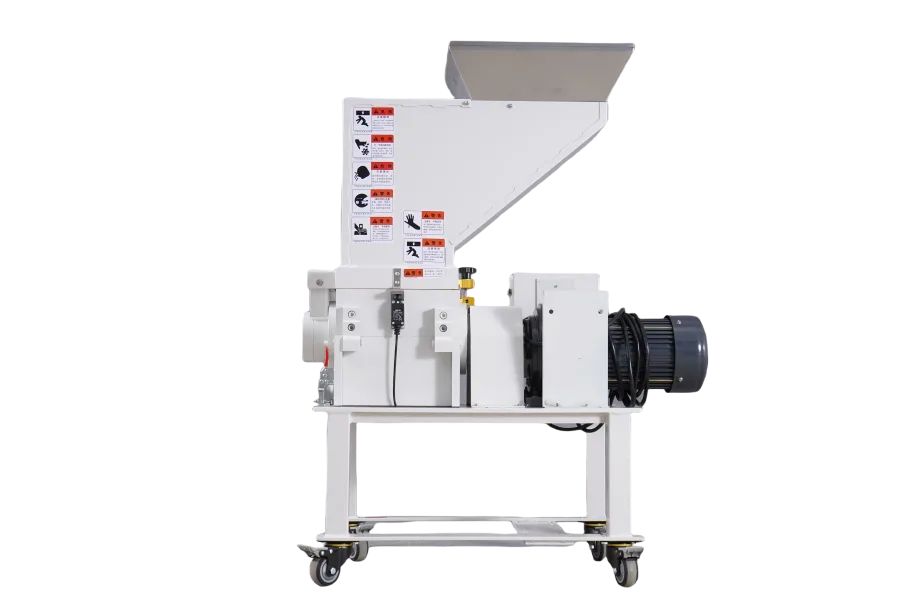
Low-Speed Sound-Proof Side Granulator
Low-speed screenless granulator for beside-the-machine recycling of plastic runners and defective parts, featuring 27–35 RPM operation, low dust generation, low noise, and…
View ProductPlanning FAQ
Crushing and recycling questions
Provide part dimensions, material, fillers, temperature, expected throughput, feed method and the required recovered-particle condition.
Machine speed, cutter design, feed consistency, screen selection, collection and maintenance all influence fines and dust.
It can when sorting, contamination control, particle quality and the approved return ratio are defined and the conveying or dosing system is compatible.