
Granulator Selection: Screen Size, Rotor Speed and Throughput
Screen size sets regrind particle size, rotor speed sets dust and fines. How to match a granulator to your scrap type and re-feed ratio.

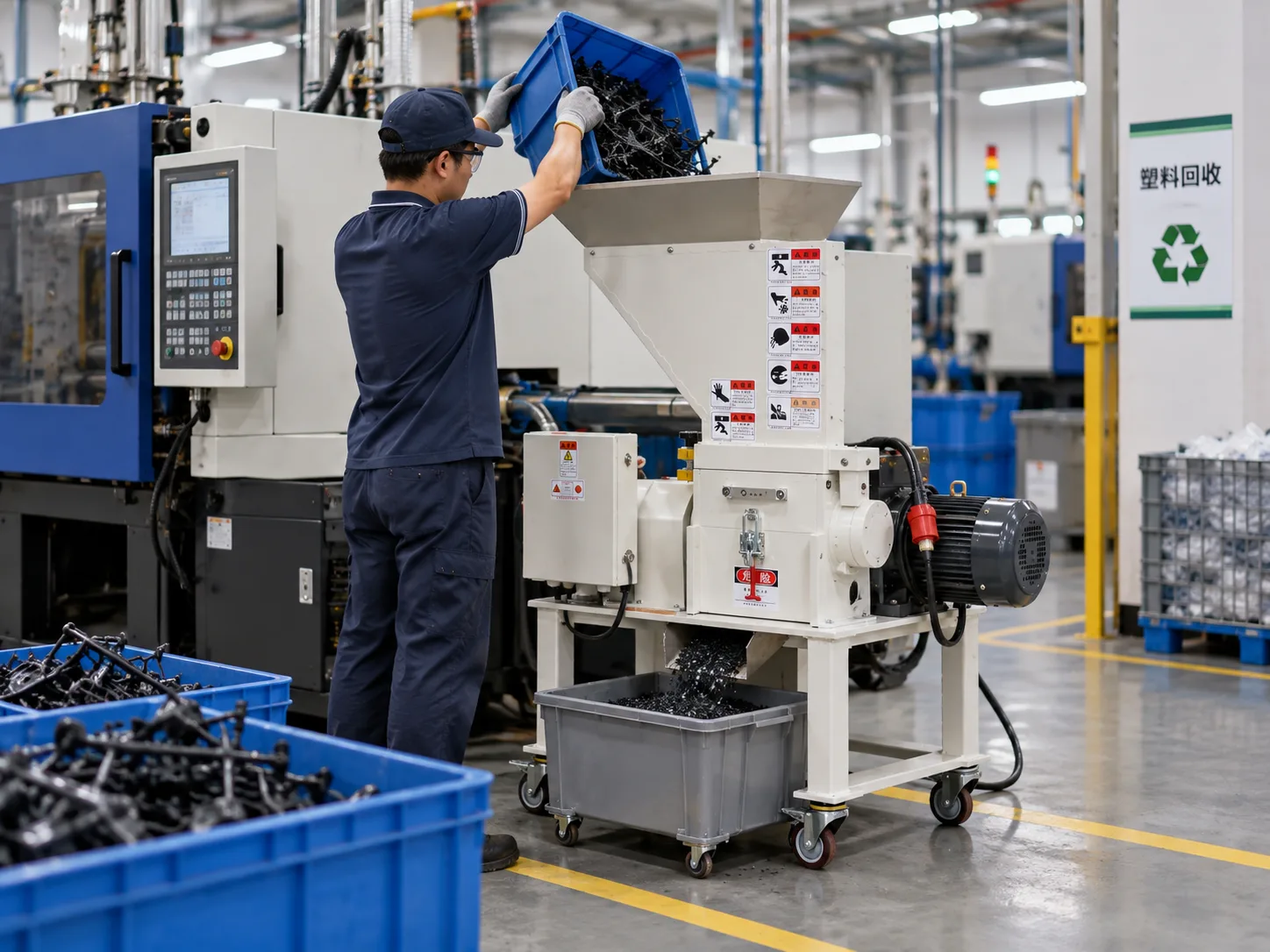
Two settings decide whether a granulator produces usable regrind or a dust problem: screen hole size and rotor speed. Screen size controls the particle size that leaves the machine; rotor speed controls how much the material is cut versus shattered. Getting them wrong produces regrind that feeds badly, dries unevenly and molds inconsistently.
The starting point is not the machine specification — it is what you intend to do with the regrind afterwards.
What does screen size actually control?
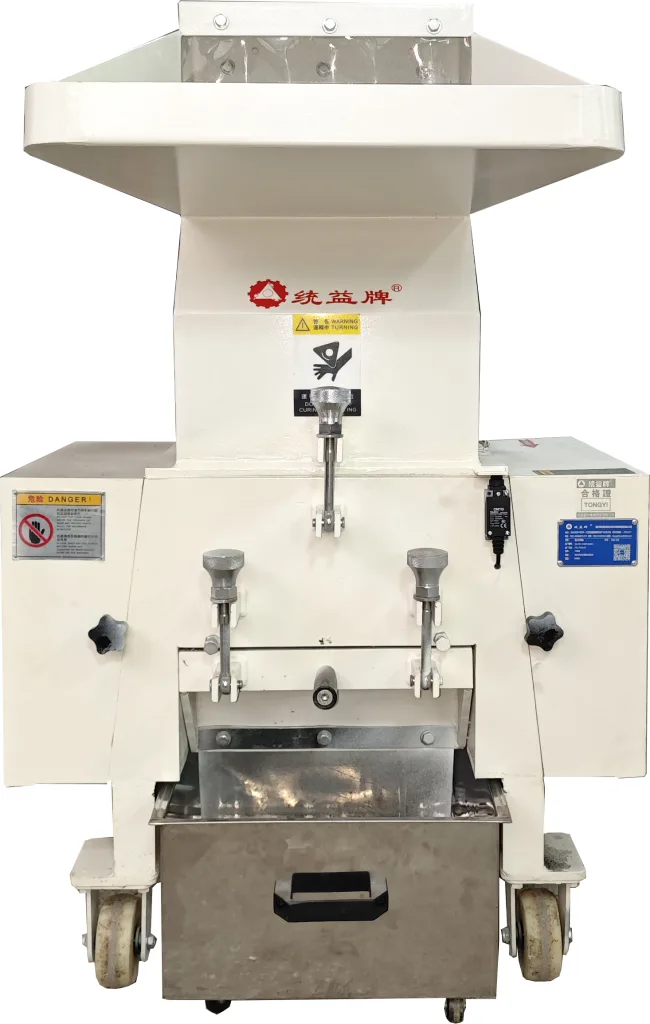
The screen is a sieve at the outlet. Material stays in the cutting chamber until it is small enough to pass through the holes, so screen size sets the maximum particle dimension. A 6 mm screen produces regrind that feeds well in most injection machines; a 10 mm screen is faster but produces particles that bridge in hoppers and dry unevenly.
| Screen hole | Typical use | Throughput | Fines |
|---|---|---|---|
| 4–5 mm | small parts, high re-feed ratio | lower | higher |
| 6–8 mm | general injection molding runners | medium | medium |
| 10–12 mm | large purgings, blow molding scrap | higher | lower |
| 12 mm + | bulk size reduction before re-granulating | highest | lowest |
The trade-off is direct: smaller holes give more uniform regrind but reduce throughput and increase fines, because material is cut more times before it escapes.
Why does rotor speed matter more than people expect?
A slow rotor cuts; a fast rotor shatters. Shattering produces dust and irregular particles with sharp edges, both of which cause feeding problems and inconsistent melting. For most injection molding scrap, a low-speed rotor running at 20–30 rpm with a screen in the 6–8 mm range produces the best regrind per hour of operation.
High-speed granulators exist for a reason — large, thick scrap needs impact energy to break down. But applying that machine to thin runners produces dust rather than regrind.
How do you size throughput correctly?
Size on peak scrap rate, not average, and add margin for the fact that granulator ratings assume continuous feeding. Two numbers are needed:
- Scrap generated per hour — shot weight minus part weight, times shots per hour, summed across machines.
- Re-feed ratio — if 20 % regrind goes back into the machine, the granulator must keep up with continuous production rather than batch clearing.
A machine producing 15 kg/h of runners needs a granulator rated above 20 kg/h in the intended screen size, because published throughput figures are usually quoted at the largest screen.
What about noise and dust in the hall?
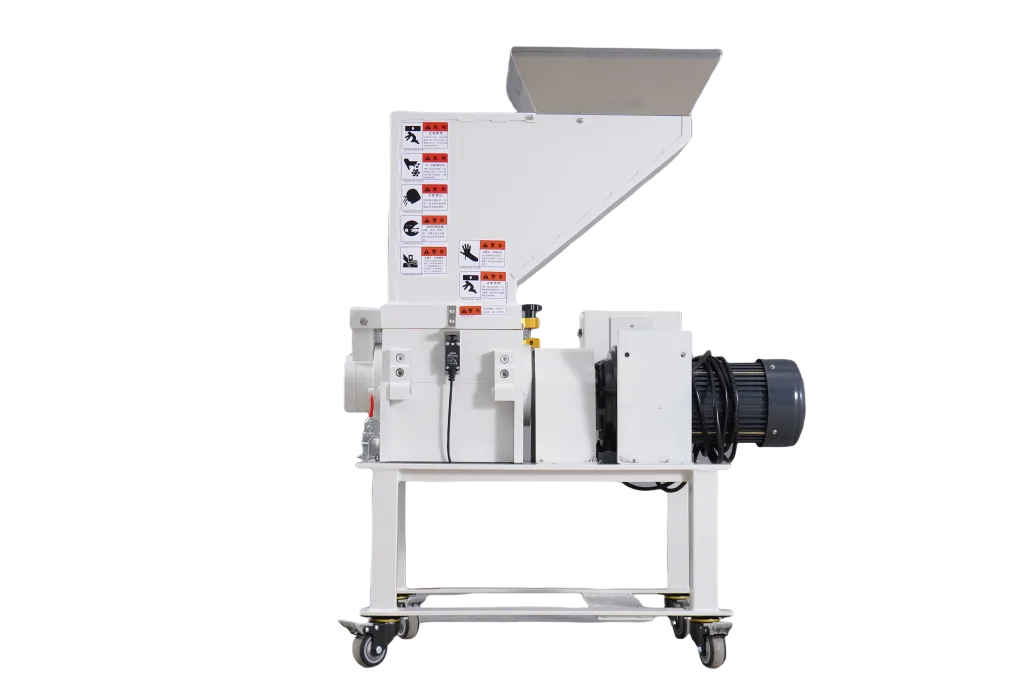
Granulators are the loudest machine in most molding halls. Sound-proofed units reduce the noise at the operator position substantially, and low rotor speed reduces it further because less impact energy is released. Where the granulator sits beside the machine rather than in a separate room, sound-proofing is usually a requirement rather than an option.
Dust control follows the same logic: slower rotor, correct screen, and a sealed cutting chamber with dust extraction where the regrind is bagged.
How do blades and maintenance affect regrind quality?
Dull blades crush rather than cut, which increases fines and heat generation. The symptom is regrind that looks increasingly powdery over weeks. Checking blade clearance on a fixed schedule and rotating or sharpening blades before they dull is the cheapest quality control available on a granulator.
Where to go next
The low-speed sound-proof side granulator is the standard choice for machine-side runner recycling, the middle-speed granulator covers general scrap, and the powerful granulator handles thick purgings and large reject parts.
Tell us your scrap type, hourly quantity and intended re-feed ratio and our engineers will specify screen and rotor configuration.