
Plastic Resin Drying: Dew Point, Drying Time and Dryer Selection
How to dry hygroscopic plastics correctly: target moisture by resin, the dew point you actually need, drying time tables, and how to size a hopper or desiccant dryer.

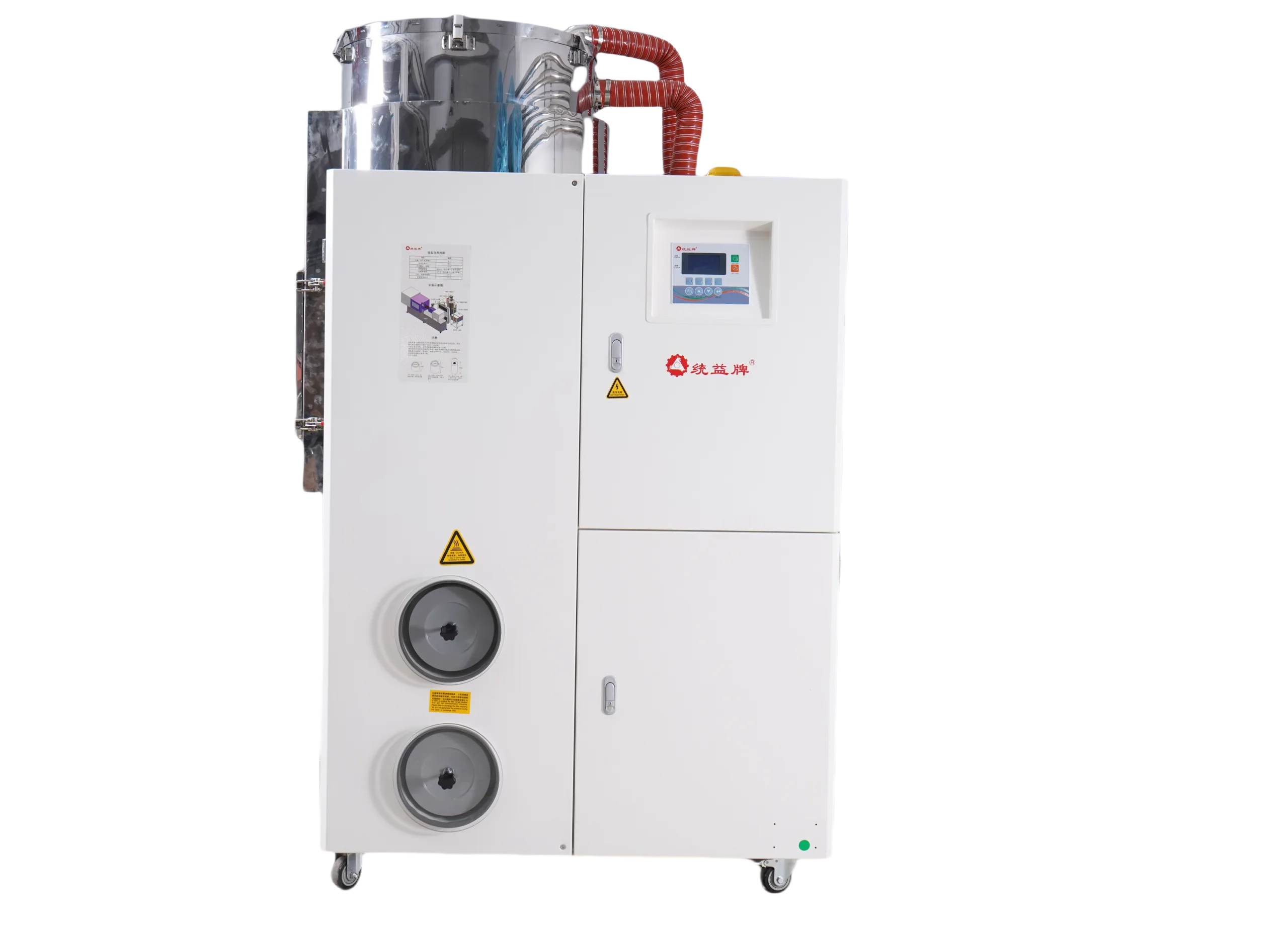
Wet resin is one of the most common causes of rejected parts in injection molding, and it is also one of the easiest problems to prevent. The short answer: hygroscopic resins such as PA, PC, PET, PBT, ABS and PMMA must be dried to a defined moisture level before processing, using air with a dew point low enough to pull water out of the granule rather than push it back in. Non-hygroscopic resins such as PP and PE normally need no drying at all.
The rest of this guide covers the numbers behind that answer: which resins need drying and to what level, what dew point actually achieves it, how long drying takes at a given temperature, and how to size a dryer so it keeps up with your machines instead of becoming the bottleneck.
Why does wet resin cause defects in molded parts?
Moisture in the granule turns to steam at melt temperature. The steam expands inside the cavity, and the result appears on the part as silver streaks, splay, bubbles, flow lines, or a dull patch near the gate. In engineering resins the damage goes deeper: water hydrolyses the polymer chain, so the melt viscosity drops and the part becomes brittle even when the surface looks acceptable.
Two failure modes are worth separating, because they need different fixes:
- Cosmetic moisture (silver streaks, splay) appears immediately and is visible on the part. It usually means surface moisture or a short drying time.
- Hydrolytic degradation shows up as a drop in impact strength and molecular weight. It is invisible on the part and only appears in testing, which is why PET, PC and PA processors measure moisture rather than judge by eye.
Which plastics actually need drying?
Only hygroscopic resins absorb enough water from the air to require drying. The table below gives the practical target: moisture content before processing, and the drying temperature and time normally used to reach it. Values are typical for injection molding; always confirm against the resin supplier’s datasheet, because grades and additives shift the window.
| Resin | Hygroscopic | Drying temp. | Typical time | Target moisture | Dew point needed |
|---|---|---|---|---|---|
| PA6 / PA66 | Yes | 80–100 °C | 3–4 h | < 0.10 % | −20 °C |
| PA (high performance) | Yes | 100–120 °C | 4–6 h | < 0.05 % | −30 °C |
| PC | Yes | 100–120 °C | 3–4 h | < 0.02 % | −20 °C |
| PET | Yes | 150–170 °C | 4–6 h | < 0.005 % | −40 °C |
| PBT | Yes | 120–140 °C | 3–4 h | < 0.04 % | −20 °C |
| ABS | Yes | 80–90 °C | 2–3 h | < 0.10 % | −20 °C |
| PMMA | Yes | 80–90 °C | 2–4 h | < 0.05 % | −20 °C |
| POM | Yes | 90–100 °C | 2–3 h | < 0.10 % | −20 °C |
| PP / PE | No | — | — | — | not required |
What dew point do you actually need?
Dew point is the temperature at which the drying air is saturated. It matters more than temperature, because air with a high dew point cannot absorb water from the granule no matter how hot it is. For most engineering resins −20 °C is sufficient. For PET, optical parts, medical parts and anything running at very low moisture targets, −40 °C is the practical requirement.
A useful rule of thumb: the lower the target moisture, the lower the dew point must be in proportion. Drying PET to 0.005 % with −20 °C air is physically impossible, while drying PA6 to 0.10 % with −40 °C air is simply expensive.
Hot air, desiccant, three-in-one or cabinet — which dryer fits?
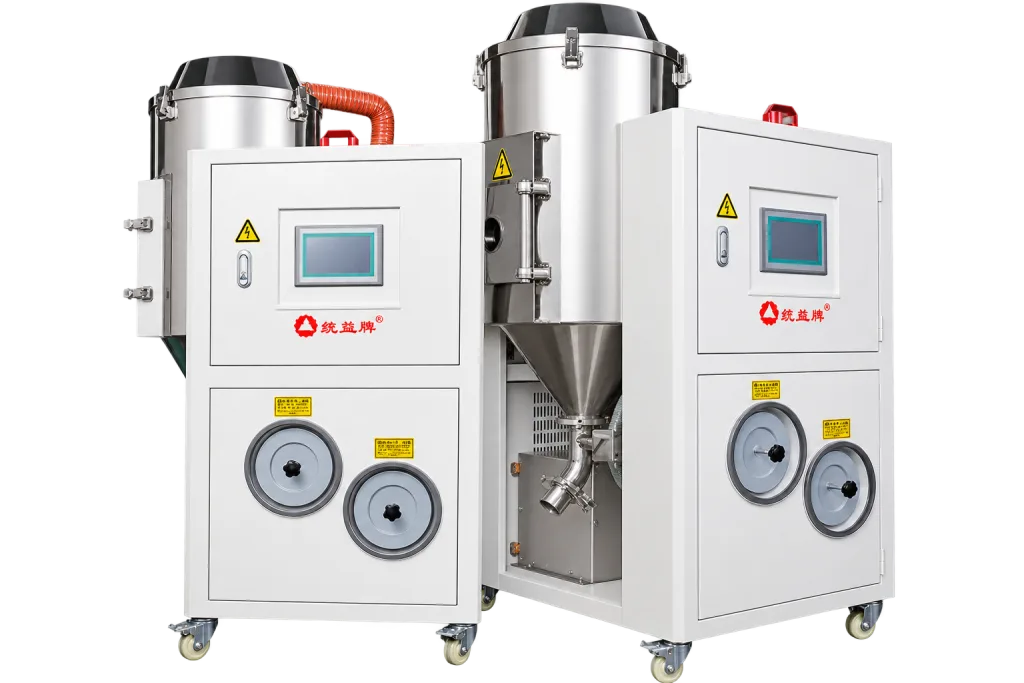
All four types heat the resin, but only two can hold a low dew point. Choose by the resin and the batch pattern, not by price alone.
| Type | Dew point | Best for | Limitation |
|---|---|---|---|
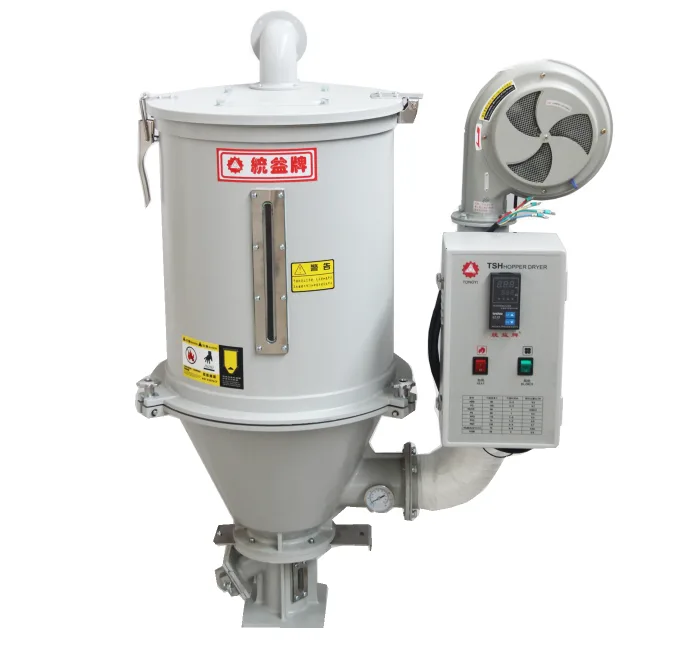
| Hot air hopper dryer | ambient (no control) | ABS, PMMA, POM, short runs | cannot dry PA, PC or PET |
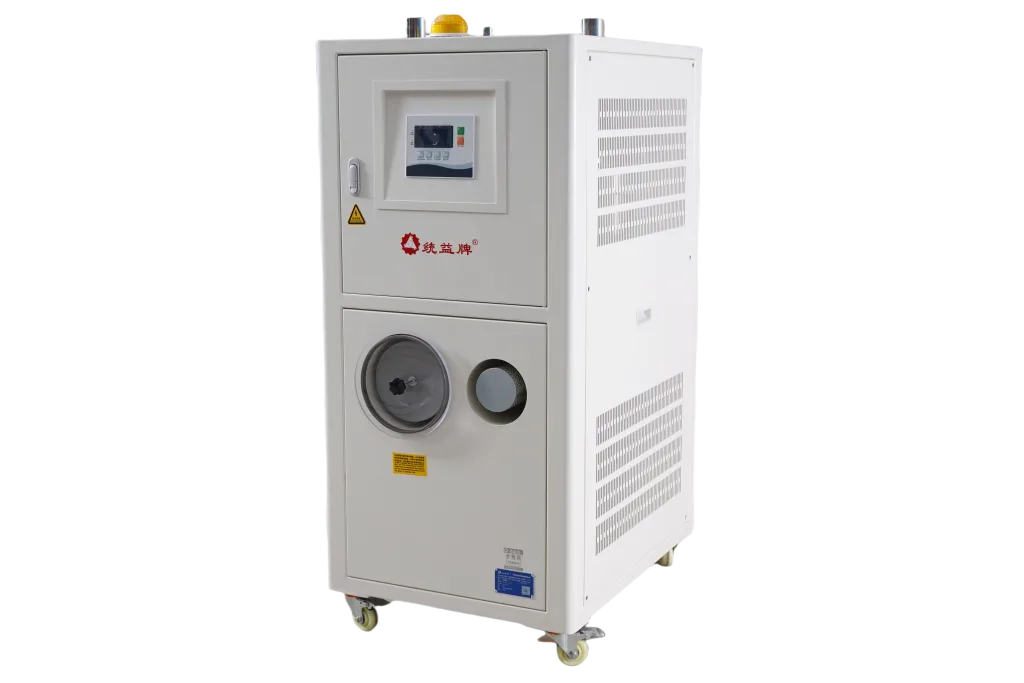
| Desiccant (honeycomb rotor) | −20 to −40 °C | PA, PC, PET, PBT | rotor needs periodic replacement |
| Three-in-one | −20 to −40 °C | lines that also convey material | higher capital cost |
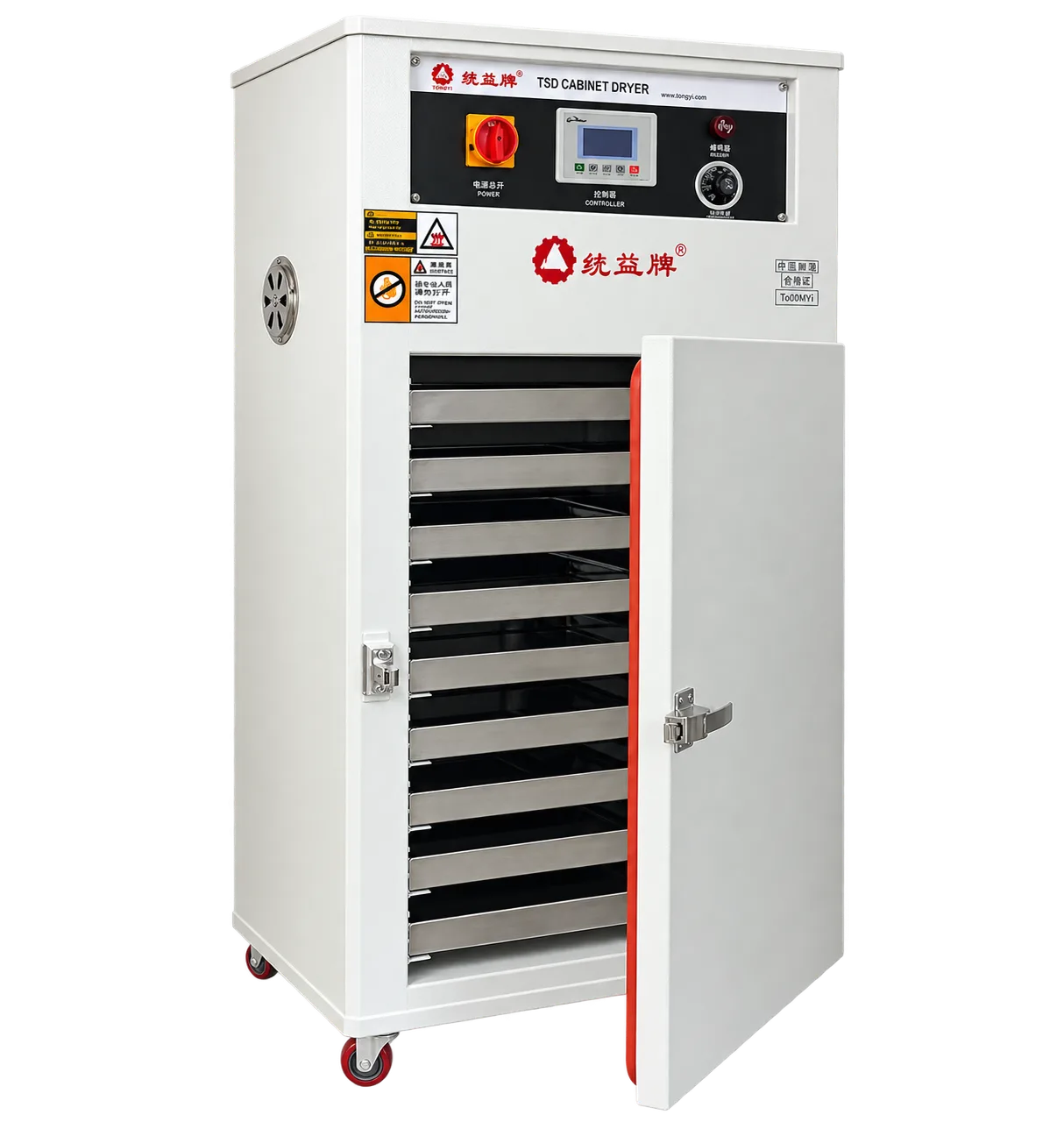
| Cabinet dryer | low temperature, batch | small batches, many colours | not for continuous production |
How do you size a dryer for a given machine count?
Size on throughput times residence time, not on machine count alone. The calculation has three steps:
- Hourly consumption — sum the shot weight × shots per hour for every machine the dryer serves. A machine running a 120 g shot on a 30 s cycle consumes about 14.4 kg/h.
- Residence time — multiply by the drying time from the table above. Six hours is a common requirement for PA, so 14.4 kg/h becomes roughly 86 kg of material in the drying circuit.
- Add working reserve — add 20–30 % so that a refill does not drop the dew point or the temperature for the whole line.
Example: eight machines at 15 kg/h each is 120 kg/h. With a four-hour drying time that is 480 kg of material to hold, so a dryer with a 500 kg hopper and a rotor rated above 120 kg/h is the starting point — not a 200 kg unit that will run continuously at its limit.
What are the most common drying mistakes?
Most drying problems come from operation rather than equipment. These five appear repeatedly:
- Drying by timer only. A full hopper needs longer than a half-full one; temperature and dew point stay the same, residence time does not.
- Using a hot air dryer on PA or PC. Without a rotor there is no dew point control, so the resin reaches an equilibrium with ambient humidity and never dries.
- Neglecting return air filtration. Dust on the rotor reduces dew point performance gradually, and the loss is invisible until parts start failing.
- Over-drying. Excessive time at high temperature degrades some resins and wastes energy; PET is particularly sensitive to thermal history.
- Storing dried resin in open containers. Regrind and dried granule re-absorb moisture within minutes in humid air.
How do you verify that drying actually worked?
Measure moisture, do not inspect the part. Three methods are practical on a shop floor: a gravimetric moisture analyser (fast, accurate enough for production checks), a Karl Fischer titration (reference method for incoming inspection and disputes), and dew point logging on the dryer outlet (confirms the machine is holding set point, not the resin moisture itself).
For most plants a gravimetric check on the first shot of every shift, plus a dew point trend on the dryer, catches the failures that cause splay and brittleness before they reach the customer.
Frequently asked questions
Can I dry resin faster by raising the temperature?
Only within the supplier’s window. Above it the granule surface dries while the core stays wet, and the resin may degrade. Raising temperature also changes the material’s thermal history, which matters for PET and PC. Longer residence time at the correct temperature is safer than a hotter, shorter cycle.
Is a hopper dryer enough for PA66?
No. PA66 is hygroscopic and needs air at roughly −20 °C dew point to reach below 0.10 % moisture. A plain hot air hopper dryer has no dew point control, so the resin reaches equilibrium with workshop humidity instead of drying.
Why do my parts turn brittle a day after molding?
Delayed brittleness usually indicates hydrolytic degradation rather than surface moisture. Water in the melt split the polymer chains during processing; the part looks fine at first and fails later. Check moisture content and drying residence time, and confirm the dryer actually holds its dew point.
Does regrind need different drying?
Yes. Regrind has a higher surface area and often a higher starting moisture content, so it usually needs longer residence time than virgin granule. Adding more than about 20 % regrind without extending drying time is a common cause of intermittent splay.
Where to go next
If you are selecting equipment, the three-in-one dehumidifying dryer covers drying and conveying in one unit, while the honeycomb rotor dehumidifier is the standalone answer when conveying is already handled. For small batches and frequent colour changes, a cabinet dryer is often the practical choice, and a hopper dryer remains the right tool for non-hygroscopic resins and short runs.
If you want the sizing done against your actual machine list, send us your shot weights, cycle times and resin types and our engineers will return a dryer specification with the dew point and hopper volume calculated.